Best Lightweight Monocular for Bird Watching are becoming an increasingly practical choice for birders who want clear, portable, and easy to use optics without the bulk of traditional binocular systems. They are great for bird watching because they combine decent magnification, strong optical clarity, and compact designs that make them easy to carry during long hikes, travel, or casual nature walks. Unlike heavier alternatives, these monoculars are designed to be quickly accessible, allowing users to react fast when birds appear unexpectedly in the field.
In this guide, you will explore the key features that define a good bird watching monocular, the top models worth considering based on real performance, and a detailed buying guide to help you avoid common mistakes when choosing one. You will also find answers to frequently asked questions to clarify important concerns such as magnification, usability, and durability. The goal is to give you a clear, practical understanding of what makes a monocular truly effective for bird watching in real outdoor conditions.
5 Best Lightweight Monocular for Bird Watching
1. Hawke Nature-Trek 10×42 Monocular Green
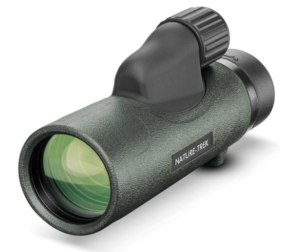
Finding the Best Lightweight Monocular for Bird Watching often means balancing portability, image quality, and durability, and the Hawke Nature Trek 10×42 does a solid job of combining all three. Weighing just 12.8 ounces and featuring a compact monocular design, it is easy to carry during long birding walks, hikes, and travel adventures without adding noticeable bulk to your gear. Despite its lightweight construction, the rubber coated chassis feels durable in hand and provides a secure grip in varying weather conditions, making it well suited for regular outdoor use.
The Nature Trek 10×42 delivers impressive viewing performance through its 10x magnification, 42mm objective lens, fully multi coated optics, and high resolution BAK 4 roof prism. Together, these features produce bright, sharp, and detailed images with good contrast and natural color reproduction, allowing bird watchers to identify plumage patterns and fine details with ease. The larger objective lens helps gather more light for improved visibility in shaded woodland areas or during the early morning and late evening hours when birds are often most active.
Practicality is another strength of this monocular. The focus knob provides two full turns for precise adjustments, making it easier to track birds moving between different distances, while the 6.6 foot close focus capability allows detailed observation of nearby birds, butterflies, and other wildlife. Hawke also includes stay on lens covers that help protect the optics from dust and debris when the monocular is not in use. For birders seeking a lightweight, travel friendly optic that delivers dependable clarity and comfortable handling, the Nature Trek 10×42 is a reliable choice.
Key Specifications
| Specification | Details |
|---|---|
| Brand | Hawke |
| Model | Nature Trek 10×42 |
| Magnification | 10x |
| Objective Lens Diameter | 42 mm |
| Prism Type | BAK 4 Roof Prism |
| Optical Coating | Fully Multi Coated |
| Close Focus Distance | 6.6 ft |
| Optical Tube Length | 143 mm |
| Weight | 12.8 oz |
| Product Dimensions | 8.5 x 4.5 x 3.7 inches |
Pros
- Excellent image clarity and brightness
- Lightweight and easy to carry
- High quality BAK 4 prism system
- Durable rubber coated construction
- Precise focusing mechanism
- Good close focus capability
- Protective stay on lens covers included
Cons
- 10x magnification can amplify hand movement
- Not as compact as pocket sized monoculars
2. Gosky Monoculars Telescope, 15×55 HD
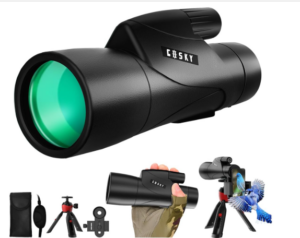
The Gosky 15×55 HD Monocular is a compelling choice for anyone looking for the Best Lightweight Monocular for Bird Watching. Its powerful 15x magnification brings distant birds noticeably closer than many standard 10x or 12x models, making it easier to observe plumage details, nesting behavior, and movement from long distances. Paired with a large 55mm objective lens, the monocular gathers plenty of light to produce bright images even during cloudy conditions, early mornings, or late afternoon birding sessions. The generous field of view of 315 feet at 1,000 yards also helps users locate and track moving subjects more efficiently.
Image quality is enhanced by the combination of an 18mm BAK 4 prism and fully multi coated FMC lenses. These optical components improve light transmission while reducing unwanted reflections, resulting in sharper images, better contrast, and more natural color reproduction. Whether observing birds in dense forests, wetlands, or open landscapes, the monocular delivers a clear and detailed viewing experience. The long eye relief and twist up eyecup further improve comfort, allowing users to enjoy extended observation sessions with reduced eye strain.
Designed for outdoor use, the Gosky 15×55 features a lightweight construction with a comfortable hand strap that improves security during use. Its IPX7 waterproof, fog proof, dustproof, and shock resistant design allows it to perform reliably in changing weather conditions, making it suitable for bird watching, hiking, camping, and wildlife observation throughout the year. A major advantage is the included smartphone adapter, which enables users to capture steady photos and videos through the monocular using most modern smartphones. This feature adds significant value for birders who enjoy documenting sightings and sharing their observations.
Key Specifications
| Specification | Details |
|---|---|
| Brand | Gosky |
| Model | RM 15×55 |
| Magnification | 15x |
| Objective Lens Diameter | 55 mm |
| Prism Type | BAK 4 Prism |
| Lens Coating | Fully Multi Coated FMC |
| Field of View | 315 ft at 1,000 yds |
| Focus Type | Manual Focus |
| Waterproof Rating | IPX7 |
| Product Dimensions | 3.25 x 2.15 x 7 inches |
| Smartphone Adapter | Included |
| Power Source | Manual |
Pros
- Powerful 15x magnification for long distance viewing
- Large 55mm objective lens provides bright images
- BAK 4 prism and FMC optics deliver sharp image quality
- IPX7 waterproof and fog proof construction
- Comfortable long eye relief for extended use
- Lightweight design with secure hand strap
- Smartphone adapter included for photography and video
- Wide field of view for tracking moving birds
Cons
- Higher magnification can make hand shake more noticeable
- Larger objective lens adds more bulk than compact models
3. Vortex Optics Solo Monocular 10×36
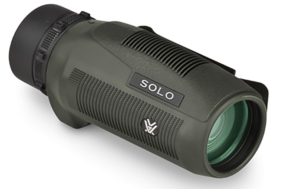
The Vortex Optics Solo 10×36 is a well balanced optic that earns its place among the Best Lightweight Monoculars for Bird Watching by combining portability, durability, and dependable optical performance. Designed for birders, hikers, travelers, and outdoor enthusiasts, this monocular offers a practical alternative to bulkier binoculars while still delivering the magnification and image quality needed to observe wildlife effectively. Its compact dimensions of 4.88 x 2.17 x 2.36 inches and lightweight construction make it easy to carry throughout the day, whether clipped to a backpack, attached to a belt, or stored in a jacket pocket.
The 10x magnification provides enough reach to observe birds perched high in trees, feeding across wetlands, or flying over open landscapes. This magnification level strikes a useful balance between detail and usability, allowing bird watchers to study feather patterns, color variations, and other identifying features without the excessive image shake often associated with higher powered optics. Complementing the magnification is a 36mm objective lens that gathers a respectable amount of light while helping maintain the monocular’s compact size. The result is an optic that performs well across a variety of environments, from bright open fields to shaded forest trails.
Image quality is one of the strongest aspects of the Vortex Solo 10×36. The fully multi coated lens system increases light transmission and improves resolution, producing bright, crisp, and detailed images. Birds appear sharp and well defined, while colors remain natural and accurate. These coatings also help reduce glare and improve contrast, making it easier to distinguish subjects from complex backgrounds such as dense foliage or distant tree lines. For bird watchers who spend hours scanning for movement or identifying species, the enhanced clarity can make a noticeable difference in the overall viewing experience.
The monocular is built with outdoor durability in mind. Its exterior is covered with a rugged rubber armored coating that protects against bumps, scratches, and the wear associated with regular field use. This armor also provides a secure non slip grip, which becomes particularly valuable when using the monocular in wet weather or while wearing gloves. The sturdy construction gives the optic a reassuring feel in hand without making it unnecessarily heavy or cumbersome.
Another major advantage is its weather resistant design. The Solo 10×36 is nitrogen purged and O ring sealed, creating a waterproof and fogproof barrier that helps maintain reliable performance in changing environmental conditions. Whether bird watching in humid forests, misty mornings, light rain, or cold temperatures, users can continue observing without worrying about internal fogging or moisture damage. This level of protection is especially important for outdoor enthusiasts who frequently encounter unpredictable weather.
Comfort has also been carefully considered. The adjustable eyecup allows users to customize eye positioning for a more comfortable viewing experience. This feature benefits both eyeglass wearers and those who observe without glasses, ensuring a clear and comfortable image regardless of personal preference. Extended bird watching sessions become more enjoyable when eye strain is minimized, and the adjustable eyecup contributes significantly to that comfort.
One feature that sets this monocular apart from many competitors is the included multi position utility clip. Rather than requiring a separate carrying solution, the clip allows users to quickly attach the monocular to clothing, backpacks, straps, or gear. This simple addition improves accessibility, ensuring the optic remains within easy reach whenever a birding opportunity appears unexpectedly.
Key Specifications
| Specification | Details |
|---|---|
| Brand | Vortex Optics |
| Model | Solo 10×36 |
| Magnification | 10x |
| Objective Lens Diameter | 36 mm |
| Lens Coating | Fully Multi Coated |
| Focus Type | Manual Focus |
| Waterproof | Yes |
| Fogproof | Yes |
| Optical Tube Length | 5 inches |
| Product Dimensions | 4.88 x 2.17 x 2.36 inches |
| Exterior | Rubber Armored |
| Eyecup | Adjustable |
| Utility Clip | Included |
| Warranty | Unlimited Lifetime VIP Warranty |
Pros
- Excellent balance between portability and optical performance
- Fully multi coated lenses produce bright and sharp images
- Compact size is ideal for travel and bird watching
- Durable rubber armored construction
- Secure non slip grip
- Waterproof and fogproof performance
- Comfortable adjustable eyecup
- Convenient multi position utility clip
- Outstanding lifetime warranty coverage
- Reliable image quality across different environments
Cons
- 36mm objective lens gathers less light than larger 42mm or 50mm models
- 10x magnification may still show slight hand movement during prolonged viewing
4. Bushnell Legend 10×42 Ultra HD Monocular
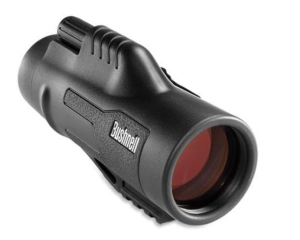
The Bushnell Legend 10×42 Ultra HD Monocular is a strong contender for anyone evaluating the Best Lightweight Monocular for Bird Watching, especially for users who prioritize optical clarity and reliable performance in challenging light conditions. Built with a 10x magnification and a 42mm objective lens, it delivers a balanced combination of reach and brightness that suits birdwatching, wildlife observation, and outdoor tracking. The compact form factor allows it to fit easily into a backpack or jacket pocket, making it practical for field use without unnecessary bulk.
Where this monocular separates itself from many competitors is in its optical system. It uses ED Prime glass combined with Ultra Wide Band Coating, which significantly improves light transmission and color fidelity. In real birdwatching scenarios, this translates into sharper edges, more accurate natural colors, and better visibility in low light environments such as early mornings or shaded forest areas. Birds appear more lifelike, with clearer separation from complex backgrounds, which is especially useful when identifying species at a distance or observing subtle behavioral details.
The 10x magnification offers a useful middle ground for bird watchers who need detail without sacrificing stability. It allows users to clearly observe feathers, markings, and movement patterns while still maintaining a manageable field of view for tracking fast or unpredictable motion. The 42mm objective lens supports this performance by gathering enough light to keep images bright even when conditions are less than ideal. Together, these specifications make the monocular versatile across different habitats, from wetlands and grasslands to wooded trails.
Durability is another important strength of the Bushnell Legend. The monocular features a rugged rubber armored exterior that improves grip and protects the internal optics from accidental impacts. This makes it suitable for demanding outdoor environments where equipment is frequently exposed to rough handling, moisture, or dust. The O ring sealed construction ensures it is both waterproof and fog proof, meaning users can rely on clear vision even in rain, humidity, or sudden temperature changes.
Ease of use is also well executed. The smooth focus knob allows quick and precise adjustments, enabling users to lock onto birds or wildlife without delay. This is particularly useful when observing moving subjects or shifting focus between near and distant objects. The twist up eyecup adds another layer of comfort, accommodating both eyeglass wearers and non wearers, and allowing for longer observation sessions without discomfort or eye strain.
Overall, the Bushnell Legend 10×42 Ultra HD Monocular delivers high end optical performance, strong durability, and practical usability in one compact package. It is particularly appealing for bird watchers who often operate in low light environments and need dependable clarity across varying weather and terrain conditions.
Key Specifications
| Specification | Details |
|---|---|
| Brand | Bushnell |
| Model | Legend 10×42 Ultra HD |
| Magnification | 10x |
| Objective Lens Diameter | 42 mm |
| Glass Type | ED Prime Glass |
| Coating | Ultra Wide Band Coating |
| Focus Type | Manual Focus |
| Waterproof | Yes (O ring sealed) |
| Fogproof | Yes |
| Weight | 374 grams |
| Product Dimensions | 6 x 4 x 4 inches |
| Eyecup | Twist up adjustable |
| Mount Type | Tripod compatible |
Pros
- Excellent clarity and color accuracy with ED Prime glass
- Strong performance in low light conditions
- Durable rubber armored construction
- Waterproof and fog proof design
- Smooth and responsive focusing system
- Comfortable twist up eyecup
- Good balance between magnification and field of view
- Tripod compatibility improves stability
Cons
- Slightly bulkier for pocket carry
- Requires battery related component not common in basic monoculars
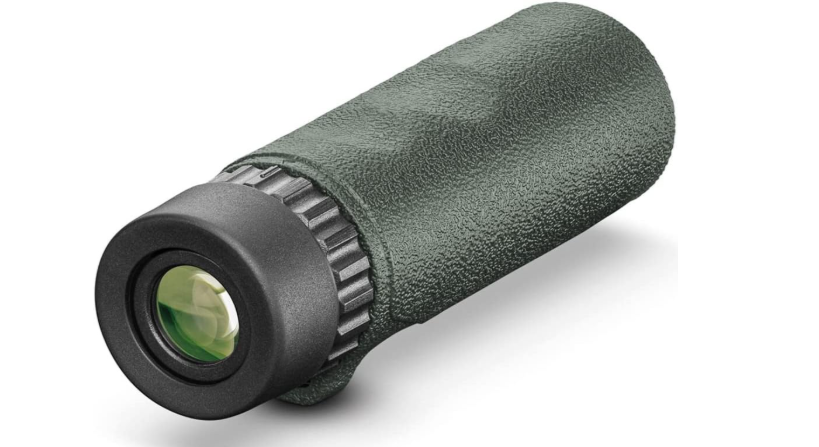
5.Hawke Endurance ED 8×25 Monocular Green
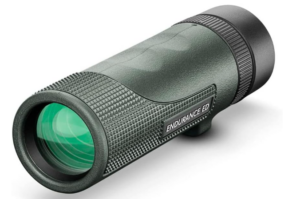
The Hawke Endurance ED 8×25 is a compact option that fits strongly within the discussion of the Best Lightweight Monocular for Bird Watching, especially for users who value portability and quick field use over extreme magnification. Its 8x magnification combined with a 25mm objective lens creates a setup that prioritizes stability, wide usability, and ease of tracking moving birds. This lower magnification also reduces image shake, which is a major advantage for handheld bird watching without a tripod.
Optically, the Endurance ED 8×25 is built around extra low dispersion glass, which improves clarity by reducing chromatic aberration and enhancing edge definition. Combined with fully multi coated optics, the monocular delivers bright, sharp, and color accurate images even in variable lighting conditions. Birds appear well defined against complex backgrounds, making it easier to identify species in wooded areas, open fields, or coastal environments. The high resolution phase corrected BAK 4 roof prisms further refine image quality by improving contrast and maintaining sharpness across the viewing field, which is important when tracking birds in motion.
The compact 25mm objective lens keeps the monocular extremely portable while still allowing enough light transmission for daylight bird watching. While it is not designed for very low light performance compared to larger 42mm or 55mm models, it excels in bright to moderate lighting conditions where most casual birding occurs. Its 105mm optical tube length and 5.3 ounce weight make it one of the most pocket friendly options in its category, allowing users to carry it effortlessly during hikes or travel without feeling burdened.
Focusing is handled through a two turn focus knob that allows precise adjustments when switching between near and distant subjects. This is especially useful when observing birds moving between branches at different distances or when scanning mixed terrain. The close focus capability also allows users to observe nearby wildlife and fine environmental details, adding versatility beyond distant viewing alone.
Durability is maintained through a lightweight rubber coated chassis that improves grip and protects the internal optics from minor impacts and outdoor wear. The stay on lens covers provide additional protection, ensuring the lenses remain clean and safe from dust or scratches during transport and storage. This makes the monocular well suited for frequent field use where gear is constantly exposed to changing conditions.
Overall, the Hawke Endurance ED 8×25 is designed for bird watchers who prioritize mobility and ease of use. It delivers high quality optical performance in a small, travel friendly form factor, making it especially suitable for spontaneous birding, hiking trips, and situations where carrying minimal gear is essential.
Key Specifications
| Specification | Details |
|---|---|
| Brand | Hawke |
| Model | Endurance ED 8×25 |
| Magnification | 8x |
| Objective Lens Diameter | 25 mm |
| Glass Type | Extra Low Dispersion (ED) |
| Prism Type | Phase Corrected BAK 4 Roof Prism |
| Optical Coating | Fully Multi Coated |
| Optical Tube Length | 105 mm |
| Weight | 5.3 oz |
| Focus Type | Two Turn Manual Focus |
| Chassis | Rubber Coated |
| Lens Covers | Stay On Covers |
Pros
- Extremely lightweight and pocket friendly design
- Low magnification reduces hand shake significantly
- ED glass improves clarity and color accuracy
- Sharp and high contrast image quality
- Easy to carry for long hikes or travel
- Fast and precise focusing system
- Durable rubber coated body
- Good option for quick, spontaneous bird watching
Cons
- 25mm objective lens limits low light performance
- Less powerful magnification compared to 10x or 15x models
Also Read: Best Monocular for Bird Watching
Advantages of the Best Lightweight Monocular for Bird Watching
1. Portability That Encourages Real Field Use
A lightweight monocular for bird watching solves one of the biggest real world problems in birding, which is simply carrying gear consistently. Devices like the Hawke Endurance ED 8×25 or Vortex Solo 10×36 are small enough to fit into a pocket or clip onto a strap, meaning they are far more likely to be with you when a bird suddenly appears. This changes behavior in a practical way because heavy binoculars often stay at home or in a bag when users decide they “don’t feel like carrying them.” The trade off is that compact size naturally limits light gathering and field depth compared to larger optical systems, but the increase in actual usage makes this a major advantage.
2. Faster and Simpler Target Acquisition
Birds rarely stay still, so speed matters more than people expect. A monocular allows single handed operation, meaning you can lift, locate, and focus quickly without aligning two barrels like binoculars. Models such as the Gosky 15×55 and Bushnell Legend 10×42 make it easier to respond instantly when movement is spotted. This is especially useful in dense environments where birds appear and disappear quickly. The limitation is that higher magnification models can become harder to stabilize, so you gain speed but sometimes lose steadiness if technique is poor.
3. Lower Physical Strain During Long Use
Weight becomes a serious factor during extended bird watching sessions. A monocular in the 5 to 12 ounce range reduces fatigue significantly compared to heavier binocular setups. This allows longer scanning sessions in open fields, wetlands, or forest edges without discomfort. Products like the Hawke Nature Trek 10×42 are designed to stay comfortable even after prolonged use. However, lighter construction often means less damping against hand movement, so slight shaking becomes more noticeable unless the user maintains a steady grip.
4. Strong Optical Performance in Modern Designs
Modern monoculars are far more capable than older compact optics. Features such as BAK 4 prisms, fully multi coated lenses, and ED glass found in models like the Bushnell Legend and Hawke Endurance ED deliver sharp, high contrast images with good color accuracy. This makes identifying birds easier, especially when distinguishing subtle markings. The limitation is physics: smaller lenses still collect less light than larger binocular systems, so performance drops faster in low light conditions such as dawn or dusk.
5. Smartphone Integration for Documentation
Some monoculars, especially the Gosky 15×55, include smartphone adapters that allow users to capture photos and videos directly through the optic. This is useful for documenting rare sightings, sharing observations, or building personal birding records. It effectively turns a simple monocular into a hybrid observation and recording tool. The drawback is that smartphone alignment requires stability and practice, and even minor movement can ruin image quality during capture.
6. Comfortable Viewing for Different Users
Features like adjustable eyecups, long eye relief, and twist up designs improve usability for both eyeglass wearers and non wearers. Models such as the Vortex Solo 10×36 and Bushnell Legend 10×42 are designed to reduce eye strain during extended observation. This makes them more accessible to a wider range of users. The limitation is inconsistency across models, where cheaper options may not offer the same level of comfort adjustment.
7. Reliable Performance in Outdoor Conditions
Weather resistance is a key advantage in real field environments. Waterproof, fog proof, and nitrogen sealed designs in monoculars like the Vortex Solo and Bushnell Legend ensure functionality in rain, humidity, and temperature shifts. Rubber armored bodies also improve grip and durability when conditions get rough. The trade off is that sealing and reinforcement add weight and cost, meaning ultra compact models may sacrifice some protection.
8. More Affordable Entry Into Quality Optics
Lightweight monoculars provide a cost effective entry point into serious bird watching compared to premium binoculars or spotting scopes. Even higher quality models remain relatively accessible, making them suitable for beginners or casual users. This lowers the barrier to entry while still offering strong optical performance. The downside is that as users become more experienced, they may eventually outgrow monoculars and move toward higher end binocular systems for better low light performance and wider viewing fields
Factors to Consider When Choosing the Best Lightweight Monocular for Bird Watching
1. Magnification Level and Viewing Stability
Magnification determines how close distant birds appear, but higher power is not automatically better. Lower magnification offers a wider field of view and reduces image shake, making it easier to track fast moving birds. Higher magnification provides more detail but demands steadier hands or support, otherwise the image becomes difficult to keep stable. The key is balance, since overly powerful optics can actually reduce usability in real birding situations where movement is constant.
2. Objective Lens Size and Light Gathering Ability
The size of the objective lens directly affects how much light enters the monocular, which impacts brightness and clarity. Larger lenses generally perform better in low light conditions such as early morning or late evening bird activity. However, increasing lens size also increases weight and bulk, reducing portability. Smaller lenses improve compactness but may struggle in dim environments, so the choice depends on whether portability or brightness is the priority.
3. Optical Glass Quality and Lens Coatings
The quality of glass and coatings determines how sharp and accurate the final image appears. High quality prisms and advanced coatings improve light transmission, reduce glare, and enhance contrast, which is essential for identifying subtle feather patterns and colors. Poor optical construction can result in dull, distorted, or hazy images even if magnification is high. This factor is critical because optical quality often matters more than raw magnification.
4. Weight and Portability
Weight is one of the most important practical factors because it affects whether the monocular is actually carried and used. Lighter designs reduce fatigue during long walks and make it easier to keep the device accessible at all times. Heavier models may offer more stability but can discourage frequent use. True effectiveness in bird watching depends on convenience, since equipment that is left behind provides no value in the field.
5. Focus System Precision and Speed
A good focus system allows quick and accurate adjustment when switching between nearby and distant subjects. Smooth and responsive focusing is essential when observing moving birds that do not stay in one position for long. If the focus mechanism is stiff or slow, users may miss important viewing moments. Precision is just as important as speed, since slight misfocus can hide important identification details.
6. Durability and Build Protection
Outdoor environments expose optical devices to moisture, dust, impacts, and temperature changes. A durable build ensures the monocular can withstand repeated field use without losing performance. Protective coatings, reinforced housing, and sealed construction help prevent internal damage and maintain clarity over time. Without proper durability, even a high performing optic can quickly degrade under real outdoor conditions.
7. Weather Resistance Capability
Bird watching often happens in unpredictable weather, so resistance to fog, rain, and humidity is essential. Proper sealing prevents internal condensation that can blur vision, while waterproof construction protects internal components from damage. Fog resistance is especially important when moving between temperature zones such as shaded forests and open sunlight. Without these protections, usability becomes limited to ideal weather conditions only.
8. Eye Comfort and Usability Design
Comfort features determine how long a user can observe without strain. Adjustable eyecups, proper eye relief, and ergonomic design allow both glasses wearers and non wearers to use the monocular effectively. Poor eye comfort leads to fatigue, reduced focus, and shorter observation sessions. Since bird watching often requires patience and long viewing periods, comfort becomes a major factor in overall satisfaction and usability.
Best Lightweight Monocular for Bird Watching are a practical solution for users who want mobility without completely sacrificing optical performance. Across the different models discussed, the clear advantage is their ability to stay accessible in real field conditions where heavier equipment often gets left behind. They provide enough magnification and clarity to identify birds effectively, while remaining compact enough to carry comfortably during long walks, hikes, or travel. Even with differences in lens size, optical glass, and build quality, they all share a core strength in improving how quickly and easily users can respond to sightings in the field.
What makes these monoculars genuinely valuable is the balance they strike between convenience and capability. Features like multi coated optics, BAK 4 prisms, weather resistance, and ergonomic design ensure they perform reliably in outdoor environments, while still staying simple to use. Although they do not fully replace high end binocular systems in every situation, they excel in portability, speed, and everyday usability. For most bird watchers, especially those who prioritize being ready at all times, this category offers a realistic and effective way to improve observation without unnecessary bulk or complexity.