
Lets dive into Best Binoculars for Alaska Cruise. Most people show up to an Alaska cruise completely unprepared for how far everything actually is, and then wonder why the experience feels underwhelming. I don’t make that mistake. The right binoculars change everything by bringing distant wildlife, glaciers, and landscapes into clear, detailed view instead of leaving you guessing at shapes on the horizon.
In this guide, I’ll break down exactly what makes binoculars suitable for Alaska conditions, from optical clarity to weather resistance, and I’ll walk through the top picks that actually perform, not just look good on paper. I’ll also cover the key factors you need to consider before buying and answer the most important questions so you don’t end up choosing something that fails when it matters most.
Best Binoculars for Alaska Cruise
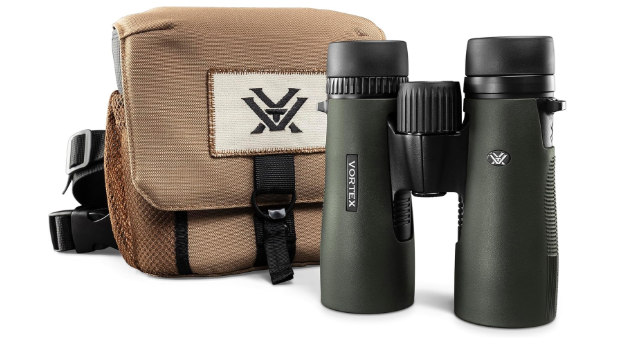
1). Vortex Optics Diamondback HD 8×42 Binoculars
The 8x magnification paired with 42mm objective lenses hits a practical balance. Higher magnification sounds impressive until your hands start shaking on a moving ship. This setup keeps the image stable while still pulling distant wildlife into clear view. The HD optical system uses selected glass elements that improve resolution and reduce color fringing, so what you see isn’t washed out or distorted. That matters when you’re trying to spot subtle details like a whale’s fin or the texture of ice formations.
Light performance is where most budget binoculars fall apart, especially in Alaska’s unpredictable weather. These don’t. Fully multi coated lenses increase light transmission across all surfaces, while dielectric coatings keep images bright and color accurate even in low light. Early mornings, foggy horizons, or overcast skies won’t kill your visibility. Add the Armortek coating, and you’re not constantly worrying about scratches or smudges ruining your view.
Usability is straightforward, which is exactly what you want when conditions aren’t ideal. The adjustable eyecups work whether you wear glasses or not, and the center focus wheel lets you dial in sharpness quickly without fiddling around. The diopter adjustment handles differences between your eyes, which is often ignored but makes a noticeable difference in clarity. The rubber armor gives a solid grip, important when your hands are cold or the deck is wet, and the option to mount it on a tripod or window adds stability when needed.
Durability isn’t optional on a cruise like this. Argon purging and O ring seals keep water and fog out, so you’re not dealing with internal condensation. The construction can handle bumps and rough handling without falling apart. And the included GlassPak harness is more useful than it sounds, keeping the binoculars accessible without hanging awkwardly around your neck.
The lifetime VIP warranty is aggressive in a good way. It’s fully transferable and covers repairs or replacement if something goes wrong. That said, it won’t save you from losing them or damaging them carelessly, so don’t treat it like a safety net for bad habits.
Pros
- Clear and sharp image with strong color accuracy
- Reliable performance in low light and cloudy conditions
- Comfortable to use with or without glasses
- Durable build with solid grip and protection
- Waterproof and fogproof for harsh environments
- Tripod adaptable for added stability
Strong lifetime warranty coverage
Cons
- Not the most compact option for travel
2). Celestron Nature DX 8×42 Binoculars
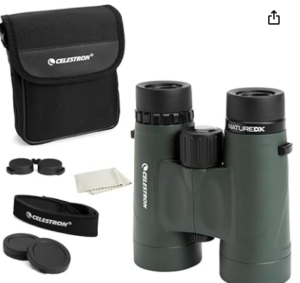
The 8x magnification is a deliberate choice, not a compromise. Anything higher sounds attractive until you’re trying to steady your hands on a moving ship. Here, you get enough reach to observe whales, seabirds, and distant shorelines while keeping the image stable. Paired with 42mm objective lenses, the binoculars maintain a solid level of brightness without becoming bulky. This combination works well when lighting shifts quickly, which is common in Alaska.
Optical quality is where this model proves its value. Fully multi coated lenses improve light transmission, while phase coated BaK 4 prisms enhance contrast and resolution. The result is a clear, sharp image with accurate colors instead of the dull or hazy views you get from lower tier optics. Early morning fog, overcast skies, or late evening light won’t degrade the image as much as you’d expect at this price level.
The 7.4 degree field of view gives you a wider window to track movement. That matters more than most people realize. Wildlife doesn’t sit still, and a narrow field will have you constantly searching instead of observing. This wider perspective makes it easier to follow birds in flight or scan open water without losing your subject.
Build quality is solid enough for real use, not just marketing claims. The rubber armored polycarbonate housing absorbs minor impacts and provides a secure grip, which becomes important when conditions are wet or your hands are cold. Waterproof construction and nitrogen purging prevent internal fogging, so you’re not dealing with condensation when moving between temperatures or facing rain and sea spray.
It also includes a tripod adaptable design, which is useful for longer viewing sessions. While handheld use is comfortable, mounting it gives you more stability when you want to observe distant details without fatigue. The warranty and support from Celestron add reassurance, although relying on warranty instead of taking care of your gear is a mistake many beginners make.
Pros
- Clear and bright image with strong contrast
- Wide field of view makes tracking moving subjects easier
- Lightweight and compact for travel and long use
- Waterproof and fog resistant for harsh conditions
- Comfortable grip with durable exterior
- Tripod adaptable for stable viewing
- Reliable warranty and brand support
Cons
- Not as rugged as higher end premium binoculars
- Tripod adapter not included in the box
3). Bushnell H2O Waterproof 10×42 Binoculars
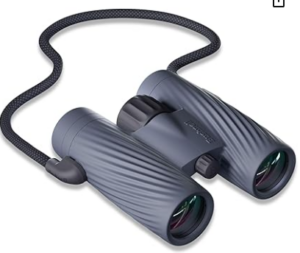
The Bushnell A3 Binoculars tries to sit in that middle ground, but you need to understand where it actually delivers and where it cuts corners.
The compact design is useful, especially when you’re moving around the deck or packing light. These are easy to carry and won’t feel like dead weight after a few hours. But compact always comes with a trade off. You’re not getting the same light gathering power as bulkier models, so while they’re comfortable for longer viewing sessions, they’re not built for pushing visibility to the extreme.
Optically, they do a respectable job. Fully multi coated lenses provide decent clarity and contrast, enough for spotting wildlife and scanning landscapes without constant strain. The EXO Barrier coating is a practical addition, not marketing fluff. Water, oil, and dust don’t cling easily to the lenses, which means less time cleaning and more time actually observing. On a damp, windy cruise, that’s more valuable than most people realize.
Durability is handled well for this category. The IPX7 waterproof rating and fogproof construction mean you won’t run into immediate issues with rain or sudden temperature changes. The rubber armor with a wave texture gives a secure grip, which matters more than you think when your hands are wet or cold. Cheap binoculars slip, these don’t.
The Snap Lock system is one of those features that sounds minor but changes usability. Attaching and removing the binoculars quickly makes a difference when you’re constantly picking them up and putting them down. It’s built for movement, not for people who want to baby their gear.
That said, don’t confuse convenience with performance. These are built to be practical and portable, not to compete with higher tier optics in image depth or low light conditions. The included accessories and lifetime warranty add value, but they don’t compensate if your priority is maximum viewing quality.
Pros
- Compact and lightweight for easy travel
- Clear and crisp image with good contrast
- Lens coating repels water and dirt effectively
- Waterproof and fog proof for outdoor reliability
- Secure and comfortable grip in wet conditions
- Quick attach strap system improves usability
- Comes with useful accessories and warranty
Cons
- Lower light performance compared to larger binoculars
4). Nikon Prostaff P3 8×42 Binoculars
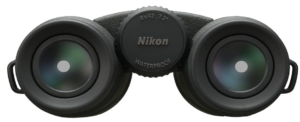
Nikon Prostaff P3 8×42 Binoculars earns its spot because it leans harder into optical clarity than most in its class, not just convenience features. The 8x magnification with large 42mm objective lenses gives you a balanced setup that actually works on a moving cruise ship. You get enough reach to observe distant wildlife without the shaky image that comes with higher magnification. More importantly, those larger lenses pull in more light, which keeps images usable during early mornings, late evenings, and overcast conditions. That’s where cheaper binoculars fall apart.
Optical performance is where this model separates itself. Multilayer-coated lenses reduce reflections and push more light through the system, while the silver-alloy prism coating improves brightness and contrast. The result is a cleaner, more vibrant image with better color accuracy. You’re not just seeing shapes in the distance, you’re picking up real detail and natural color, which matters when you’re scanning glaciers, water, and wildlife under constantly changing light.
The build is designed for actual outdoor use, not just spec sheets. O ring seals and nitrogen purging keep moisture out, preventing internal fogging when the weather shifts. That reliability matters more than most people admit. If your binocular fogs up mid-cruise, it’s useless. The fiberglass-reinforced polycarbonate body keeps the weight down while maintaining durability, and the rubber armor adds grip so you’re not fighting to hold it steady in wet conditions.
Comfort is handled well, which is critical if you plan to use binoculars for more than a few minutes. The turn and slide eyecups and long eye relief make it usable whether you wear glasses or not. The central focus wheel is smooth and responsive, letting you adjust quickly when your subject moves. The ergonomic shape improves balance, so it doesn’t feel awkward during extended viewing sessions.
That said, don’t pretend this is a premium optic killer. It’s not. It focuses on delivering strong clarity and reliability at a reasonable level, not pushing into elite performance territory.
Pros
- Bright and sharp image with strong color accuracy
- Performs well in low light and changing conditions
- Durable and weather resistant construction
- Comfortable design for extended use
- Lightweight yet sturdy build
- Smooth and precise focusing system
Cons
- Does not reach the optical performance of high end models
- Field of view is not the widest in its category
5). Nikon Monarch 7 8×42 Binoculars
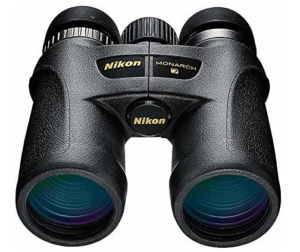
Nikon Monarch 7 8×42 Binoculars sits in a more serious category because it prioritizes image quality and field of view in a way many mid-range binoculars simply don’t.
The first thing you notice is the unusually wide field of view. That sounds technical until you’re trying to track a whale surfacing or a bird cutting across open water. Narrow views force constant searching. This one gives you more visual space, which reduces frustration and improves tracking speed. On a moving cruise deck, that advantage matters more than people expect.
Optical performance is where it starts separating itself. Extra low dispersion glass improves brightness and reduces color distortion, which is critical when you’re dealing with reflective water, snow, and shifting coastal light. Dielectric high reflective multilayer prism coatings work across all lenses and prisms to maintain contrast and keep colors accurate instead of washed out or artificially dull. You get a more realistic image, not a softened version of it.
The roof prism system with phase correction keeps fine details intact, which becomes important when you’re trying to distinguish wildlife from background terrain. Combined with the anti reflective multicoated lens system, the image stays cleaner in challenging lighting conditions like fog, overcast skies, or early morning haze.
Durability is not treated as an afterthought. The rubber armored body improves grip and gives it enough protection to handle rough handling on boats, docks, and backpacks. Nitrogen filling prevents internal fogging, and waterproof sealing keeps moisture out entirely. That’s not optional in Alaska; it’s mandatory if you don’t want gear failure mid-trip.
Comfort also holds up. Despite being more advanced optically, it remains manageable for extended viewing sessions without feeling overly bulky or fatiguing. That balance is important because binocular fatigue is real when you’re scanning constantly for wildlife.
Now the blunt part: this is not a budget-friendly option, and it shouldn’t be judged like one. You are paying for optical quality and field performance, not convenience or entry-level accessibility. If you don’t actually care about seeing detail clearly, you’re wasting money here.
Pros
- Very wide field of view for easier tracking
- High contrast and accurate color reproduction
- Strong brightness in low and mixed lighting conditions
- Excellent detail preservation with phase correction
- Durable, waterproof, and fog resistant build
- Comfortable grip for extended use
- Reliable performance in harsh environments
Cons
- Higher price compared to standard binoculars
- Not the lightest option for travel packing
6). Nikon Monarch M5 8×42 Binocular
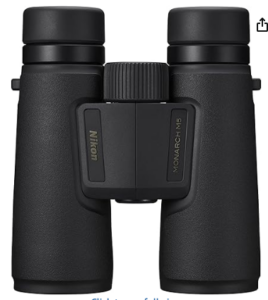
Nikon Monarch M5 8×42 Binoculars is not just a minor variation in the lineup. It’s tuned more aggressively for clarity and usability in real outdoor conditions.
The biggest advantage starts with the ED glass. Extra low dispersion glass reduces chromatic aberration and color fringing, which is a common weakness in cheaper optics. In practical terms, that means you don’t get those distracting color edges around birds, cliffs, or distant boats. Instead, you get a cleaner, more accurate image. On an Alaska cruise where everything is high contrast, water, ice, sky, that difference is not subtle.
Light handling is another strong point. Dielectric high reflective multilayer prism coatings improve light transmission, giving you brighter and more natural colors even when conditions are poor. Dawn cruises, foggy coastlines, and shaded fjords are where weaker binoculars collapse into dullness. This model holds detail better, so you are not just seeing silhouettes.
The wide field of view is not a marketing extra, it changes how usable the binoculars feel. Tracking moving wildlife becomes less frustrating because you don’t constantly lose the subject out of frame. Combined with smooth central focusing and decent close focus capability, you can shift from distant landscapes to nearby details without fighting the optics.
Build quality is aligned with real outdoor use. The nitrogen purged, O ring sealed body keeps it waterproof and fog proof, so sudden weather shifts or temperature changes won’t fog the inside. The rubber armored exterior improves grip and shock resistance, which matters more than people admit when you’re on a wet deck or moving between locations quickly. Adjustable eyecups also make it more comfortable for eyeglass wearers during long sessions.
Now the reality check. This is still not a premium flagship optic. It improves clarity and usability, but it does not push into ultra high-end territory where edge-to-edge sharpness and extreme low light performance become exceptional. If you expect “perfect image quality,” you are buying the wrong tier entirely.
Pros
- Very clear image with reduced color fringing
- Strong performance in low light and changing weather
- Wide field of view makes tracking easier
- Comfortable focusing and good close focus ability
- Waterproof and fog proof construction
- Lightweight and easy to handle for long use
- Natural and accurate color reproduction
Cons
- Not as sharp at the edges as higher end models
- Still limited in extreme low light compared to premium optics
Advantages of Using Binoculars on an Alaska Cruise
1. Better wildlife viewing
Binoculars let you actually identify animals instead of just spotting movement. In Alaska, wildlife is often far from the ship. Without magnification you see vague shapes, but with binoculars you can distinguish whales surfacing, eagles flying, or seals resting on ice. This turns random sightings into clear, meaningful observation.
2. Clearer distant scenery
Alaska’s landscapes are huge and far away. Glaciers, mountains, and fjords can look flat or faded from a distance. Binoculars bring these details closer, revealing textures in ice, rock layers, and landscape depth that your eyes cannot pick up alone. It makes the scenery feel more real and detailed.
3. Improved performance in poor light
Weather in Alaska is often cloudy, foggy, or low light. Good binoculars help maintain brightness and contrast when visibility drops. Instead of the view turning dull or grey, you still get usable detail in early morning or evening conditions.
4. Easier tracking of moving subjects
Wildlife moves quickly and unpredictably, and the ship is also moving. Binoculars with a good field of view make it easier to follow birds in flight or whales surfacing without losing them. Without them, you constantly lose sight and waste time searching again.
5. More detail and clarity
Binoculars reveal fine details like animal markings, glacier cracks, and coastline structure. These are completely invisible to the naked eye at distance. This added detail makes the experience more informative and visually engaging.
6. More immersive experience
Seeing something clearly creates a stronger emotional connection than guessing what it is. Watching a whale breach or an eagle hunt in detail feels far more impactful than seeing a distant splash or silhouette. Binoculars make the trip more engaging instead of passive.
7. Better use of time on the cruise
Without binoculars, you miss or misunderstand many sightings. With them, every moment of scanning the horizon becomes productive. You spend less time wondering what you’re seeing and more time actually observing
Factors to Consider When Choosing the Best Binoculars for Alaska Cruise
1. Magnification level
Magnification determines how close distant objects appear, but higher is not always better. For an Alaska cruise, moderate magnification is more practical because the ship is moving and so are many subjects like wildlife. Too much magnification amplifies hand shake and makes it harder to keep subjects in view. A balanced level gives enough detail without turning the image unstable or difficult to track.
2. Objective lens size
The size of the front lenses affects how much light enters the binoculars. Larger lenses generally produce brighter images, which is important in Alaska where weather is often cloudy or dim. However, very large lenses add weight and bulk, which can be tiring during long viewing sessions. The ideal choice balances brightness with portability so you can use them comfortably for extended periods.
3. Optical quality and coatings
Lens quality and coatings determine how sharp, bright, and color accurate the image will be. In low light or foggy conditions, poor optics produce dull or washed out views. Good coatings reduce reflections and improve contrast, helping you see clearer details in landscapes and wildlife. This factor is crucial because Alaska’s lighting conditions change frequently throughout the day.
4. Field of view
Field of view refers to how wide an area you can see through the binoculars. A wider view makes it easier to locate and track moving subjects like birds or whales. A narrow view forces constant searching, which can cause you to lose sight of what you were watching. On a moving cruise ship, a wider field significantly improves usability and reduces frustration.
5. Low light performance
Alaska often presents challenging lighting such as early mornings, late evenings, fog, and overcast skies. Binoculars that perform well in low light allow you to still see clear details when conditions are not ideal. Poor low light performance results in dark, unclear images where details disappear. This factor directly affects how often your binoculars are useful during the trip.
6. Durability and weather resistance
The environment on a cruise can expose gear to moisture, cold, wind, and occasional impact. Binoculars need to withstand these conditions without internal fogging or water damage. Sealed construction and protective exterior materials help ensure reliability. If this factor is ignored, performance can fail at the worst possible time when wildlife is in view.
7. Comfort and ergonomics
Since binocular use often involves long periods of scanning the horizon, comfort becomes important. Weight, grip design, and ease of focusing all affect how long you can use them without strain. Adjustable eyecups also matter for users with or without glasses. Poor ergonomics lead to fatigue and reduce how often you actually use the binoculars.
8. Ease of focus and tracking
Quick and smooth focusing is important when subjects move suddenly or change distance. A good focusing system allows fast adjustments without losing sight of what you are observing. If focusing is slow or stiff, you may miss key moments like wildlife activity. On a cruise where everything is in motion, responsive focus is essential for effective viewing.
Read also: Best Camping Gear Under $200 (Full Setup)
Frequently Asked Questions about Best Binoculars for Alaska Cruise
1. Do you really need binoculars for an Alaska cruise?
Yes, unless you’re fine with seeing distant shapes instead of real detail. Wildlife and landscapes are often far from the ship, and your eyes alone won’t capture texture, movement, or identifying features. Binoculars turn vague sightings into clear, meaningful moments.
2. What magnification works best for an Alaska cruise?
Moderate magnification is the smart choice. Higher magnification sounds appealing but becomes shaky and hard to control on a moving ship. A balanced level keeps images stable while still bringing distant subjects close enough to observe clearly.
3. Are bigger binoculars always better?
No, and this is where many people get it wrong. Larger binoculars gather more light, which improves brightness, but they are heavier and harder to carry for long periods. The goal is balance, not maximum size.
4. How important is low light performance?
Very important. Alaska’s weather is often cloudy, foggy, or dim. If your binoculars struggle in low light, you’ll lose detail exactly when conditions get interesting. Good light handling keeps the image usable throughout the day.
5. What does field of view actually affect?
It determines how much you can see at once. A wider view makes it easier to find and follow moving wildlife like birds or whales. A narrow view forces constant searching, which quickly becomes frustrating.
6. Do binoculars need to be waterproof?
Yes. Moisture, rain, and temperature changes are common on cruises. Without proper sealing, binoculars can fog internally or get damaged. Weather resistance is not optional in this environment.
Conclusion
Most people underestimate how demanding Alaska’s conditions are and end up with gear that limits what they can actually see. The best binoculars for Alaska cruise discussed here stand out because they focus on what truly matters in that environment: stable magnification, strong light performance, wide viewing angles for tracking movement, and reliable weather resistance.
Instead of struggling with dim, shaky, or unclear views, these options deliver consistent clarity, better detail, and usability in real conditions. The result is a more complete and engaging experience, where you’re not just looking at the scenery but actually observing it with precision.