
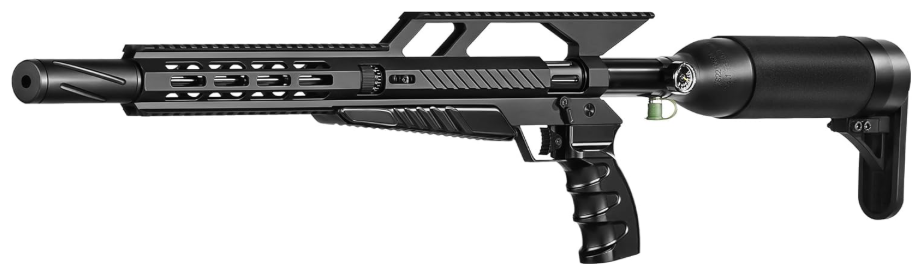
The Best PCP Air Rifles for Target Shooting are designed for one thing above everything else: consistent, repeatable accuracy under controlled conditions. In this guide, I focus on what actually matters when selecting a PCP platform for precision work, stripping away marketing noise and highlighting the real performance factors that affect grouping, stability, and shot-to-shot reliability.
1. GAMO Arrow PCP Air Rifle, Multi-Shot 10X Magazine, Straight Pull Charging Handle, Whisper Fusion Noise Dampening, CAT 2-Stage Trigger, Open Sights
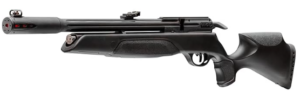
The GAMO Arrow PCP Air Rifle is a pre charged pneumatic platform designed for fast follow up shots, consistent target practice, and reduced manual effort compared to spring powered rifles. It uses a 105cc onboard air cylinder filled up to 232 bar, delivering a usable shot string of roughly 30 shots per fill depending on pellet weight and setup. The rifle is offered in .177 and .22 calibers, with .177 generally favoring tighter target groups while .22 provides more impact energy.
It runs a straight pull bolt system paired with a 10 round rotary magazine, allowing rapid firing without breaking shooting position. This makes it more efficient for training drills and repeated target engagement. The CAT two stage trigger is adjustable, letting the shooter fine tune first and second stage travel for a cleaner break, though poor adjustment can negatively affect consistency if not set correctly. The rifle also includes Whisper Fusion noise dampening, which reduces sound output compared to standard air rifles but does not make it silent in real use.
Build-wise, it weighs about 5 pounds with a synthetic stock and metal barrel assembly, making it light and easy to handle during extended sessions. It includes open sights but is primarily intended for scope use via its 11mm dovetail rail. A built in pressure gauge and quick fill system are included for monitoring and refilling the air reservoir.
Performance depends heavily on pellet quality, fill consistency, and shooter discipline. While the platform is marketed for accuracy, real world grouping is strongly influenced by optics choice and trigger tuning rather than the rifle alone.
Key Specifications
- Power system: Pre charged pneumatic (PCP)
- Air reservoir: 105cc onboard cylinder
- Maximum fill pressure: 232 bar
- Caliber options: .177 and .22
- Magazine: 10 shot rotary magazine (10X system)
- Action: Straight pull bolt system
- Trigger: CAT two stage adjustable trigger
- Noise reduction: Whisper Fusion system
- Barrel: Rifled steel barrel
- Weight: ~5 lbs
- Stock: Synthetic polymer construction
- Optics mounting: 11mm dovetail rail
- Sights: Open sights included
- Pressure monitoring: Built in gauge
- Filling system: Quick fill connector
Pros
- Fast 10 shot follow up capability improves training flow
- PCP system removes heavy cocking effort
- Adjustable trigger allows tuning for precision control
- Lightweight design supports longer shooting sessions
- Compact build improves handling stability
- Lower noise output than traditional spring rifles
Cons
- Requires external PCP filling equipment (hidden cost factor)
- Accuracy depends heavily on pellet consistency and optics quality
2. Umarex Notos Carbine .22 Caliber PCP Pellet Gun Air Rifle
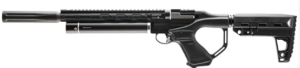
The Umarex Notos Carbine .22 is a compact pre charged pneumatic air rifle built for controlled shooting, steady shot cycles, and simplified handling. It uses a short 11.75 inch barrel and a regulated air system designed to keep shot performance more consistent across the air charge. In practical terms, this setup prioritizes repeatability over raw power, which is exactly what matters in target shooting and light precision work.
Power output is listed at around 700 fps with a 12 grain .22 pellet, which places it in a moderate velocity range. It uses a 7 shot auto indexing rotary magazine combined with a side lever action, allowing smooth and quick follow up shots without breaking shoulder position. The regulated air tank is one of the more important engineering choices here because it reduces velocity swings, which directly improves grouping consistency when shooting for accuracy.
The build is compact and uses metal for both barrel and frame components, giving it a more rigid feel compared to many lightweight polymer dominated PCP rifles. At around 5 pounds, it remains easy to handle, especially in extended target sessions. The fixed high pressure air system is integrated into the design rather than being oversized or external, reinforcing its compact carbine profile.
For practical shooting, the Notos is designed to work well for plinking, target practice, and small game use. However, its shorter barrel means it is not chasing maximum velocity or long range efficiency. Instead, it leans toward controllability and ease of use. Accuracy potential depends heavily on pellet selection, optic quality, and how consistently the rifle is filled and maintained. The included magazine system is efficient, but like most rotary systems, it rewards careful loading and consistent pellet quality.
Key Specifications
- Power system: Pre charged pneumatic (PCP)
- Caliber: .22
- Velocity: approximately 700 fps with 12 grain pellets
- Barrel length: 11.75 inches
- Magazine: 7 shot auto indexing rotary magazine
- Action: Side lever cocking system
- Air system: Fixed regulated high pressure air tank
- Barrel material: Metal
- Frame material: Metal
- Weight: approximately 5 lbs
- Intended use: Target shooting, plinking, small game applications
- Manufacturer: Umarex USA
- Magazine compatibility: Spare magazine part number 2254848
Pros
- Regulated system improves shot to shot consistency
- Compact carbine design is easy to handle and control
- Side lever action allows fast follow up shots
- Metal construction improves rigidity and durability feel
- Magazine system supports quick shooting rhythm
- Lightweight build reduces fatigue during long sessions
Cons
- Short barrel limits maximum velocity and long range efficiency
- 7 shot capacity is lower than many competing PCP systems
3. Umarex Komplete NCR N2-Powered .177 Caliber PCP Air Rifle
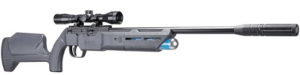
The Umarex Komplete NCR is not a traditional PCP rifle in the usual sense. Instead of relying on a pump or external tank, it uses a disposable high pressure nitrogen (N2) cartridge system. This design removes the need for compressors or hand pumps, which simplifies entry into air rifle shooting, but it also locks you into consumable cartridges. That tradeoff defines the entire platform.
Performance is rated at up to around 975 fps with 11.9 grain .177 pellets, producing roughly 25 foot pounds of energy. A regulator steps down the pressure to around 1,800 psi for consistent shot delivery, with claims of approximately 45 usable shots per cartridge. In target shooting terms, the regulated output is more important than peak velocity, because consistency between shots is what keeps group sizes tight.
The rifle comes with a 10 shot magazine system and includes two magazines in the package. It uses a Picatinny rail for optics mounting and ships with a 4×32 scope and rings, though serious target shooters will likely upgrade the optic for better clarity and parallax control. The MLOK compatible fore-end allows accessory mounting such as bipods, which improves bench stability during precision work.
Construction is metal for both barrel and frame components, giving it a solid and stable feel in hand. The system also integrates SilencAir noise reduction technology, which reduces report significantly compared to standard air rifles. This makes it more suitable for controlled environments where noise management matters.
The biggest design shift is the nitrogen cartridge system itself. It eliminates air filling equipment, which is convenient, but introduces recurring cost and dependency on proprietary consumables. It also changes how you think about shooting sessions, since each cartridge becomes a finite resource rather than a refillable air reservoir.
Key Specifications
- Power system: Disposable high pressure nitrogen (N2) cartridge system
- Cartridge pressure: approximately 3,600 psi (cartridge system)
- Regulated output pressure: approximately 1,800 psi
- Caliber: .177 (also available in .22 variants)
- Velocity: up to 975 fps (11.9 grain pellet)
- Energy output: approximately 25 ft-lbs
- Magazine capacity: 10 shot rotary magazines (2 included)
- Optics rail: Picatinny rail included
- Scope: 4×32 included with rings
- Accessory mounting: MLOK compatible fore-end
- Barrel material: Metal
- Frame material: Metal
- Noise reduction: SilencAir integrated system
- Estimated shots per cartridge: ~45+ (manufacturer claim)
- Manufacturer: Umarex USA
Pros
- No need for pumps, compressors, or external air tanks
- Regulated system improves shot consistency for target shooting
- Comes ready to shoot with scope and magazines included
- High velocity performance for a compact platform
- MLOK system allows stable accessory setup
- Reduced noise output improves shooting comfort
Cons
- Ongoing cost of disposable nitrogen cartridges
- Limited flexibility compared to refillable PCP systems
4. JTS AirStryke PCP Air Rifle
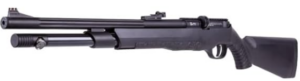
The JTS AirStryke is a regulated sidelever PCP air rifle built for shooters who want higher shot capacity, adjustable control, and more traditional full-size rifle handling. Compared to compact carbines, it leans toward stability and sustained shooting performance, using a larger 200cc air cylinder regulated up to 3000 PSI. This gives it a stronger emphasis on consistency across longer shooting sessions rather than ultra-compact handling.
Performance in .22 caliber is listed at around 820 fps depending on pellet weight, with a reported shot count of up to roughly 47 shots per fill in that configuration. The regulated system is the key factor here, because it smooths out pressure delivery and reduces velocity variation, which directly improves grouping consistency for target shooting. It is also available in .25 caliber, which shifts it more toward impact energy rather than precision work.
The rifle uses a sidelever action paired with a 10 round magazine system and includes two magazines in the package. This supports steady shooting rhythm without constant reloading interruptions. It also features a rifled barrel, adjustable trigger, manual safety, and integrated pressure gauges for monitoring air levels. The 19 inch barrel length contributes to better air utilization and improved shot stability compared to shorter carbines.
In terms of build, it weighs around 7 pounds with a synthetic stock, rubber buttpad, and textured grip surfaces designed for control during extended sessions. It includes both fiber optic sights and a Picatinny rail for optics, although serious target shooters will typically rely on a dedicated scope rather than iron sights. The overall layout is closer to a traditional precision rifle format than compact PCP carbines.
One important detail is that the rifle is internally suppressed. This reduces noise output, but like most “integrated suppression” systems in air rifles, it should be understood as noise reduction rather than true quiet operation. Real world sound levels still depend heavily on pellet choice and power setting.
Key Specifications
- Power system: Pre charged pneumatic (PCP)
- Caliber options: .22 and .25
- Velocity: up to 820 fps (.22 with 1.175g pellets)
- Air cylinder: 200cc onboard reservoir
- Maximum fill pressure: 3000 PSI
- Regulated system: Yes (internally regulated PCP)
- Shot count: up to ~47 shots per fill (.22 configuration)
- Magazine capacity: 10 shot rotary magazine
- Magazines included: 2
- Action: Sidelever bolt system
- Barrel: 19 inch rifled barrel
- Overall length: 41 inches
- Weight: approximately 7 pounds
- Stock: Synthetic with rubber buttpad and textured grip
- Optics mounting: Picatinny rail
- Sights: Adjustable fiber optic front and rear sights
- Safety: Manual safety
- Manufacturer: JTS Airguns
Pros
- Regulated system improves shot to shot consistency for target shooting
- Larger 200cc tank supports longer shooting sessions
- Sidelever action allows smooth and fast cycling
- 10 shot magazine with spare included improves shooting flow
- 19 inch barrel supports better stability and accuracy potential
- Adjustable trigger allows shooter customization
- Solid full size rifle platform improves stability on bench rest
Cons
- Heavier and less compact than carbine style PCP rifles
- Requires external filling equipment and setup cost
5. GamoGamo, Urban PCP .22 Caliber
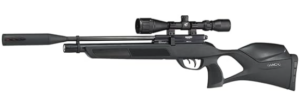
The GAMO Urban PCP is a regulated pre charged pneumatic rifle designed for consistent low recoil shooting, controlled accuracy, and efficient air usage. It uses a compact PCP system with a metal barrel and metal receiver, built for steady shot performance rather than high power output. This platform is commonly used for target shooting and controlled practice due to its predictable shot cycle.
It operates in .22 caliber and uses a 10 round magazine system for repeat fire capability. The PCP system is designed to deliver stable pressure output per shot, which is more important for grouping consistency than raw velocity. While some listings incorrectly mix BB and pellet specifications, the Urban PCP is fundamentally a pellet based rifle, not a BB semi automatic system.
The rifle features Whisper Fusion sound moderation, which reduces report compared to standard PCP rifles, although it does not eliminate noise completely. It is optics ready with an 11mm dovetail rail, allowing users to mount scopes for precision shooting. At around 6.6 pounds, it sits in a manageable weight range for bench work and field target practice.
Its strength is not speed or power but consistency. The Urban PCP is tuned for controlled energy delivery, which makes it suitable for shooters focused on tight grouping rather than hunting performance or high velocity output. However, like all PCP systems, performance depends heavily on pellet choice, fill consistency, and optic quality.
Key Specifications
- Power system: Pre charged pneumatic (PCP)
- Caliber: .22
- Magazine capacity: 10 rounds
- Barrel material: Metal
- Frame material: Metal
- Weight: approximately 6.6 lbs
- Overall length: approximately 45 inches
- Optics mounting: 11mm dovetail rail
- Sound reduction: Whisper Fusion system
- Intended use: Target shooting and controlled precision practice
- Manufacturer: Gamo
Pros
- Regulated PCP system improves shot consistency
- Metal construction improves rigidity and stability
- 10 round magazine supports steady shooting rhythm
- Good balance between weight and handling stability
- Quieting system reduces shooting noise compared to standard PCP rifles
- Optics ready platform supports precision setup
Cons
- Conflicting marketing specs reduce clarity and trust in product data
- Not designed for high power or long range performance
6. Gamo Swarm Magnum 10X GEN3i Air Rifle
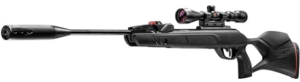
The Gamo Swarm Magnum 10X GEN3i is a high power gas piston air rifle built more for energy delivery and rapid follow up shots than precision target competition work. It uses Gamo’s IGT Mach 1 gas piston system with a large 33mm cylinder, designed to maximize pellet velocity and maintain consistent springless performance compared to traditional break barrel designs.
It is chambered in .177 caliber and uses a 10 shot rotary magazine system that auto advances using recoil driven inertia (GEN3i system). This allows quick firing without manually loading each shot, which increases shooting speed but also introduces more mechanical movement during firing cycles compared to single shot precision rifles. Listed velocity can reach up to 1650 fps with alloy pellets, though real world accuracy testing typically depends more on pellet weight selection than peak velocity claims.
The rifle features Whisper Fusion noise reduction, which helps reduce muzzle report through internal baffling chambers. It is also equipped with a recoil reducing rail designed to protect optics and improve scope stability under heavy recoil. A 3–9×40 scope is commonly included depending on package, though for serious target shooting, optic quality is still a limiting factor relative to the rifle’s power output.
At approximately 6.88 pounds, it remains relatively manageable in weight, but recoil characteristics are stronger than PCP systems due to the gas piston power plant. This makes follow up shot precision more challenging compared to regulated PCP rifles, especially for shooters focused purely on tight group consistency.
Key Specifications
- Power system: Gas piston (IGT Mach 1)
- Caliber: .177
- Magazine capacity: 10 shot GEN3i inertia fed system
- Velocity: up to 1650 fps (with alloy pellets)
- Barrel material: Aluminum
- Frame material: Metal
- Weight: approximately 6.88 lbs
- Noise reduction: Whisper Fusion system
- Optics rail: Recoil Reducing Rail (RRR) mount system
- Included optics: Often 3–9×40 scope (package dependent)
- Action: Break barrel with inertia magazine system
- Intended use: High power shooting, pest control, general field use
- Manufacturer: Gamo
Pros
- Very high velocity output compared to most air rifles
- 10 shot magazine increases shooting speed and convenience
- Gas piston system removes spring fatigue and tuning issues
- Whisper Fusion reduces noise compared to standard break barrels
- Recoil reducing rail helps protect mounted optics
- Suitable for users needing power and repeat shots
Cons
- Not optimized for precision target shooting consistency
Strong recoil compared to PCP platforms reduces tight grouping potential
7. Beeman PCP Underlever Air Rifle
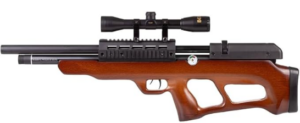
The Beeman PCP Underlever is a pre charged pneumatic air rifle built around a more traditional underlever cocking system, paired with a modern PCP air reservoir. This combination is designed to deliver controlled, repeatable shot performance while maintaining a stable shooting platform that favors precision over speed or raw power.
As a PCP system, it removes spring recoil entirely, which is a major advantage for target shooting. That absence of mechanical spring movement allows the barrel to remain more stable during firing, improving consistency in shot placement when paired with a good scope and proper pellets. The underlever mechanism is used to cycle the action and prepare the next shot without disturbing the shooter’s position as much as break barrel designs.
It uses a 10 round magazine system, making it a multi shot platform rather than a single load precision rifle. This improves shooting rhythm during practice sessions, but it also introduces the usual magazine dependent variables such as pellet alignment and loading consistency. The build combines wood, metal, and polymer materials, giving it a more traditional rifle feel compared to synthetic dominated tactical PCP platforms.
The listed weight appears inconsistent in published data, but in practical terms this type of platform typically sits in a mid weight category suitable for bench shooting and controlled field use. The rifled alloy steel barrel supports precision work, and the PCP system is the primary factor driving consistency rather than any cosmetic or stock design elements.
For target shooting, the biggest strength of this rifle is its stability and lack of recoil compared to gas piston or spring powered systems. However, like all PCP rifles, performance is still dependent on regulator consistency (if present), pellet quality, and fill discipline. It is not a high velocity or high energy platform; it is a control focused system.
Key Specifications
- Power system: Pre charged pneumatic (PCP)
- Action: Underlever cocking system
- Magazine capacity: 10 shot rotary magazine
- Barrel: Rifled alloy steel barrel
- Stock materials: Wood, metal, and polymer combination
- Air system: PCP reservoir (exact capacity not specified in listing)
- Caliber: Not clearly specified in provided listing
- Intended use: Target shooting and controlled precision practice
- Manufacturer: Beeman / S/R Industries
Pros
- PCP system eliminates spring recoil for improved shot stability
- Underlever design allows consistent cycling without heavy barrel movement
- Multi shot magazine supports smooth training sessions
- More stable shooting platform compared to gas piston rifles
- Suitable for bench rest and controlled accuracy work
- Traditional rifle feel may suit precision focused shooters
Cons
- Incomplete or unclear published specifications reduce transparency
- Magazine system introduces pellet alignment sensitivity
- Requires external PCP filling equipment and setup cost
- Not a high power or long range platform
- Likely requires optic upgrade for serious target shooting
- Less tactical handling advantage compared to modern PCP carbines
Also read: Best Scope for Air Rifle Target Shooting
Advantages of Using a PCP Air Rifle for Target Shooting
1. Consistency in shot-to-shot performance
PCP systems are valued mainly because they regulate air pressure before each shot. This means the pellet is pushed with nearly the same force every time, reducing velocity variation. In target shooting, this matters more than raw power. If your shots vary in speed, your groupings open up no matter how good your aim is. PCP rifles remove a large chunk of that inconsistency, which is why they dominate precision practice setups.
2. Zero recoil disruption
Unlike spring or gas piston rifles, PCP air rifles produce almost no mechanical recoil. There is no heavy piston slamming forward or spring vibration during firing. That matters because recoil—even small amounts—forces the shooter to re-stabilize the rifle after every shot. With PCP, the rifle stays relatively still, allowing you to focus on trigger control and follow-through instead of fighting movement.
3. Better accuracy potential at longer practice sessions
Because PCP rifles don’t fatigue internal springs and don’t shift point of impact as quickly over time, they maintain performance across longer shooting sessions. You can fire multiple magazines while still holding similar point-of-impact behavior, assuming your fill pressure stays stable. This makes them more suitable for structured training rather than casual single-shot plinking.
4. Multi-shot capability without breaking shooting position
Most PCP rifles use rotary magazines or multi-shot systems. This allows repeated firing without reloading pellets one by one. In target shooting, this is not just convenience—it improves rhythm. You stay in position, maintain your sight picture, and focus on correction between shots instead of constantly resetting your stance.
5. Trigger control refinement becomes more meaningful
Because PCP rifles remove recoil and vibration variables, the trigger becomes one of the few remaining factors affecting accuracy. This actually helps training. You quickly learn how small changes in trigger pressure affect grouping. In other rifle systems, recoil masks these errors, slowing down skill development.
6. Lower fatigue during training
PCP rifles require no heavy cocking effort per shot. That means you are not physically exhausting yourself during a long session. This matters more than people admit. Fatigue leads to poor stance, rushed shots, and inconsistent breathing. PCP systems let you focus purely on technique rather than mechanical effort.
7. More predictable platform for optics use
Since PCP rifles produce minimal recoil and vibration, scopes hold zero more reliably compared to break barrel or gas piston rifles. This improves repeatability when dialing adjustments or working on grouping consistency. It also makes them more forgiving when upgrading optics over time.
Factors to Consider When Choosing Best PCP Air Rifle for Target Shooting
1. Regulation and shot consistency
The most important factor in a PCP rifle for target shooting is whether it delivers consistent air pressure per shot. Without regulation, each pellet can leave the barrel at slightly different speeds, which destroys tight grouping even if everything else is perfect. A good system should minimize velocity variation across the usable shot string. If this is weak, nothing else in the rifle matters for precision work.
2. Barrel quality and length balance
The barrel is where accuracy is actually decided, not the marketing claims around the rifle. A properly manufactured rifled barrel with consistent internal finish will stabilize pellets more reliably. However, longer is not always better. Excess length can add weight and handling issues without improving grouping if the air system is not matched correctly. The key is balance between stability, pellet stabilization, and air efficiency.
3. Trigger quality and adjustability
A poor trigger ruins accuracy faster than most beginners expect. In target shooting, even small inconsistencies in pull weight or break point can shift point of impact. A good PCP rifle should offer a clean break and preferably adjustable stages so the shooter can fine tune control. If the trigger is vague or unpredictable, the shooter ends up compensating unconsciously, which increases grouping spread.
4. Air system capacity and efficiency
The size of the air reservoir and how efficiently it delivers shots determines how practical the rifle is for real training sessions. A small tank may require frequent refilling, breaking rhythm and reducing consistency over time. On the other hand, poor efficiency means wasted air per shot and unstable performance near the end of the pressure curve. A good system maintains usable consistency across a meaningful shot count, not just peak performance at the start.
5. Magazine reliability and feeding consistency
Multi shot PCP rifles rely on magazines, and this is often where hidden accuracy problems appear. If pellets are not aligned properly or the indexing system is inconsistent, it introduces variation before the pellet even reaches the barrel. For target shooting, smooth and repeatable feeding matters more than capacity. A flawed magazine system creates “random flyers” that shooters often blame on the rifle or optics.
6. Overall platform stability and recoil behavior
Even though PCP rifles have minimal recoil compared to other airgun types, platform stability still matters. Weight distribution, stock rigidity, and vibration control all influence how consistently the shooter can maintain sight alignment. A stable rifle reduces human error during follow through. A poorly balanced or flexible platform amplifies small mistakes, especially during longer shooting sessions where fatigue begins to show.
Frequently Asked Questions About Best PCP Air Rifles for Target Shooting
1. What makes a PCP air rifle better for target shooting compared to other air rifles?
PCP air rifles are preferred for target shooting because they deliver consistent shot-to-shot performance with minimal recoil. This consistency reduces grouping variation, making it easier to focus on technique rather than compensating for mechanical movement or velocity fluctuations.
2. Do all PCP air rifles give the same level of accuracy?
No. Accuracy varies widely between models. While all PCP systems remove spring recoil, differences in regulation, barrel quality, trigger design, and magazine consistency can significantly affect real-world precision. Some rifles are built for casual shooting, while others are closer to precision-focused platforms.
3. How important is a regulator in a PCP air rifle?
A regulator is very important for target shooting because it stabilizes air pressure before each shot. Without it, velocity tends to drop or fluctuate as the air tank empties. A regulated system helps maintain tighter groupings across a longer shooting session.
4. Does barrel length determine accuracy in PCP rifles?
Not directly. Barrel quality matters more than length. A longer barrel can improve air efficiency and stability in some setups, but only if the air system and pellet match are properly tuned. A well-made shorter barrel can outperform a poorly designed longer one.
5. Why do PCP air rifles use magazines instead of single loading?
Magazines are used to allow faster follow-up shots without breaking shooting position. In target shooting practice, this improves rhythm and efficiency. However, magazine quality matters because poor pellet alignment or indexing can reduce consistency.
6. Is a more powerful PCP air rifle always better for target shooting?
No. Higher power does not guarantee better accuracy. In many cases, moderate power levels offer better control and consistency. Target shooting depends more on stability, regulation, and trigger control than raw velocity or energy output.
7. Do PCP air rifles require a lot of maintenance?
They require less mechanical maintenance than spring-powered rifles, but they do need proper air system care. This includes safe filling practices, O-ring checks, and keeping moisture out of the system. Poor maintenance can affect consistency and long-term performance.
Conclusion
The Best PCP Air Rifles for Target Shooting ultimately come down to control, consistency, and how well the system removes variables that interfere with accuracy. Across all the platforms discussed, the clear pattern is that regulation quality, barrel performance, trigger behavior, and magazine reliability matter far more than advertised velocity or flashy features. A good PCP rifle does not make you accurate on its own; it simply ensures the rifle is not the limiting factor in your shooting results.
If you choose wisely, a PCP platform gives you a stable foundation for developing real precision skills over time, especially in structured target practice. However, choosing based on marketing claims alone leads to disappointment, because many rifles prioritize power or convenience over true consistency. The key is to match your expectations with the actual engineering purpose of the rifle, not its promotional description