
5 Best Air Rifle for Hunting Whitetail Deer

5 Best Air Rifle for Hunting Whitetail Deer

5 Best Air Rifle for Hunting Whitetail Deer is a topic that goes beyond power claims and focuses on choosing the right balance of accuracy, energy, and control for ethical hunting. These air rifles are often selected for their ability to deliver consistent performance through PCP systems, improved shot stability, and suitable caliber options that can handle medium game when used responsibly. They are not all equal, and the difference between a good hunting rifle and a poor choice usually comes down to consistency, effective range, and how well the shooter understands the limits of the platform.

In this guide, you will get a clear breakdown of key features that matter most, top picks based on real performance traits, a practical buying guide to help you avoid common mistakes, and FAQs that address the most important concerns hunters have. The goal is not just to list rifles, but to help you understand what actually works in the field and why many choices fail when used without proper judgment and discipline.

5 Best Air Rifle for Hunting Whitetail Deer


1. JTS Airacuda PRS Max PCP Air Rifle
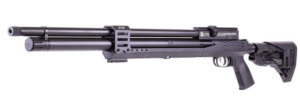
JTS Airacuda PRS Max PCP Air Rifle

The JTS Airacuda PRS Max PCP Air Rifle is a serious contender for hunters looking for a high power, regulated platform capable of delivering consistent performance in the field. Built in .22, .25, and .30 calibers, it is designed for shooters who want controlled power, solid shot capacity, and a structured shooting system rather than a casual plinker. For whitetail deer hunting, it positions itself as a precision focused PCP air rifle, but it is not a shortcut to ethical hunting success. Skill, shot placement, and proper caliber selection still matter more than raw specifications.

This rifle is built around a regulated PCP system, meaning it is designed to deliver more consistent pressure across shots compared to unregulated air rifles. The 220 cc cylinder operating at up to 3200 PSI provides a respectable shot count, reaching up to 40 shots in .22 caliber, though real world hunting use will usually prioritize a smaller number of highly accurate shots rather than maximum capacity. The inclusion of a rifled barrel and adjustable trigger gives the shooter more control, but the platform still demands tuning and familiarity before it performs at its best.

In terms of handling, the aluminum alloy chassis and adjustable stock help the rifle adapt to different shooters and field positions. Weighing 8.5 pounds, it is not a lightweight walk and stalk option, especially for long tracking sessions. The sidelever action and two magazine system improve reload efficiency, but the manual cycling still requires deliberate movement, which can be a drawback in fast follow up scenarios. For hunting whitetail deer, this rifle is better suited for controlled stands or blinds rather than constant movement.

Power output varies by caliber, with up to 950 FPS in .22, 920 FPS in .25, and 860 FPS in .30. These numbers look impressive on paper, but they should not be misread as automatic hunting effectiveness. Energy transfer and pellet choice matter more than velocity alone. The rifle’s regulated system helps maintain shot consistency, which is more important for ethical hunting than chasing maximum speed figures.

Key Specifications

Feature Details
Brand JTS Airguns
Model Airacuda PRS Max PCP Air Rifle
Calibers .22, .25, .30
Power Type PCP regulated
Cylinder Capacity 220 cc
Operating Pressure 3200 PSI / 220 BAR
Velocity 950 FPS (.22), 920 FPS (.25), 860 FPS (.30)
Magazine Capacity 10 rounds (.22 and .25), 7 rounds (.30)
Barrel Length 21.1 inches
Overall Length 38.8 to 41.2 inches
Weight 8.5 pounds
Stock Adjustable aluminum alloy chassis
Trigger Two stage adjustable
Included 2 magazines

Pros

  • Consistent shot performance due to regulated PCP system
  • Strong build quality with aluminum alloy chassis and solid barrel design
  • Multiple caliber options including .22, .25, and .30 for different hunting needs
  • Adjustable stock and trigger allow better shooter customization
  • Good magazine capacity for a hunting focused PCP platform

Cons

  • Heavy weight makes long tracking hunts more tiring
  • Requires experience and tuning to achieve consistent field accuracy under real hunting conditions
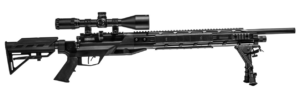
 

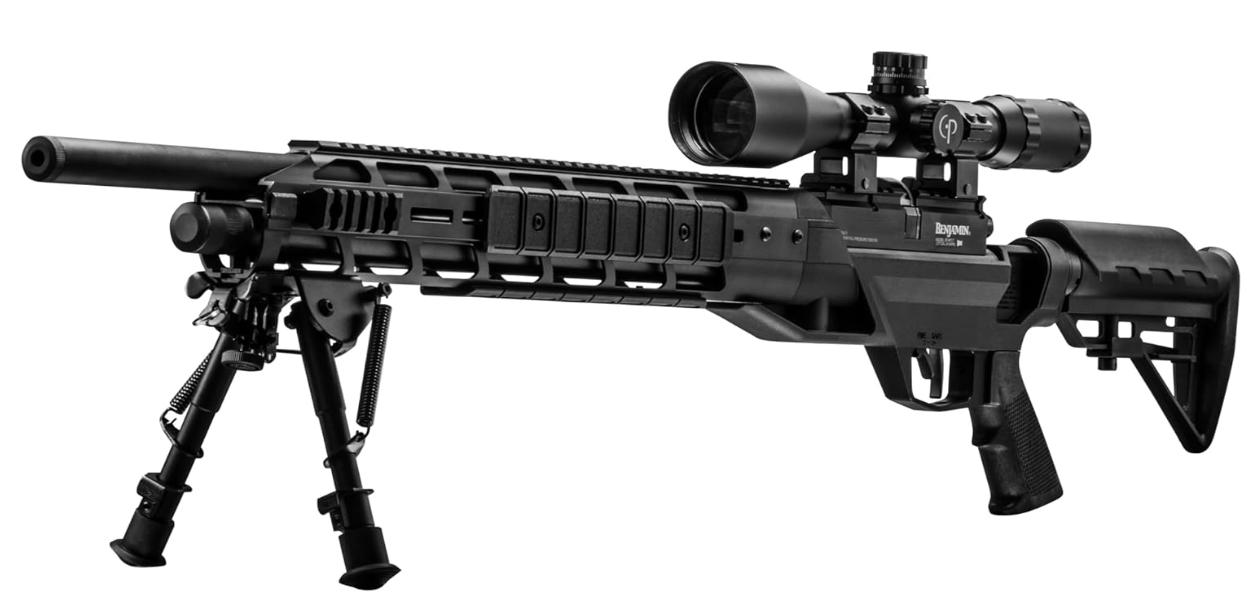
2. BenjaminBenjamin Armada

BenjaminBenjamin Armada

The Benjamin Armada PCP Air Rifle is built as a modular, tactical styled platform aimed at hunters and precision shooters who want flexibility and consistent power delivery. For a keyword like best air rifle for hunting whitetail deer, this rifle enters the conversation because of its PCP system, high velocity potential, and strong accessory compatibility. However, it is important to be realistic: while it is powerful for an air rifle, whitetail deer hunting requires responsible caliber selection, shot placement discipline, and understanding of ethical limits rather than relying on marketing claims alone.

This rifle runs on a PCP system, which gives it a more stable pressure curve compared to spring or CO2 systems. That stability is important for hunting situations where consistency matters more than raw speed. The Armada supports multiple calibers including .177, .22, and .25, which gives flexibility, but also creates confusion for buyers who assume all calibers are equally suitable for deer hunting. In reality, the .25 caliber is the only practical option in this lineup for larger game, while .177 is clearly not appropriate for whitetail deer. This is a critical point many buyers overlook.

Performance-wise, the rifle can reach up to 1100 fps depending on configuration, but velocity alone is not a measure of hunting effectiveness. Energy transfer, pellet weight, and shot placement are what actually determine performance on game. The 10 round rotary magazine offers fast follow up shots, which is useful for pest control or range shooting, but for ethical hunting it should not encourage poor shot discipline. The included 4-16×50 scope and Picatinny rail system improve usability out of the box, reducing the need for immediate upgrades.

The design is modular and heavily accessory focused, which makes it appealing for shooters who like to customize their setup. The reversible bolt action is a practical feature for both left and right handed users, and the integrated bipod support improves stability in field conditions. However, the rifle weighs 12.3 pounds, which is significant and can become a drawback during long hunting walks or when carrying additional gear. This is not a lightweight stalking rifle, it is more of a supported shooting platform.

Key Specifications

Feature Details
Brand Benjamin
Model Armada PCP Air Rifle
Calibers .177, .22, .25
Power Type PCP
Magazine Capacity 10 round rotary clip
Velocity Up to 1100 fps (varies by caliber)
Barrel Rifled alloy steel
Overall Length 46 inches
Weight 12.3 pounds
Rail System 5 inch Picatinny rail
Optics Included 4 to 16 x 50 mm riflescope
Stock Modular tactical design
Action Bolt action, reversible
Accessories Bipod included

Pros

  • Strong modular design allows customization for different shooting setups
  • Consistent PCP power system improves shot stability compared to spring rifles
  • High velocity potential suitable for small to medium game hunting setups
  • Included scope and bipod reduce initial upgrade costs
  • Large magazine capacity supports fast follow up shooting when needed

Cons

  • Very heavy which reduces mobility during long hunting sessions
  • .177 caliber option is unsuitable for whitetail deer and can mislead inexperienced user


3. Umarex Hammer .50 Caliber PCP Pellet Gun Air Rifle
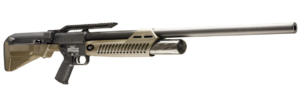
Umarex Hammer .50 Caliber PCP Pellet Gun Air Rifle

The Umarex Hammer .50 Caliber PCP Air Rifle is not subtle and it is not trying to be. It is positioned as one of the most powerful production air rifles available, and that alone explains why it often gets mentioned in discussions around hunting larger game like whitetail deer. But power claims need context. Excess energy without control, accuracy, and ethical shot placement is not an advantage, it is just wasted potential. This rifle is built for hunters who understand responsibility as much as raw performance.

This platform uses a high pressure PCP system with a 4500 psi carbon fiber tank, which gives it serious energy delivery capability. It fires .50 caliber projectiles, which immediately separates it from most traditional air rifles in terms of impact potential. However, it only provides around four full power regulated shots per fill, meaning this is not a high volume shooting system. It is designed for deliberate, carefully planned shots rather than repeated firing. That limitation is not a flaw, it is part of how the system achieves its power output.

In terms of handling, the rifle is surprisingly light at around 5 pounds, especially considering its power class. This makes it easier to carry in the field compared to many heavy PCP rifles. The straight pull bolt with a short travel distance supports faster cycling between shots, but the very low magazine capacity of 2 rounds forces discipline. There is no room for careless shooting here. The safety system includes a magazine lock and trigger block, which adds an extra layer of control, especially in hunting environments where safety cannot be compromised.

Performance wise, the Hammer pushes .50 caliber pellets up to 1130 fps. That figure sounds extreme, but what matters more is terminal energy transfer, which is where this rifle is designed to excel. It is built to deliver heavy impact rather than long range precision competition style shooting. For whitetail deer hunting, this level of power can be excessive if not properly controlled, and it demands an experienced shooter who understands ethical engagement distances and shot placement limits.

The rifle also includes modern mounting options like Picatinny rails and M-LOK compatibility, making it adaptable for optics and accessories. While this increases usability, it does not compensate for the fact that this is a specialized hunting tool, not a general purpose air rifle. It is powerful, but it is also unforgiving.

Key Specifications

Feature Details
Brand Umarex
Model Hammer PCP Air Rifle
Caliber .50
Power Type PCP
Velocity Up to 1130 fps
Magazine Capacity 2 round linear mags
Shots Per Fill 4 full power shots + 1 finishing shot
Air Tank 4500 psi carbon fiber, 24 cu in
Weight 5 pounds
Barrel Material Aluminum
Action Straight pull bolt
Rail System Picatinny and M-LOK
Safety Mag lock out and trigger block

Pros

  • Extreme power output suitable for large game hunting scenarios when used responsibly
  • Very lightweight design compared to other high power PCP rifles
  • High pressure tank allows strong energy delivery per shot
  • Straight pull bolt supports quick follow up cycling under controlled conditions
  • Strong safety system reduces accidental discharge risk

Cons

  • Extremely low shot capacity limits practicality for extended hunting sessions
  • Overpowered for many hunting situations requiring careful ethical judgment


4. Hatsan Hercules Bully PCP Air Rifle, .30 Caliber
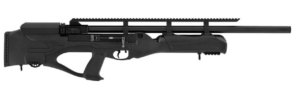
Hatsan Hercules Bully PCP Air Rifle, .30 Caliber
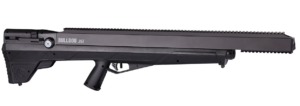
The Hatsan Hercules Bully PCP Air Rifle is built for shooters who want high power in a compact bullpup design. It often enters conversations about whitetail deer hunting because of its .30 caliber capability and strong muzzle energy output. But this is where reality needs to be stated clearly: power alone does not make a rifle suitable for ethical hunting. You still need controlled shot placement, proper distance discipline, and a shooter who understands what the platform can and cannot safely do.

This rifle uses a PCP system with a large 480cc carbon fiber air bottle, which gives it extended air capacity compared to many standard PCP rifles. That translates into more usable shots per fill and better field endurance. The bullpup configuration shortens the overall length while keeping a 21 inch barrel, which helps balance maneuverability with ballistic performance. However, the 10.3 pound weight means it is not truly a light carry rifle. It is more suited to stationary hunting positions rather than long distance tracking.

In terms of performance, the Hercules Bully pushes up to 1070 fps in .30 caliber with up to 115 FPE of muzzle energy. This level of energy is what places it in the “serious hunting air rifle” category. Still, it is important not to confuse energy with effectiveness. Pellet selection and shot placement remain more important than raw numbers. The side lever action and 10 round magazine offer smooth cycling and decent capacity, but this is not a rapid fire system. It is designed for deliberate, controlled shooting rather than volume shooting.

The QuietEnergy system helps reduce noise, which is useful in hunting environments where sound discipline matters. The two stage adjustable trigger improves control, although it requires tuning and familiarity to get the best feel. The combination rail system allows flexibility for optics mounting, which is important because this rifle is only as effective as the shooter’s ability to place accurate shots under field conditions.

Overall, this is a powerful PCP rifle that sits closer to a heavy duty hunting platform than a general purpose airgun. But it is not a shortcut to ethical whitetail hunting. It demands experience, patience, and a realistic understanding of range limitations.

Key Specifications

Feature Details
Brand Hatsan
Model Hercules Bully PCP Air Rifle
Caliber .30
Power Type PCP
Velocity Up to 1070 fps
Muzzle Energy Up to 115 FPE
Magazine Capacity 10 rounds
Air Tank 480cc carbon fiber bottle
Barrel Length 21 inches
Overall Configuration Bullpup
Weight 10.3 pounds
Action Side lever
Rail System 11 mm and Picatinny compatible
Trigger Two stage adjustable
Noise Reduction QuietEnergy integrated moderator

Pros

  • High muzzle energy suitable for serious small to medium game hunting applications
  • Large 480cc air bottle provides strong shot availability per fill
  • Bullpup design keeps overall length compact for better handling in tight spaces
  • QuietEnergy system helps reduce shot noise in field environments
  • 10 round magazine supports consistent follow up shooting when needed

Cons

  • Heavy weight reduces comfort during long hunting walks
  • Requires experience and tuning to achieve consistent ethical field accuracy

5. Benjamin Bulldog Hunting Rifle

Benjamin Bulldog Hunting Rifle

The Benjamin Bulldog .357 Caliber PCP Hunting Rifle is one of the few air rifles in this list that actually starts to align with serious whitetail deer hunting expectations. It uses a big bore .357 caliber platform, which immediately separates it from lighter .22 and .25 setups. That said, bigger caliber alone does not automatically justify its use on deer. Ethical hunting still depends on shooter skill, distance control, and consistent shot placement, not just the size of the projectile.

This rifle is built around a PCP system with a bullpup configuration that keeps the overall length at around 36 to 40 inches while still delivering big bore performance. That compact structure makes it easier to maneuver in tight hunting environments compared to traditional long rifles. The reversible side lever bolt action supports both left and right handed shooters, which is a practical design choice. However, at 9.2 pounds, it is still a heavy platform, especially for hunters who expect to carry it for long distances.

Performance wise, the Bulldog pushes up to 910 fps in .357 caliber. That number looks moderate compared to smaller calibers, but it is misleading because this rifle is designed for heavy projectile energy rather than speed. This is where many shooters misunderstand air rifle performance. Whitetail deer hunting requires sufficient energy transfer, not just velocity, and this platform is built more toward impact force than flat trajectory shooting. The 5 shot magazine reinforces that this is a deliberate, controlled hunting system rather than a high volume shooter.

The baffle less sound trap system helps reduce report, which is important in hunting scenarios where noise discipline can affect success. The 26 inch Picatinny rail offers significant flexibility for mounting optics and accessories, making it adaptable for different hunting setups. However, the plastic frame material is a point of compromise. For a rifle in this power class, some users may expect a more rigid full metal chassis for long term durability and stability under field stress.

Overall, the Benjamin Bulldog sits much closer to a legitimate whitetail capable air rifle than most smaller caliber PCPs. Still, it is not a guarantee of ethical effectiveness. It requires experience, proper pellet selection, and disciplined shot ranges to be considered responsible in the field.

Key Specifications

Feature Details
Brand Benjamin
Model Bulldog Hunting Rifle
Caliber .357
Power Type PCP
Velocity Up to 910 fps
Magazine Capacity 5 rounds
Overall Length 36 to 40 inches
Weight 9.2 pounds
Barrel Type Rifled steel
Rail System 26 inch Picatinny rail
Action Side lever, reversible
Stock Material Synthetic
Sound Reduction Baffle less sound trap

Pros

  • Large .357 caliber delivers strong energy suitable for ethical medium game hunting when used correctly
  • Compact bullpup design improves handling in tight hunting environments
  • Sound suppression system helps reduce noise signature in the field
  • Side lever action supports smooth and reliable cycling for controlled shooting
  • Flexible Picatinny rail allows extensive optics and accessory customization

Cons

  • Heavy build reduces comfort during long distance carrying and tracking
  • Plastic frame construction may feel less robust compared to full metal alternatives


Also Read: 5 Best Air Rifle for Squirrel Hunting

Advantages of Best Air Rifle for Hunting Whitetail Deer


1. Improved Ethical Hunting Potential

These rifles provide enough power for clean, controlled shots when used within proper limits. They help avoid underpowered setups that risk wounding game, but only work well if the shooter respects realistic distances.

2. High Level of Shot Consistency

PCP systems regulate air pressure, giving more stable velocity and tighter shot groups. This consistency improves reliability in the field where precision matters more than raw power.

3. Better Energy Transfer for Medium Game

Higher muzzle energy in calibers like .25 and .30 improves penetration and terminal performance. This only works properly with correct pellets and accurate shot placement.

4. Greater Caliber Flexibility

Different caliber options allow hunters to match power levels to specific game. However, not all calibers are suitable for deer, so selection matters.

5. Reduced Noise Compared to Firearms

These air rifles are quieter than traditional guns, helping reduce disturbance in hunting areas. Still, quieter operation does not reduce the need for careful shot decisions.

6. Better Control in Short to Medium Range Hunting

They perform best at realistic hunting distances where accuracy is easier to maintain. Pushing beyond these ranges reduces effectiveness quickly.

7. Customization and Optics Compatibility

Most models support scopes and adjustments for improved handling and accuracy. But upgrades cannot compensate for poor shooting fundamentals.

8. Lower Recoil for Better Accuracy

Low recoil helps maintain steady aim and reduces flinching. However, it can also mislead shooters into overestimating their effective range.

Factors to Consider When Choosing Best Air Rifle for Hunting Whitetail Deer


1. Caliber Selection and Intended Game Suitability

Caliber choice is one of the most critical decisions because it directly affects energy delivery, penetration, and ethical performance. Larger calibers generally provide more impact power, while smaller calibers may offer better speed but less terminal effectiveness. Choosing the wrong caliber can lead to poor hunting outcomes, so the rifle must match the size of the intended game and not just personal preference or hype.

2. Muzzle Energy and Real Hunting Performance

Muzzle energy matters more than velocity when evaluating hunting effectiveness. Higher energy improves penetration and ensures better transfer of force into the target. However, energy alone does not guarantee success because shot placement and pellet design play an equally important role. A rifle with balanced energy output is more reliable than one that only looks powerful on paper.

3. Accuracy and Shot Consistency

Consistency in shot grouping is essential for ethical hunting. A rifle that produces stable velocity and tight groupings allows the shooter to place shots accurately under field conditions. Inconsistent performance leads to missed or poorly placed shots, which increases the risk of wounding game rather than harvesting it cleanly.

4. Effective Hunting Range

Every air rifle has a practical range where it can deliver ethical and reliable performance. Beyond that range, accuracy and energy drop significantly, making shots unreliable. Understanding this limit is more important than maximum advertised distance because real hunting requires predictable performance, not theoretical capability.

5. Weight and Field Handling

A rifle’s weight affects how easily it can be carried, aimed, and stabilized during long hunting sessions. Heavier rifles may offer better stability when shooting but become tiring during long walks or tracking situations. Lighter rifles improve mobility but may require more effort to hold steady, so balance is important.

6. Air System Capacity and Shot Availability

The air tank size and pressure system determine how many consistent shots a rifle can deliver before needing a refill. Larger tanks provide more endurance in the field, while smaller systems require more frequent refilling. This factor becomes important during extended hunts where access to refilling equipment is limited.

7. Noise Level and Stealth Performance

Noise reduction plays a role in preventing game from being alerted after the first shot. Quieter rifles improve hunting success by reducing disturbance in the environment. However, reduced noise does not compensate for poor accuracy or insufficient power, so it should be seen as a supporting advantage rather than a primary factor.

8. Build Quality and Reliability in Field Conditions

A hunting rifle must withstand outdoor conditions such as moisture, dust, and physical impact. Strong construction materials and reliable internal components ensure the rifle performs consistently over time. Poor build quality can lead to failures in critical moments, making durability a key factor for long term hunting use.

Frequently Asked Questions About Best Air Rifle for Hunting Whitetail Deer


1. Can an air rifle be used for whitetail deer hunting?

Yes, but only specific high power PCP air rifles in larger calibers like .25, .30, or .357 are suitable. Even then, success depends heavily on shot placement, range control, and shooter skill. Lower caliber or underpowered rifles are not appropriate for this type of game.

2. What is the most important factor when choosing an air rifle for deer hunting?

Power alone is not enough. The most important factor is a balance between muzzle energy, accuracy, and consistency. A rifle that shoots slightly less powerfully but delivers precise and repeatable shots is far more effective than an inconsistent high power option.

3. How far can you ethically shoot a whitetail deer with an air rifle?

Ethical range is usually much shorter than advertised maximum range. In most cases, effective hunting distances are within close to moderate ranges where the shooter can guarantee accurate placement and sufficient energy transfer. Stretching beyond that increases the risk of poor outcomes.

Conclusion

Best Air Rifle for Hunting Whitetail Deer is not about picking the most powerful option, but about choosing a platform that balances accuracy, consistency, and ethical killing potential. Across the rifles discussed, the real value comes from regulated PCP systems that deliver stable shot performance, larger calibers that improve energy transfer, and designs that support controlled shooting rather than rushed decisions. Heavy hitters like .357 and .50 caliber models show impressive power, while .25 and .30 caliber rifles offer a more balanced and practical approach for most hunters.

What makes these air rifles strong choices is their ability to perform reliably within realistic hunting limits. Features like improved shot consistency, reduced recoil, quieter operation, and better optics compatibility all contribute to more responsible hunting outcomes. However, no rifle replaces skill and discipline, and pushing any of these platforms beyond ethical range limits is where most failures happen.