Best Thermal Monocular for Deer Hunting can make a major difference in how effectively hunters detect movement, identify targets, and observe deer in low light and complete darkness. Unlike conventional optics, thermal monoculars use heat signatures to reveal animals that may otherwise remain hidden by vegetation, terrain, or changing weather conditions. With improvements in thermal sensor technology, display quality, battery performance, detection range, and smart connectivity features, these devices have become valuable tools for both casual and serious hunters.
In this guide, you will explore the key features that matter most when choosing a thermal monocular, discover top picks across different performance levels and budgets, understand the important factors to consider before buying, and find answers to common questions through a detailed FAQ section. Whether your priority is long range detection, portability, image clarity, or overall hunting efficiency, this guide will help you identify the right option for your deer hunting needs.
5 Best Thermal Monocular for Deer Hunting
1. AGM Global Vision Taipan V2 Thermal Imaging monocular for Hunting
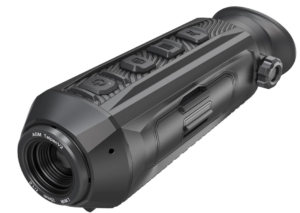
Finding the Best Thermal Monocular for Deer Hunting comes down to balancing image quality, detection distance, battery life, and field durability. The AGM Global Vision Taipan V2 15-256 positions itself as a strong option for hunters who need reliable thermal performance during early morning tracking, dense cover observation, and complete darkness. Its compact design and lightweight 300 gram construction make it easy to carry during long hunting sessions without adding unnecessary bulk.
The Taipan V2 uses a 12μm VOx thermal sensor paired with a 256×192 thermal resolution to produce detailed heat detection. This combination allows hunters to distinguish deer movement and body signatures more effectively than standard night optics. The 15mm objective lens extends visibility while supporting digital magnification up to 17.5x, giving enough reach for scanning open fields and woodland edges.
One of the strongest advantages of this monocular is its detection capability. With a maximum detection range of up to 750 meters, hunters gain more time to observe animal movement before making decisions. The 1280×960 LCOS display provides a sharper viewing experience and improves comfort during extended observation periods. The larger rubber eyepiece also contributes to easier viewing without excessive eye strain.
Battery management is another area where this device performs well. The removable power system delivers up to 7 hours of runtime, while the integrated 90 degree tilt sensor automatically reduces power usage when the device is lowered. This helps preserve battery during long evenings in the field where charging is not practical.
The built in media functions increase usability beyond simple observation. Users can capture photos and record video with audio directly to the 16GB internal storage. WiFi connectivity and AGM Connect App support enable live viewing, remote control, and quick access to saved footage through compatible mobile devices.
Durability is clearly built into the design. The IP67 waterproof rating protects the unit from rain, dust, and rough outdoor conditions, while the rubberized outer layer improves grip and resistance during demanding hunts.
Key Specifications
| Specification | Details |
|---|---|
| Brand | AGM Global Vision |
| Model | Taipan V2 15-256 |
| Thermal Sensor | 12μm VOx |
| Thermal Resolution | 256 × 192 |
| Objective Lens | 15 mm |
| Maximum Magnification | 17.5x |
| Detection Range | Up to 750 meters |
| Display | 1280 × 960 LCOS |
| Storage | 16GB Internal |
| Battery Runtime | Up to 7 Hours |
| Connectivity | WiFi with AGM Connect App |
| Waterproof Rating | IP67 |
| Weight | 300 grams |
| Compatible Devices | Smartphone, Tablet |
| Night Vision | Yes |
Pros
- Excellent thermal detection performance in complete darkness
- Long 750 meter detection range for deer spotting
- Lightweight and comfortable for extended carrying
- Video recording with sound and onboard storage
- Reliable waterproof construction for outdoor use
Cons
- Digital zoom performance softens image detail at maximum magnification
2. AGM Global Vision Varmint V2 Thermal Imaging Riflescope LRF for Hunting
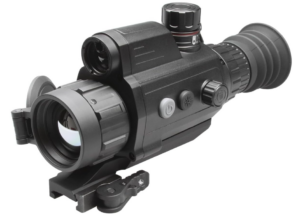
Choosing the Best Thermal Monocular for Deer Hunting requires more than long range visibility. Reliable target detection, image responsiveness, range estimation, and consistent performance during low light conditions all play a major role. The AGM Global Vision Varmint V2 35-384 combines thermal imaging technology with integrated distance measurement tools, making it a capable option for hunters who need more information before taking action.
Built around a highly sensitive 12μm thermal detector with fast 50Hz image refresh, the Varmint V2 produces smooth and responsive thermal imaging when tracking moving deer across changing terrain. The 35mm objective lens improves target acquisition at distance while supporting multiple digital zoom levels including 1x, 2x, 4x, and 8x for flexible observation and identification.
One feature that adds significant value is the integrated 600 meter laser rangefinder. Instead of estimating distance visually, hunters can obtain direct range measurements and combine them with the built in ballistic calculator for improved shot planning. The high resolution OLED display delivers clear thermal imagery while selectable reticle styles and color options allow users to tailor the viewing experience to different environments and lighting conditions.
The Varmint V2 also includes modern hunting features beyond observation. On board video recording and snapshot capture allow users to save hunts directly to the internal 16GB EMMC storage. WiFi support expands functionality by enabling connectivity with compatible devices for easier access and sharing of captured content.
Designed for field use, this thermal optic uses a durable polycarbonate body with waterproof protection for changing outdoor conditions. Runtime reaches up to 4.5 hours on internal power, and external power support extends operation for longer hunting sessions.
Key Specifications
| Specification | Details |
|---|---|
| Brand | AGM Global Vision |
| Model | Varmint V2 35-384 |
| Thermal Detector | 12μm High Sensitivity |
| Refresh Rate | 50Hz |
| Objective Lens | 35 mm |
| Digital Zoom | 1x, 2x, 4x, 8x |
| Laser Rangefinder | Built in 600 meters |
| Display | High Resolution OLED |
| Reticle Options | Multiple Types and Colors |
| Video Recording | Yes |
| Photo Capture | Yes |
| Internal Storage | 16GB EMMC |
| Connectivity | WiFi |
| Runtime | Up to 4.5 Hours |
| External Power Support | Yes |
| Mount Type | Picatinny |
| Weight | 1.5 Pounds |
| Waterproof | Yes |
| Night Vision | Yes |
Pros
- Integrated 600 meter laser rangefinder improves distance accuracy
- Fast 50Hz thermal imaging tracks movement smoothly
- Built in ballistic calculator supports better shot planning
- High resolution OLED display delivers clear thermal viewing
- Video recording and internal storage add practical field utility
Cons
- Shorter internal battery life than some dedicated thermal viewers
3. ATN BlazeHunter Thermal Imaging Monocular
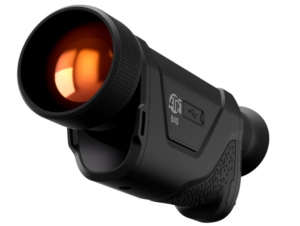
Selecting the Best Thermal Monocular for Deer Hunting means finding equipment that combines image clarity, long field endurance, effective range estimation, and easy portability. The ATN BlazeHunter 640×512 3.5–28x LRF targets hunters who want premium thermal performance with modern features designed for longer and more efficient scouting sessions.
The BlazeHunter uses a professional grade vanadium oxide uncooled focal plane thermal detector with a NETD below 18mK, allowing it to identify subtle temperature differences with impressive precision. Combined with the 640×512 thermal resolution, this monocular delivers detailed heat separation that helps distinguish deer movement and body outlines even in challenging weather and low visibility conditions. The 35mm objective lens and 3.5x to 28x magnification range provide flexibility for both scanning and closer observation.
Viewing quality is further enhanced by the large 0.41 inch OLED display with a 1440×1080 resolution. The increased pixel density creates sharper image presentation and improves target recognition during extended sessions. Users can also select from six color palettes including White Hot, Black Hot, High Red, Iron Red, Green Hot, and Sepia to adapt thermal contrast based on terrain and lighting conditions.
A major advantage for deer hunters is the integrated laser rangefinder, which enables quick and accurate distance measurements without carrying separate equipment. Video recording allows hunts and observations to be captured for later review, while built in WiFi supports real time sharing with up to four connected users through the companion app.
Battery performance is one of the strongest areas of this monocular. The replaceable battery system includes two rechargeable batteries and delivers up to 14 hours of operation, reducing interruptions during overnight scouting or full day field use. At only 320 grams and under 0.8 pounds, the BlazeHunter remains comfortable to carry for extended periods.
Key Specifications
| Specification | Details |
|---|---|
| Brand | ATN |
| Model | BlazeHunter 640×512 3.5–28x LRF |
| Thermal Sensor | Vanadium Oxide Uncooled Focal Plane Detector |
| Thermal Resolution | 640 × 512 |
| NETD | Less than 18mK |
| Magnification | 3.5x to 28x |
| Objective Lens | 35 mm |
| Display | 0.41 inch OLED |
| Display Resolution | 1440 × 1080 |
| Laser Rangefinder | Built in |
| Video Recording | Yes |
| Color Palettes | 6 Modes |
| Connectivity | WiFi |
| Battery Type | Replaceable Lithium Ion |
| Battery Runtime | Up to 14 Hours |
| Weight | 320 Grams |
| Compatible Devices | Smartphone, Tablet |
Pros
- High resolution 640×512 thermal imaging delivers excellent detail
- Built in laser rangefinder improves hunting accuracy
- Exceptional battery life for long field sessions
- Large OLED display creates sharper viewing experience
- Lightweight design reduces fatigue during extended use
Cons
- Maximum digital magnification reduces image sharpness
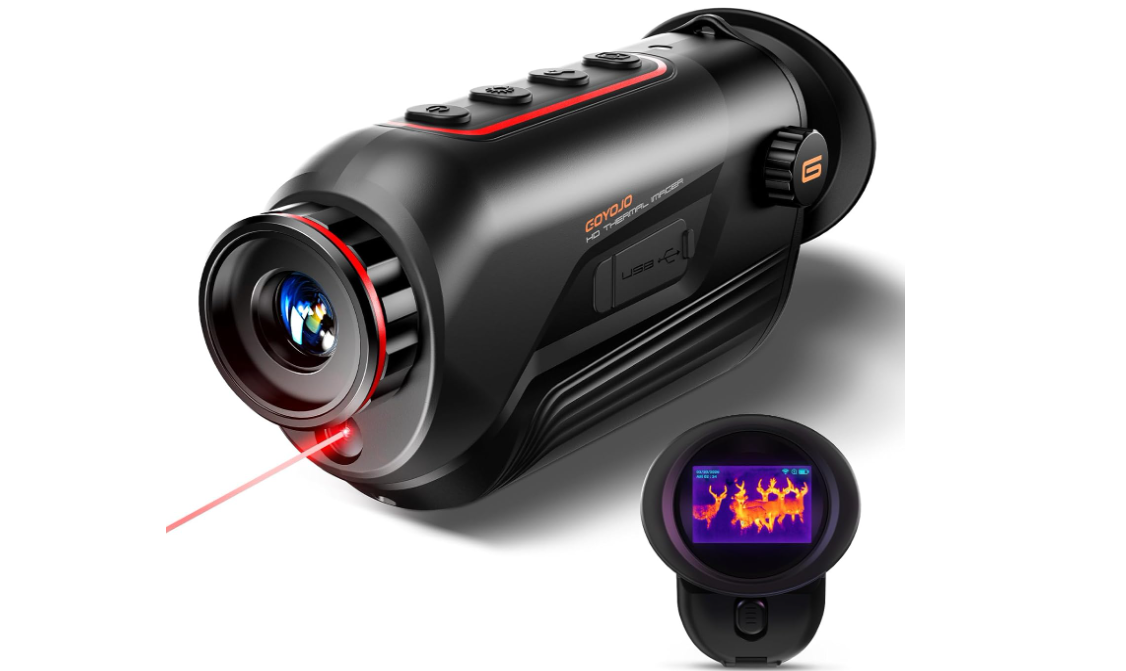
4. GOYOJO G210 Thermal Monocular, 256×192 Thermal Imaging Monoscope
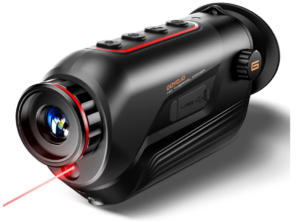
Finding the Best Thermal Monocular for Deer Hunting often means balancing affordability, dependable thermal detection, battery life, and portability. The GOYOJO G210 is designed for hunters who want practical thermal capability without stepping into premium pricing categories. With thermal imaging, multiple viewing modes, app connectivity, and durable construction, it offers useful features for nighttime deer observation and outdoor scouting.
The GOYOJO G210 uses a 256×192 thermal imaging sensor paired with a 12μm infrared detector to detect heat signatures quickly and consistently in changing light conditions. Unlike standard optical devices that depend on ambient light, this thermal monocular identifies targets through heat contrast, making it useful for early morning hunts, low visibility environments, and complete darkness. The 10mm focal lens supports compact operation while maintaining effective thermal observation.
Users can customize the viewing experience using six selectable color palettes including White Hot, Black Hot, Red Hot, Rainbow, Iron Red, and Glimmer. These modes allow hunters to adjust thermal contrast depending on terrain and environmental conditions. The included 4x zoom helps improve target inspection at distance, while built in image capture and 16GB storage allow users to save observations directly on the device.
Connectivity features add flexibility in the field. Through the companion mobile app, users can share thermal images in real time and improve coordination during group hunting sessions. The weather resistant housing combined with IP65 waterproof protection helps the monocular continue operating in rain, dust, and demanding outdoor conditions.
Battery performance is practical for typical hunting use, with replaceable batteries delivering more than 6 hours of operation. Combined with handheld and tripod mounting options, the G210 remains adaptable for both mobile scanning and stationary observation.
Key Specifications
| Specification | Details |
|---|---|
| Brand | GOYOJO |
| Model | G210 |
| Thermal Resolution | 256 × 192 |
| Thermal Detector | 12μm Infrared Sensor |
| Objective Lens | 10 mm |
| Zoom | 4x |
| Display Modes | 6 Color Palettes |
| Storage | 16GB Internal |
| Connectivity | Mobile App Support |
| Refresh Rate | 25Hz |
| Battery Runtime | Over 6 Hours |
| Waterproof Rating | IP65 |
| Mount Type | Tripod Mount and Handheld |
| Focus Type | Fixed Focus |
| Power Source | Battery Powered |
| Product Dimensions | 9.44 × 5.51 × 4.33 Inches |
Pros
- Affordable entry into thermal deer hunting optics
- Multiple color palettes improve viewing flexibility
- Built in image storage for recording observations
- Lightweight handheld design supports easier carrying
- Weather resistant construction handles outdoor conditions
Cons
- Lower 256×192 resolution limits fine detail at longer distances
5.FLIR Scout Pro III – Thermal Imaging Monocular
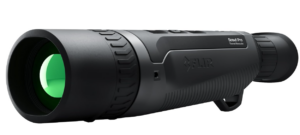
Choosing the Best Thermal Monocular for Deer Hunting means prioritizing detection range, image usability, portability, and reliable operation in demanding outdoor environments. Although originally designed with professional field applications in mind, the FLIR Scout Pro III delivers features that also translate well into long distance wildlife observation and deer tracking. Its compact form and extended thermal reach make it a capable option for hunters covering large areas.
The Scout Pro III focuses heavily on long range thermal detection performance. With a human detection capability reaching up to 1500 meters and a 12 degree wide field of view lens, this monocular allows users to scan broader terrain while maintaining strong target awareness at distance. For deer hunting, this extended reach provides additional time to identify movement patterns and observe activity before closing distance.
Ease of use is another advantage of this model. FLIR designed the Scout Pro III with an intuitive operating interface that requires minimal setup and allows quick access to core functions. The auto focus system reduces manual adjustments in changing conditions, helping users remain focused on observation rather than device management.
Connectivity and media functionality expand usability in the field. The monocular supports evidence collection, media transfer through USB, and live video streaming through its companion application. Smartphone, laptop, and tablet compatibility make viewing and sharing more convenient during group observation or post hunt review.
Physically, the Scout Pro III remains compact despite its detection capability. The ergonomic housing improves comfort during prolonged use, while the included charging and docking accessories simplify storage and preparation between outings. Its portable size also allows easier carrying in hunting packs or outer gear pockets.
Key Specifications
| Specification | Details |
|---|---|
| Brand | FLIR |
| Model | Scout Pro III |
| Detection Range | Up to 1500 meters |
| Field of View | 12° Wide |
| Lens Type | Wide Field Lens |
| Focus System | Auto Focus |
| Streaming | Live Video Support |
| Media Transfer | USB Compatible |
| Device Compatibility | Smartphone, Laptop, Tablet |
| Battery Type | Lithium Ion |
| Included Accessories | Car Charger and Docking Station |
| Weight | 1.64 Pounds |
| Dimensions | 9.09 × 2.51 × 2.51 Inches |
Pros
- Exceptional long range detection capability
- Wide field of view supports faster area scanning
- Simple controls with minimal learning curve
- Compact design remains comfortable during long sessions
- Live streaming and media transfer improve usability
Cons
- Professional feature set may exceed casual hunting needs
Also Read About: 5 Best Monocular for Birding in the Wild
Advantages of Best Thermal Monocular for Deer Hunting
1. Detects Deer in Complete Darkness
One of the biggest advantages of using the Best Thermal Monocular for Deer Hunting is the ability to detect heat signatures even in total darkness. Unlike traditional optics that depend on available light, thermal monoculars identify body heat, making it easier to locate deer during early mornings, nighttime hunts, and heavily shaded environments. This improves visibility when standard scopes become ineffective.
2. Improves Long Distance Detection
Thermal monoculars allow hunters to identify animal movement at significantly greater distances before approaching. Advanced models can detect heat signatures hundreds or even thousands of meters away, giving hunters more time to observe behavior, plan movement, and avoid unnecessary disturbance in the hunting area.
3. Performs Better in Challenging Weather Conditions
Fog, light rain, dust, and low visibility conditions often reduce the effectiveness of standard optical equipment. Thermal monoculars remain useful because they read temperature differences instead of relying entirely on visible light. This provides more consistent performance during changing outdoor conditions.
4. Enhances Target Identification Efficiency
Using thermal imaging helps hunters quickly separate animals from background vegetation and terrain. Deer that would otherwise blend into brush, tall grass, or wooded areas become easier to notice through heat contrast, reducing time spent scanning and improving observation accuracy.
5. Reduces Physical Movement While Scouting
Because thermal monoculars provide wider area awareness and long range detection, hunters can observe larger sections of land without constantly relocating. Less movement lowers the chance of alerting wildlife and helps maintain a more controlled and strategic hunting approach.
6. Provides Additional Recording and Sharing Capabilities
Many modern thermal monoculars include video recording, image capture, internal storage, and wireless connectivity. These features allow hunters to document observations, review animal activity patterns later, and share footage with partners or hunting groups for better coordination.
7. Increases Comfort During Extended Hunting Sessions
Thermal monoculars are often designed to remain lightweight while offering long battery performance and ergonomic handling. This combination makes extended glassing sessions more comfortable and reduces fatigue during long periods of scouting and observation.
8. Supports More Informed Hunting Decisions
Thermal technology provides faster environmental awareness and clearer identification of movement patterns before making decisions in the field. Instead of relying on assumptions or limited visibility, hunters can evaluate distance, activity, and surroundings more effectively, leading to better timing and overall hunting efficiency.
Factors to Consider When Choosing the Best Thermal Monocular for Deer Hunting
1. Thermal Sensor Resolution
Thermal sensor resolution directly affects how much detail you can see when identifying deer and reading movement patterns. Higher resolutions produce sharper thermal images and improve target recognition at longer distances, while lower resolutions may struggle to separate animals from surrounding terrain. Choosing the right resolution depends on how far and how precisely you plan to observe.
2. Detection Range
Detection range determines how far the monocular can identify heat signatures before you move closer. A longer detection range gives hunters more time to monitor activity, evaluate surroundings, and plan positioning without disturbing wildlife. However, detection range should be balanced with image quality because long range detection alone does not guarantee clear identification.
3. Magnification and Field of View
Magnification influences how closely you can inspect distant targets, while field of view determines how much terrain appears in a single scan. Higher magnification can improve distant observation but often narrows the viewing area. A balanced combination helps maintain both area coverage and target detail during deer hunting.
4. Display Quality and Image Clarity
The display plays a major role in overall viewing comfort and target interpretation. Higher display resolution and smoother image refresh provide clearer thermal output and reduce eye strain during extended use. Good display quality also makes it easier to distinguish animal shapes and movement in changing conditions.
5. Battery Life and Power Options
Long battery performance becomes important during overnight hunts and extended scouting sessions. Devices with replaceable batteries or external power support offer greater flexibility and reduce interruptions in the field. Selecting a monocular with dependable runtime helps maintain consistent observation throughout the hunt.
6. Durability and Weather Protection
Outdoor conditions can change quickly, making durability an essential consideration. Water resistance, dust protection, and strong exterior construction improve reliability during rain, rough handling, and demanding environments. A durable thermal monocular provides better long term value and dependable field performance.
7. Recording and Connectivity Features
Modern thermal monoculars often include video recording, image capture, internal storage, and wireless connectivity. These functions allow users to document observations, review activity later, and share live viewing when needed. While not essential for every hunter, they add convenience and expand overall usability.
8. Weight and Ergonomic Design
Comfort matters when carrying and using a thermal monocular for long periods. Lightweight designs reduce fatigue and improve mobility, while ergonomic controls make operation easier in low visibility conditions. Choosing a comfortable device improves the overall hunting experience and supports longer observation sessions.
Frequently Asked Questions About Best Thermal Monocular for Deer Hunting
1. What is the best thermal monocular for deer hunting?
The best thermal monocular for deer hunting depends on factors such as thermal resolution, detection range, battery life, display quality, and portability. Some hunters prioritize long range detection, while others focus on image clarity, lightweight design, or recording features. Choosing based on your hunting environment and typical observation distance usually delivers better results than selecting only by price.
2. How far can a thermal monocular detect deer?
Detection distance varies depending on the thermal sensor, lens size, environmental conditions, and target size. Entry level thermal monoculars may detect heat signatures at several hundred meters, while advanced models can extend detection well beyond one kilometer. Keep in mind that detection range is different from identification range, since recognizing an animal clearly often requires being closer.
3. Is a thermal monocular better than traditional night vision for deer hunting?
A thermal monocular and traditional night vision serve different purposes, but thermal imaging often provides advantages for deer hunting because it detects heat rather than relying on available light. This makes it easier to spot animals hidden by darkness, light vegetation, or changing weather conditions. Night vision can provide more natural image detail, while thermal technology generally improves target detection efficiency.
Conclusion
Best Thermal Monocular for Deer Hunting options continue to improve the way hunters detect, observe, and track deer in low light and nighttime conditions. Across the products discussed, the combination of thermal imaging sensors, extended detection distances, improved display quality, recording capabilities, wireless connectivity, and weather resistant construction creates a more efficient and dependable hunting experience. These devices help hunters identify movement faster, cover more terrain, and maintain better awareness in conditions where traditional optics become limited.
The best choices stand out because they balance image clarity, battery performance, portability, and practical field features for real world use. Whether the priority is long range scanning, lightweight carrying comfort, advanced thermal sensitivity, or added tools such as rangefinding and media capture, a quality thermal monocular can make observation more effective and decision making more informed. Selecting the right model ultimately depends on hunting style, environment, and the level of performance needed in the field.