
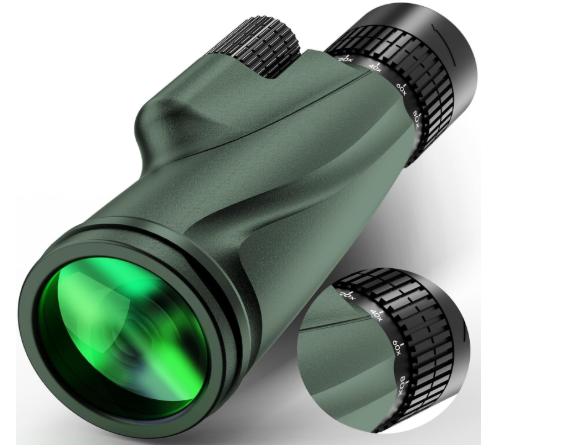
Best Compact Monocular for Bird Watching is becoming a popular choice for outdoor enthusiasts who want a lightweight and practical way to observe wildlife without carrying bulky equipment. These compact scopes are great for bird watching because they combine portability with enough optical power to spot and identify birds in their natural environment, especially during hikes, travel, or casual nature observation. While they are not meant to fully replace binoculars or professional spotting scopes, they offer a convenient middle ground for users who value mobility and quick access over heavy setups.
In this guide, you will go through the key features that matter most when choosing a monocular, top picks across different performance levels, a practical buying guide that highlights what actually works in the field, and frequently asked questions to clear common doubts. The goal is to help you avoid misleading specifications and focus on real-world performance so you can choose a monocular that actually performs when it matters outdoors.
5 Best Compact Monocular for Bird Watching
1. Vortex Optics Solo Monocular 8×36
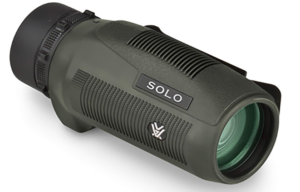
The Vortex Optics Solo Monocular 8×36 fits squarely into that practical category, offering a compact build that favors usability over complexity. However, it is not a perfect tool and it does make tradeoffs that serious bird watchers should not ignore.
This monocular uses 8x magnification paired with a 36mm objective lens, which gives a stable and reasonably bright image for daytime birding. The optical system uses fully multi coated lenses, which improves light transmission and helps reduce dullness in shaded environments like forests or early morning conditions. In real use, this means you get usable clarity without constantly fighting dim or washed out views. That said, it is not a high end low light performer, so anyone expecting sharp dusk or dawn detail will be disappointed.
Build quality is where this model earns most of its credibility. The rubber armored body improves grip and helps absorb minor impacts, which matters when you are hiking or tracking birds in uneven terrain. It is also nitrogen purged and sealed with o rings, making it resistant to fog and water. This is not optional for outdoor bird watching gear, it is essential. Still, while it handles weather well, the compact size can feel slightly less stable during extended handheld viewing compared to heavier optics.
Comfort is handled through an adjustable eyecup that supports both glasses and non glasses users. This sounds minor, but in practice it prevents eye strain during longer observation sessions. The included utility clip also makes it easier to attach the monocular to a bag or strap, reducing the risk of dropping it or fumbling during quick bird sightings. The main limitation here is that the small form factor, while portable, can feel less steady for users with larger hands.
Overall, this monocular is built for bird watchers who prioritize movement and convenience over maximum optical power. It performs best in open daylight environments and casual to semi serious birding sessions. It does not try to compete with larger binocular systems, and it should not be treated as a full replacement for them.
Key specifications
| Specification | Detail |
|---|---|
| Brand | Vortex Optics |
| Model | Solo Monocular 8×36 |
| Magnification | 8x |
| Objective lens diameter | 36 mm |
| Optical coating | Fully multi coated lenses |
| Focus type | Manual focus |
| Dimensions | 4.9 inches by 2.6 inches by 4.9 inches |
| Weather protection | Waterproof and fogproof with nitrogen purging |
| Body design | Rubber armored non slip grip |
| Mounting | Handheld with utility clip |
| Warranty | Unlimited lifetime warranty |
Pros
- Lightweight and easy to carry during long walks
- Clear image quality in good daylight conditions
- Strong grip thanks to rubber armor
- Waterproof and fog resistant for outdoor use
- Comfortable eyecup for glasses and non glasses users
- Useful clip for fast access and portability
- Lifetime warranty support adds long term reliability
Cons
- Limited performance in low light conditions
- Single eye viewing can cause fatigue over time
2. Scotar 12×50 Monocular Telescope
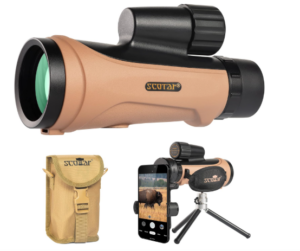
The Scotar 12×50 Monocular Telescope takes a more aggressive approach with stronger zoom and a larger objective lens, but that comes with tradeoffs that many users underestimate before buying.
This monocular uses 12x magnification paired with a 50mm objective lens, which theoretically gives you more reach for distant bird identification. In practice, it does allow you to see faraway subjects in greater detail compared to smaller 8x systems, especially in open environments like wetlands or savannahs. However, higher magnification also amplifies hand shake, meaning you will struggle to maintain a steady image without using the included mini tripod. This makes it less convenient for quick, spontaneous bird sightings where speed matters more than setup.
Optically, it uses FMC coatings with BAK4 phase and dielectric prisms, which improves light transmission and reduces internal reflection. This results in relatively sharp images with better contrast than entry level monoculars. The 50mm lens also helps pull in more light, which is useful in early morning or late afternoon birding sessions. Still, the system is not truly optimized for low light performance despite the marketing claims, and image softness becomes noticeable when conditions drop below ideal daylight.
Durability is a stronger point. The IP67 waterproof and fogproof rating means it can handle rain, dust, and humidity without internal fogging or damage. The nitrogen filled construction further stabilizes performance during temperature changes. While this makes it suitable for harsh environments, the device is heavier and bulkier than compact alternatives, which reduces its portability advantage.
The inclusion of accessories like a smartphone adapter and mini tripod adds versatility, especially for users interested in documenting bird sightings. However, this also signals a design bias toward beginner experimentation rather than pure field efficiency. Serious bird watchers may find the phone mounting system more of a distraction than a benefit when tracking fast moving birds.
Overall, this monocular leans toward power and feature richness rather than simplicity. It can deliver more detail at distance, but it demands more effort, more stability control, and more patience from the user.
Key specifications
| Specification | Detail |
|---|---|
| Brand | Scotar |
| Model | RM |
| Magnification | 12x |
| Objective lens diameter | 50 mm |
| Prism type | BAK4 phase and dielectric coated |
| Optical coating | Fully multi coated (FMC) |
| Field use rating | IP67 waterproof and fogproof |
| Focus type | Manual focus |
| Dimensions | 6.69 inches by 2.55 inches by 3.54 inches |
| Weight | 1.94 pounds |
| Mounting | Handheld with tripod support |
| Accessories | Smartphone adapter, mini tripod, carrying pouch |
Pros
- Higher magnification for distant bird observation
- Large 50mm lens improves light intake in daylight
- BAK4 prism system improves contrast and image clarity
- IP67 waterproof and fogproof protection
- Useful accessory bundle including tripod and phone adapter
- Strong durability with temperature and vibration resistance
Cons
- 12x magnification makes hand shake very noticeable
- Requires tripod for stable long viewing sessions
3. Opticron Explorer WA ED-R 8×42 Monocular, 30785
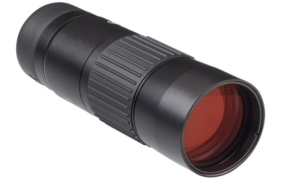
The Opticron Explorer WA ED-R 8×42 Monocular sits in a more disciplined middle ground, focusing on optical quality and usability rather than raw magnification or gimmicks. That said, it is not flawless and it will frustrate users who expect binocular-like immersion from a single eyepiece system.
This monocular uses an 8x magnification paired with a 42mm objective lens, which is a practical combination for bird watching. It keeps image shake manageable while still delivering enough reach for identifying species at moderate distances. The inclusion of ED glass is not marketing fluff here; it genuinely helps reduce color fringing and improves edge clarity, especially when viewing birds against bright skies or reflective water surfaces. However, it is still a monocular, meaning depth perception is inherently limited compared to binocular setups, which can make tracking fast flying birds less intuitive.
The optical system uses phase corrected roof prisms with high transmission coatings, which improves contrast and brightness consistency across the field of view. This is where the device separates itself from cheaper compact monoculars. Images feel more natural and less “flat,” which matters when distinguishing subtle plumage differences. The wide angle eyepiece also improves situational awareness, but it does not fully eliminate the narrow viewing feel common to monocular designs.
Ergonomically, it is built for controlled, deliberate observation rather than quick grab and scan use. The wide focusing wheel is smooth and precise, allowing fine adjustments when locking onto small or partially hidden birds. The retractable eyecup and long eye relief make it comfortable for glasses wearers, which is often overlooked in lower tier models. Still, it is slightly less pocket friendly than ultra compact monoculars, meaning portability is good but not exceptional.
Weather resistance is solid with nitrogen waterproof construction, so it can handle humidity, rain, and temperature changes without internal fogging. It is also tripod compatible, which is a realistic acknowledgment that steady long viewing benefits from support, even at 8x magnification. The limitation is that this makes it feel less like a quick field tool and more like a precision instrument.
Key specifications
| Specification | Detail |
|---|---|
| Brand | Opticron |
| Model | Explorer WA ED-R 8×42 |
| Magnification | 8x |
| Objective lens diameter | 42 mm |
| Glass type | ED glass objective |
| Prism type | Phase corrected roof prism |
| Optical coating | High light transmission multi coating |
| Field of view | Wide angle design |
| Close focus distance | 1.9 m |
| Eye relief | Long eye relief for glasses users |
| Focus type | Wide wheel manual focus |
| Waterproofing | Nitrogen sealed, waterproof construction |
| Mounting | Tripod compatible |
Pros
- High quality ED glass improves color accuracy and sharpness
- 8x magnification keeps image stable and easy to track
- Wide angle view improves situational awareness
- Comfortable eye relief for glasses users
- Strong phase corrected prism system enhances contrast
- Close focus capability useful for nearby bird observation
- Solid waterproof and fogproof construction
Cons
- Tripod use may feel unnecessary for quick bird spotting
- Less convenient for rapid movement or spontaneous scanning
4. Belmeri10-300×40 Monoculars for Adults High Powered 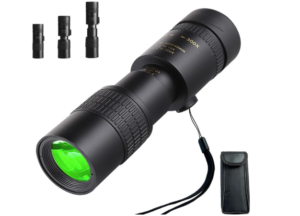
Belmeri 10-300×40 Monocular Telescope is a textbook example of this tradeoff. It markets extreme magnification, but in practice it behaves more like a budget, variable-clarity optic that prioritizes novelty over dependable bird identification performance.
This monocular offers a 10–300x zoom range paired with a 40mm objective lens, which immediately raises a red flag for realistic bird watching use. At lower magnification, it can function as a basic spotting tool for general observation. However, as soon as you push beyond moderate zoom levels, image stability collapses. Even the slightest hand movement becomes exaggerated, and the image loses clarity fast. In practical birding scenarios, anything above roughly 20x becomes difficult to use without a tripod, and even then the optical limitations of the system prevent consistent sharpness.
It uses BAK4 prism glass and FMC coatings, which are standard features in budget monoculars meant to improve light transmission and reduce internal reflection. Under good daylight conditions, you can get acceptable brightness and color reproduction at lower zoom settings. But the quality drops quickly when zoom is increased, revealing softness and reduced contrast. This is not a surprise given the price bracket, but it directly contradicts the advertised “high definition zoom” claims.
Build design is lightweight and pocket friendly, which makes it easy to carry during travel or casual outdoor use. However, the mechanical zoom system introduces another weakness: too many moving parts in a low cost optical system usually means reduced alignment precision. That shows up as inconsistent focus behavior and a “tunnel-like” viewing experience at higher magnification. There is also no stabilization support included, which is a major omission for anything claiming extreme zoom capability.
In real bird watching terms, this device struggles with what matters most: fast acquisition, stable tracking, and reliable clarity. It is more suited for casual curiosity viewing than serious identification work. It can show you something is there, but not always clearly enough to confidently identify details like plumage patterns or subtle movement behavior.
Key specifications
| Specification | Detail |
|---|---|
| Brand | Belmeri |
| Model | Belmeri monocular telescope |
| Magnification | 10x to 300x variable zoom |
| Objective lens diameter | 40 mm |
| Prism type | BAK4 prism |
| Optical coating | FMC (Fully Multi Coated) |
| Focus type | Manual focus |
| Optical tube length | 6.8 inches |
| Dimensions | 5 inches by 1.8 inches by 1.8 inches |
| Mounting | Handheld (no tripod included) |
| Compatible devices | Smartphone compatible |
| Intended use | Bird watching, stargazing, concerts, hiking |
Pros
- Very low price makes it accessible for beginners
- Wide zoom range for experimental viewing
- Lightweight and easy to carry in a pocket or bag
- BAK4 prism improves baseline image quality at low zoom
- FMC coatings help maintain acceptable brightness in daylight
- Simple manual operation with no learning curve
Cons
- Focus becomes inconsistent at long distances
- Limited usefulness for serious bird identification
5. PhysioPhyx Monocular Telescope 80 x 100
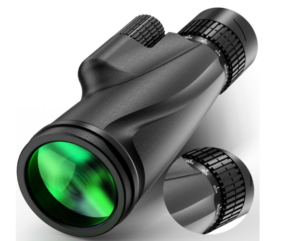
The Best Compact Monocular for Bird Watching category is where marketing exaggeration collides directly with real optical physics, and the PhysioPhyx 80×100 High Powered Monocular Telescope is a clear example of that conflict. It presents itself as a powerful all purpose viewing tool, but its actual design reveals a budget focused optic that prioritizes advertised magnification over real world image stability and clarity.
This monocular claims extremely high magnification with an 80–100x range paired with a 21mm objective lens, which is fundamentally mismatched for bird watching. In practice, that small objective lens cannot gather enough light to support high magnification viewing, especially in outdoor environments where lighting constantly changes. At usable levels, meaning much lower than the advertised maximum, you can still identify general shapes and movement. However, fine detail such as feather structure or subtle color differences becomes unreliable even in daylight.
The optical system uses BAK4 prism glass and FMC coatings, which are standard attempts to improve brightness and reduce internal reflection. These features do help slightly at lower magnification, but they cannot compensate for the physical limitations of the lens size. Once you increase zoom, the image quickly becomes soft and loses contrast. This is not a defect in a single unit, it is a predictable outcome of pushing extreme magnification through a small optical system.
Stability is another major constraint. Even though a tripod is included, the overall system still struggles with image shake due to the high magnification claim. At practical viewing levels, the tripod becomes necessary rather than optional. The smartphone adapter adds a documentation angle, but it does not improve optical performance. It mainly encourages users to treat the device as a filming gadget rather than a serious bird identification tool.
Build quality is acceptable for its price range, with a rubberized exterior that improves grip and protects against minor impacts. It is also relatively lightweight, which makes it easy to carry. However, the internal optical alignment is clearly optimized for cost efficiency rather than precision, which shows up in inconsistent sharpness at distance.
Overall, this monocular is designed more to impress on paper than to perform consistently in the field. It can work for casual observation or short range viewing, but it falls apart when used for serious bird watching where stability, clarity, and accurate detail recognition matter.
Key specifications
| Specification | Detail |
|---|---|
| Brand | PhysioPhyx |
| Model | YYYY8888 |
| Magnification | 80x to 100x adjustable (claimed) |
| Objective lens diameter | 21 mm |
| Prism type | BAK4 prism |
| Optical coating | FMC (Fully Multi Coated) |
| Focus type | Manual dual focus wheel |
| Weight | 1 pound |
| Dimensions | 5.45 inches by 4.69 inches by 4.86 inches |
| Mounting | Handheld with tripod included |
| Smartphone compatibility | Yes |
| Intended use | Bird watching, hiking, wildlife observation |
Pros
- Very affordable entry price
- Includes tripod and smartphone adapter
- Lightweight and easy to transport
- Rubber coating improves grip and basic durability
- Usable for casual close range observation
- Simple setup for beginners
Cons
- Extreme magnification is not realistic in practice
- Requires tripod for almost all stable viewing
Also Read: Best Monocular for Bird Watching
Advantages of Best Compact Monocular for Bird Watching
1. Clear purchase direction for beginners
This keyword forces focus on a very specific use case, which reduces confusion for beginners who might otherwise drift between binoculars, spotting scopes, and random zoom gadgets. It narrows decision making to a single category. However, it can also oversimplify choices and hide the fact that performance differences inside this category are massive.
2. Filters out irrelevant optical equipment
By specifying compact monoculars and bird watching, the keyword eliminates unrelated gear like astronomy telescopes or heavy professional spotting scopes. This is useful because those categories behave very differently in the field. The downside is that some genuinely better alternatives like compact binoculars may be unfairly excluded even though they often outperform monoculars for bird tracking.
3. Encourages portability focused evaluation
The keyword naturally pushes attention toward size, weight, and ease of carrying. That matters in bird watching where movement is constant and setup time kills opportunities. The weakness here is that portability becomes overvalued, sometimes at the expense of optical quality and stability, which are more important for accurate identification.
4. Helps compare real world usability instead of specs alone
When framed properly, this keyword shifts evaluation toward how devices perform in nature rather than just magnification numbers. This is important because many monoculars exaggerate zoom capabilities. Still, many buyers still get trapped by spec marketing, so the keyword alone does not prevent poor choices.
5. Supports quick identification of budget tiers
Using this keyword helps separate entry level monoculars from mid range and premium ones within the same category. That makes it easier to compare tradeoffs like glass quality, coating systems, and durability. However, price alone can be misleading because some expensive models still underperform optically.
6. Improves content structure for reviews and guides
From a content perspective, the keyword creates a clean framework for organizing reviews, comparisons, and buying guides. It forces structure around a single intent. The downside is that it can encourage repetitive or formulaic content that ignores deeper performance nuances between models.
7. Highlights field practicality over technical complexity
This keyword naturally prioritizes real outdoor use like bird tracking, focus speed, and grip comfort. That is more useful than lab based specs. However, it can also downplay important optical engineering details like prism quality or light transmission, which strongly affect image clarity.
8. Makes decision making faster but riskier
The biggest advantage is speed. It helps users quickly arrive at a shortlist instead of drowning in options. But this speed comes at a cost. It increases the risk of choosing based on simplified rankings instead of understanding whether a monocular actually performs well in real bird watching conditions.
Factors to Consider When Choosing the Best Compact Monocular for Bird Watching
1. Magnification Balance
Magnification is often treated as the main selling point, but higher numbers are not automatically better. In real bird watching, excessive magnification reduces stability, narrows the field of view, and makes it harder to track moving subjects. A balanced level is more effective because it keeps the image steady enough for identification instead of turning every movement into a blur.
2. Objective Lens Size
The objective lens determines how much light enters the optic, which directly affects brightness and clarity. Larger lenses generally perform better in low light conditions like early morning or late evening bird activity. However, increasing size also adds weight and bulk, so there is always a tradeoff between portability and image brightness that must be managed carefully.
3. Optical Glass Quality
The type of glass used in the internal system affects sharpness, color accuracy, and edge clarity. Higher quality glass reduces distortions and improves detail recognition, which is critical when distinguishing similar bird species. Lower quality optics may still look acceptable at first glance but fail when fine details matter.
4. Prism System Design
The prism system controls how light is reflected and corrected inside the device. A well designed system improves contrast and prevents image distortion, especially at distance. Poor prism design often results in dull or flat images where fine textures and subtle color differences are lost, making accurate identification more difficult.
5. Field of View
Field of view determines how wide an area you can see at once. A wider view makes it easier to locate and track moving birds, especially in dense environments or flight situations. Narrow field of view forces constant repositioning, which slows down observation and increases the chance of losing sight of the subject.
6. Focus Speed and Precision
Fast and precise focusing is essential because birds rarely stay still for long. A smooth focusing system allows quick adjustments without overshooting clarity. If focus is slow or inconsistent, you will frequently miss key identification moments, especially when birds are partially hidden or moving through vegetation.
7. Durability and Weather Resistance
Outdoor bird watching exposes equipment to rain, dust, humidity, and temperature changes. Proper sealing and protective construction prevent internal fogging and long term damage. Without this, even good optical systems can become unreliable in real field conditions, especially in changing climates.
8. Portability and Handling Comfort
Since bird watching involves long periods of movement, weight and grip comfort matter more than many people expect. A device that is too heavy or awkward leads to fatigue and reduced usage over time. Good handling design ensures stability during viewing while still being easy to carry and deploy quickly when a sighting occurs.
Frequently Asked Questions About the Best Compact Monocular for Bird Watching
1. What magnification is actually useful for bird watching?
Higher magnification sounds impressive, but in real field conditions it quickly becomes harder to control. Excessive zoom increases image shake and reduces your ability to track moving birds smoothly. In practice, moderate magnification is more effective because it keeps the image stable while still giving enough detail for identification. The real advantage comes from balance, not maximum power, since stability and clarity matter more than extreme reach.
2. Is a monocular better than binoculars for bird watching?
A monocular is lighter and easier to carry, which makes it convenient for quick, on the go observation. However, binoculars generally provide better depth perception and easier tracking because both eyes are engaged. That means monoculars trade viewing comfort and stability for portability. If your priority is fast movement and lightweight gear, a monocular works, but if accuracy and comfort during long sessions matter more, binoculars usually perform better.
3. What features matter most when choosing a compact monocular?
The most important factors are optical clarity, stability, and usability in real outdoor conditions. Good lens quality and coatings determine how sharp and natural the image looks, while a stable magnification level ensures you can actually use it without constant shaking. Weather resistance and comfortable handling also matter because bird watching often happens in unpredictable environments. A strong monocular is not defined by extreme specs, but by how consistently it performs in real field use.
Conclusion
The Best Compact Monocular for Bird Watching sits in a space where practicality matters more than flashy specifications, and the real value comes from how well a device balances clarity, portability, and stability in actual outdoor use. Across the models discussed, the strongest options are the ones that avoid extreme magnification claims and instead focus on usable zoom levels, reliable optical glass, and consistent image performance in changing light conditions. Devices that prioritize balanced magnification, decent objective lens size, and solid coatings tend to perform far better in real bird watching situations than those that advertise unrealistic zoom ranges but fail to maintain clarity in the field.
Ultimately, these monoculars are great for bird watching because they offer a lightweight, mobile alternative to bulkier optics while still delivering enough detail to identify species at reasonable distances. They are especially useful for users who need quick deployment, easy carrying, and simple operation during hikes or nature walks. However, the key takeaway is that effectiveness depends less on maximum specs and more on real world usability. The best choices are those that remain steady, clear, and comfortable over time, rather than those that simply look powerful on paper.