Best Thermal Imaging Monocular for Hunting options have become increasingly popular among hunters who want better target detection, improved visibility in low light conditions, and more reliable performance across changing terrain and weather. Unlike traditional optics, thermal monoculars detect heat signatures, making them highly effective for locating wildlife, tracking movement, and improving overall situational awareness during day or night use. Modern models also combine features such as advanced thermal sensors, long detection ranges, wireless connectivity, recording capabilities, durable weather resistant construction, and extended battery performance to create a more capable hunting experience.
In this guide, you will explore the most important features that define a quality thermal monocular, discover top picks across different performance categories, learn the essential factors to consider before buying, and find answers to common questions. Whether your priority is portability, image clarity, detection distance, or advanced functionality, this guide is designed to help you choose the right thermal monocular for your hunting needs.
5 Best Thermal Imaging Monocular for Hunting
1. TOPDON TS004 Pro Thermal Imaging Monocular
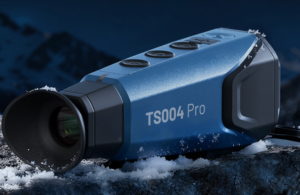
Finding the Best Thermal Imaging Monocular for Hunting means choosing a device that balances image quality, battery endurance, detection performance, and field durability. The TOPDON TS004 Pro positions itself as a strong option for hunters who need dependable thermal visibility during low light conditions, foggy environments, and long outdoor sessions. Built with a 384 × 288 infrared resolution and supported by a smooth 50Hz refresh rate, this monocular delivers detailed thermal imaging that helps users identify movement and heat signatures with greater confidence.
One of the most useful qualities of the TS004 Pro is its ability to maintain clear thermal observation across changing outdoor conditions. Combined with a 19mm objective lens and a detection distance reaching up to 650 yards, users can scan wider areas while still maintaining visible detail at practical observation ranges. This makes it suitable for wildlife tracking, target detection, and general outdoor surveillance.
Battery performance plays an important role in thermal optics, and the TS004 Pro performs well in this area. Its integrated 5000mAh battery supports up to 11 hours of continuous use, reducing interruptions during extended hunting sessions. This longer operating time gives hunters more flexibility during early morning or overnight outings without frequent charging concerns.
The wireless connectivity feature adds another layer of convenience. Through the TopInfrared mobile application, users can connect the monocular to a smartphone for live viewing, image capture, and video recording with audio support. Offline functionality also improves usability in remote locations where network access may not be available.
Durability is another area where the TS004 Pro performs effectively. The silicone protected body and IP67 waterproof construction help protect the device against dust, rain exposure, and accidental drops up to 2 meters. Hunters who frequently move through rough terrain or changing weather conditions will appreciate this level of protection.
Key Specifications
| Specification | Details |
|---|---|
| Brand | TOPDON |
| Model | TS004 Pro |
| Thermal Resolution | 384 × 288 |
| Display Resolution | 512 × 384 |
| Refresh Rate | 50Hz |
| Objective Lens Diameter | 19mm |
| Detection Range | Up to 650 YD |
| Clear Detail Visibility | Up to 146 YD |
| Battery Capacity | 5000mAh |
| Battery Runtime | Up to 11 Hours |
| Connectivity | Wireless App Connection |
| Mobile App | TopInfrared |
| Waterproof Rating | IP67 |
| Focus Type | Manual Focus |
| Included Battery | 1 × 12V Battery |
Pros
- Excellent thermal image clarity with 384 × 288 IR resolution
- Long lasting battery supports up to 11 hours of operation
- Wireless monitoring and recording through mobile app integration
- Strong IP67 protection against water, dust, and outdoor conditions
- Reliable detection range suitable for hunting and wildlife observation
Cons
- Manual focus may require adjustment during fast moving observation
2. AGM Global Vision Taipan V2 Thermal Imaging monocular
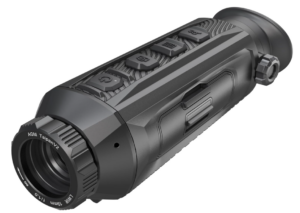
When searching for the Best Thermal Imaging Monocular for Hunting, image precision, detection distance, durability, and recording capability often separate average optics from reliable field tools. The AGM Global Vision Taipan V2 is designed for hunters and outdoor users who need dependable thermal performance during low visibility conditions. Featuring a 320 × 256 thermal sensor combined with advanced 12μm technology and image enhancement processing, this monocular produces detailed thermal views that help reveal movement and heat signatures more effectively.
The Taipan V2 performs particularly well across open landscapes and wooded environments thanks to its 19mm lens and detection range reaching up to 950 meters. Combined with adjustable 3x to 22.5x digital zoom, users can scan broad areas and then narrow focus when additional detail is needed. This flexibility makes the monocular suitable for wildlife tracking, observation, and extended hunting sessions.
Another useful feature is the integrated multimedia capability. Users can record thermal videos together with audio directly onto the built in 16GB storage. Through Wi Fi connectivity and the AGM Connect App, footage can be streamed, transferred, and managed directly from a smartphone, creating a more connected field experience.
Battery efficiency is supported through intelligent power management. A rechargeable battery delivers up to 6 hours of use, while the built in 90 degree tilt sensor automatically powers off the display when the monocular is lowered, helping extend operational time. Combined with IP67 waterproof protection and rubber overmolding, the Taipan V2 is built to remain dependable in demanding outdoor environments.
Key Specifications
| Specification | Details |
|---|---|
| Brand | AGM Global Vision |
| Model | Taipan V2 19 320 |
| Thermal Sensor | 320 × 256 |
| Sensor Technology | 12μm |
| Objective Lens | 19mm |
| Digital Zoom | 3x to 22.5x |
| Detection Range | Up to 950 Meters |
| Display Resolution | 1280 × 960 LCOS |
| Internal Storage | 16GB |
| Video Recording | Yes |
| Audio Recording | Yes |
| Wireless Connectivity | Wi Fi |
| Mobile App | AGM Connect |
| Battery Runtime | Up to 6 Hours |
| Waterproof Rating | IP67 |
| Focus Type | Auto Focus |
| Weight | 3.25 Pounds |
Pros
- Excellent thermal clarity with advanced 12μm sensor technology
- Long detection range supports wide area observation
- Built in video and audio recording with internal storage
- Wi Fi streaming and remote access through AGM Connect App
- Rugged IP67 construction suitable for harsh outdoor conditions
Cons
- Digital zoom at higher levels reduces fine image detail
3. RIX Pocket K3 Portable Thermal Monocular
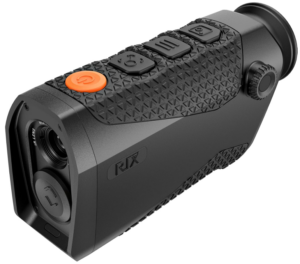
Choosing the Best Thermal Imaging Monocular for Hunting often comes down to balancing image quality, portability, battery flexibility, and field usability. The RIX Pocket K3 is designed for hunters who want thermal capability in a lightweight and compact format without carrying bulky equipment. With a 384 × 288 thermal sensor, 15mm objective lens, and 50Hz refresh rate, this monocular aims to provide smooth thermal observation for tracking movement and detecting heat signatures in challenging conditions.
One of the strongest advantages of the Pocket K3 is portability. Weighing only 0.47 pounds and measuring under five inches in length, the device is easy to carry during long outdoor sessions. Its compact construction makes quick deployment possible while reducing fatigue during extended use. The integrated 1/4 inch to 20 tripod interface also gives users additional stability during stationary observation.
Image performance remains competitive for a handheld thermal unit in this category. The combination of a 384 resolution thermal sensor and RIX RET image enhancement technology improves thermal contrast and overall scene visibility. Electronic Image Stabilization further supports viewing comfort by minimizing the effects of minor hand movement during handheld operation. Combined with the 800 × 600 OLED display, the result is a clearer and more comfortable viewing experience.
The Pocket K3 also introduces practical digital features that improve field use. Built in Wi Fi supports remote viewing and media transfer, while integrated photo, audio, and video recording with 8GB internal memory allows users to capture important observations. Its replaceable power system offers flexibility for longer hunting trips where charging access may be limited.
With a maximum detection range reaching up to 853 yards under controlled conditions and a wide 17.5 degree field of view, the Pocket K3 gives hunters the ability to scan large areas efficiently while maintaining thermal awareness across changing terrain.
Key Specifications
| Specification | Details |
|---|---|
| Brand | RIX |
| Model | Pocket K3 |
| Thermal Resolution | 384 × 288 |
| Refresh Rate | 50Hz |
| Objective Lens Diameter | 15mm |
| Base Magnification | 2x |
| Field of View | 17.5 Degrees |
| Detection Range | Up to 853 Yards |
| Display Resolution | 800 × 600 OLED |
| Image Stabilization | Electronic Image Stabilization |
| Image Processing | RET Image Enhancement |
| Recording Functions | Photo Audio and Video |
| Internal Storage | 8GB |
| Connectivity | Wi Fi |
| Tripod Interface | 1/4 inch to 20 |
| Dimensions | 4.9 × 1.8 × 2.9 Inches |
| Weight | 0.47 Pounds |
Pros
- Compact and lightweight design for easy carry
- 384 × 288 thermal sensor produces clear thermal imaging
- Electronic Image Stabilization improves handheld viewing
- Replaceable power system supports extended field use
- Built in Wi Fi and recording functions improve usability
Cons
- Limited 8GB storage may fill quickly during long recordings
4. DNT Optics – Hound Thermal Imaging Monocular
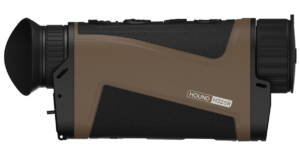
Selecting the Best Thermal Imaging Monocular for Hunting requires more than thermal visibility alone. Accuracy, target measurement, image quality, and field usability all influence real world performance. The DNT Optics HOUND H325R brings together thermal observation with integrated ranging and ballistic support, creating a feature rich solution for hunters who want more than standard heat detection.
The HOUND H325R combines a high sensitivity 12μm thermal sensor with an impressive 18mK sensitivity rating to capture subtle heat differences across challenging environments. Supported by AI driven Image Super Resolution processing, the monocular enhances scene clarity and improves target definition, helping users identify animals and movement even in dense vegetation, low visibility conditions, or complete darkness.
One of the most advanced capabilities of this model is the built in laser rangefinder paired with an onboard ballistic calculator. The laser rangefinder measures targets from 5 to 1200 yards and combines real time distance data with customized ballistic information to generate aiming adjustments. This functionality gives hunters additional precision during longer distance observation and shooting scenarios.
Viewing quality is equally strong thanks to the 1024 × 768 Micro OLED display and multiple thermal color palettes including White Hot, Black Hot, Red Hot, and Iron Hot. These viewing modes allow users to adapt thermal presentation depending on terrain, environmental contrast, and personal preference. Combined with a comfortable 25mm eye relief and fast diopter adjustment, extended observation sessions remain more comfortable.
Portability also works in the HOUND’s favor. Weighing under 11 ounces and constructed from durable polycarbonate with an IP67 waterproof and dust resistant design, the monocular remains compact while offering durability for demanding outdoor conditions. Its ambidextrous design further improves handling across different hunting environments.
Key Specifications
| Specification | Details |
|---|---|
| Brand | DNT Optics |
| Model | HOUND H325R |
| Style | 384 25 |
| Thermal Sensor | 12μm |
| Thermal Sensitivity | 18mK |
| Laser Rangefinder | Yes |
| Rangefinder Distance | 5 to 1200 Yards |
| Ballistic Calculator | Integrated |
| Display | 1024 × 768 Micro OLED |
| Thermal Palettes | White Hot Black Hot Red Hot Iron Hot |
| Eye Relief | 25mm |
| Field of View | 18.4 × 13.8 Yards at 100 Yards |
| Waterproof Rating | IP67 |
| Weight | 10.55 Ounces |
| Material | Polycarbonate |
Pros
- Integrated laser rangefinder improves distance measurement accuracy
- Built in ballistic calculator supports more precise aiming
- High sensitivity thermal sensor captures subtle heat signatures
- Lightweight construction improves portability during long hunts
- Multiple thermal palettes increase viewing flexibility
Cons
- Advanced features may require setup time for new users
5. Pulsar Axion Compact Thermal Monocular
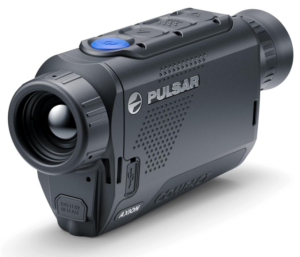
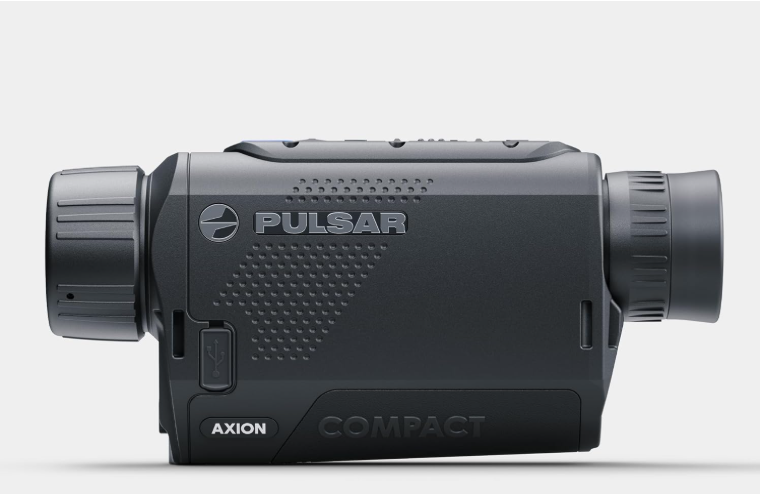
Finding the Best Thermal Imaging Monocular for Hunting often means choosing a device that combines portability with dependable thermal performance in changing outdoor conditions. The Pulsar Axion Compact XQ19 is designed for hunters who want strong thermal sensitivity and lightweight carry without sacrificing image quality. Built around a 384 × 288 thermal sensor and advanced thermal sensitivity below 18mK NETD, this monocular is capable of revealing subtle temperature differences that may otherwise go unnoticed.
The Axion Compact performs particularly well in realistic hunting environments where weather and terrain create visibility challenges. Rain, humidity, fog, and partial cover can make conventional optics less effective, but the highly sensitive uncooled microbolometer detector helps maintain thermal separation and target recognition. This makes the device useful for tracking game, scanning brush, and locating movement across varied terrain.
Viewing quality is supported by a 640 × 400 AMOLED display that delivers strong contrast and smooth image rendering. Compared with traditional display technologies, the AMOLED panel improves visibility of thermal scenes while maintaining responsiveness across different temperatures. Combined with the 19mm f/1.0 lens and adjustable 1.5x to 6x digital zoom, users can switch between wider area scanning and closer target inspection with ease.
Portability is another major advantage. At only 0.55 pounds and with a compact 5.3 inch body, the Axion remains easy to carry during extended outdoor sessions. Despite its smaller size, the optical system maintains practical field performance while reducing fatigue during prolonged observation.
The fast aperture lens contributes additional brightness and thermal efficiency, helping improve image visibility in difficult conditions and supporting dependable thermal observation during low light and nighttime hunting situations.
Key Specifications
| Specification | Details |
|---|---|
| Brand | Pulsar |
| Model | Axion Compact XQ19 |
| Thermal Resolution | 384 × 288 |
| Thermal Sensitivity | Below 18mK NETD |
| Sensor Type | Uncooled Microbolometer |
| Objective Lens | 19mm f/1.0 |
| Digital Zoom | 1.5x to 6x |
| Display Resolution | 640 × 400 AMOLED |
| Optical Tube Length | 5.3 Inches |
| Weight | 0.55 Pounds |
| Exit Pupil | 4mm |
| Battery | 1 × 9V Included |
| Mount Compatibility | Tripod |
Pros
- Excellent thermal sensitivity for detecting subtle heat differences
- Compact and lightweight design improves portability
- Sharp AMOLED display delivers strong thermal contrast
- Flexible zoom range supports scanning and observation
- Performs reliably in fog humidity and challenging conditions
Cons
- Mid range configuration prioritizes portability over extreme distance detection
Related Article: 5 Best Thermal Monocular for Coyote Hunting
Advantages of Best Thermal Imaging Monocular for Hunting
1. Improved Visibility in Complete Darkness
One of the biggest advantages of using the Best Thermal Imaging Monocular for Hunting is the ability to detect heat signatures even in complete darkness. Unlike traditional optics that depend on available light, thermal monoculars identify temperature differences, allowing hunters to observe animals and movement clearly during nighttime or low light conditions.
2. Better Performance Through Challenging Weather Conditions
Thermal imaging technology performs effectively in environments where visibility is reduced by fog, humidity, light rain, or dust. Heat detection allows hunters to maintain visual awareness even when environmental conditions limit standard optical equipment, improving consistency across changing outdoor situations.
3. Faster Target Detection Across Large Areas
Thermal monoculars make it easier to scan wide landscapes and quickly identify heat producing objects. Instead of relying on movement or color contrast, users can locate animals faster because thermal imaging highlights living targets against the surrounding environment.
4. Enhanced Wildlife Tracking Capability
Tracking becomes more efficient because thermal imaging helps reveal heat trails and detect hidden animals behind light vegetation or brush. This improves observation accuracy and reduces time spent searching, especially during early morning and evening hunting periods.
5. Increased Observation Range and Situational Awareness
Modern thermal monoculars often provide extended detection distances that allow hunters to monitor activity far beyond normal visual limits. This expanded awareness helps users evaluate terrain, identify movement patterns, and make better decisions before approaching an area.
6. Greater Convenience with Recording and Wireless Features
Many advanced thermal monoculars include built in video recording, image capture, internal storage, and wireless connectivity. These functions allow hunters to document observations, review activity later, and connect devices for easier viewing and content transfer.
7. Comfortable and Efficient Long Duration Use
Compact designs, lightweight construction, image stabilization, and ergonomic viewing systems make thermal monoculars easier to carry and use for extended periods. Long battery performance in many models also supports uninterrupted observation during lengthy hunting sessions.
8. Improved Adaptability Across Different Hunting Environments
The Best Thermal Imaging Monocular for Hunting can be used across forests, open fields, mountainous terrain, and dense brush. Features such as multiple thermal palettes, zoom controls, weather resistance, and advanced sensors allow hunters to adapt quickly to different environments and observation requirements.
Factors to Consider When Choosing the Best Thermal Imaging Monocular for Hunting
1. Thermal Sensor Resolution
Thermal sensor resolution directly affects how much detail the monocular can display. Higher resolutions generally produce clearer thermal images and make it easier to distinguish animals, terrain features, and movement at different distances. A stronger sensor also improves recognition quality in difficult viewing conditions.
2. Detection Range
Detection range determines how far the monocular can identify heat sources. Hunters should consider both maximum detection distance and practical recognition distance because identifying a heat source and clearly understanding what it is are different levels of performance. Selecting a range that matches your hunting environment improves usability.
3. Thermal Sensitivity
Thermal sensitivity, commonly expressed as NETD, measures how effectively the device detects small temperature differences. Lower thermal sensitivity values typically improve performance in fog, rain, humidity, and low contrast conditions. This factor becomes especially important for detecting partially concealed animals.
4. Lens Size and Magnification
Objective lens diameter and magnification influence field of view and observation distance. Larger lenses may improve longer range performance, while lower magnification often supports wider scanning coverage. Choosing the right balance depends on whether you prioritize broad terrain observation or more detailed distant viewing.
5. Display Quality
The display affects how comfortable and accurate thermal viewing feels during use. Higher resolution displays with strong contrast improve target visibility and reduce eye strain during extended sessions. Features such as smooth refresh rates and quality screen technology also contribute to a more natural viewing experience.
6. Battery Performance
Battery runtime is critical for uninterrupted hunting sessions. Longer operating time reduces charging interruptions and improves reliability during overnight or extended outdoor use. Replaceable or rechargeable power options can also influence convenience depending on how and where the monocular will be used.
7. Durability and Weather Resistance
Outdoor conditions can be unpredictable, making build quality an important consideration. Water resistance, dust protection, shock resistance, and rugged construction help maintain performance across rough terrain and changing weather conditions. A durable monocular provides greater long term reliability.
8. Connectivity and Recording Features
Modern thermal monoculars often include wireless connectivity, internal storage, image capture, and video recording functions. These features improve usability by allowing remote viewing, documentation, and easier transfer of recorded content. Choosing only the features you actually need helps avoid unnecessary complexity and cost.
Frequently Asked Questions About Best Thermal Imaging Monocular for Hunting
1. What is the best thermal imaging monocular for hunting?
The best thermal imaging monocular for hunting depends on factors such as thermal resolution, detection range, battery life, durability, display quality, and additional features like recording or wireless connectivity. Hunters should choose a model based on their typical hunting distance, environment, and whether they prioritize portability or advanced functionality.
2. How far can a thermal imaging monocular detect animals?
Detection range varies depending on sensor quality, lens size, environmental conditions, and target size. Many thermal monoculars can detect heat signatures from several hundred yards to over one thousand yards under favorable conditions. However, recognition distance for identifying the target is usually shorter than the maximum detection specification.
3. Is a thermal imaging monocular worth buying for hunting?
A thermal imaging monocular can be a valuable tool for hunters who operate in low light, dense vegetation, or changing weather conditions. Thermal technology improves target detection, situational awareness, and tracking efficiency while reducing dependence on ambient light, making hunting observation more effective across different environments.
Conclusion
Best Thermal Imaging Monocular for Hunting options continue to evolve by combining improved thermal sensitivity, longer detection distances, better display technology, and practical field features that enhance the overall hunting experience. Whether prioritizing portability, extended observation range, advanced recording functions, wireless connectivity, or rugged weather resistance, these thermal monoculars provide hunters with a more efficient way to detect movement and identify heat signatures across challenging environments and lighting conditions.
Choosing the right thermal monocular ultimately depends on hunting style, terrain, viewing distance, and preferred features. The strongest options deliver a balanced combination of image clarity, dependable battery performance, durable construction, and comfortable operation for extended use. With the right selection, hunters gain improved situational awareness, more reliable target detection, and greater confidence during every outdoor session.