
Best Thermal Monocular for Hog Hunting is built for hunters who need reliable heat detection in environments where visibility drops to near zero. These devices are highly effective for spotting and tracking hogs at night, in thick brush, and across open fields where traditional optics struggle to perform. Their ability to reveal heat signatures instantly gives hunters a major advantage in locating fast moving animals and making quicker decisions in the field.
In this guide, you will see what makes these monoculars effective for hog hunting, the key features that matter most, and how different performance levels impact real world use. It also covers top picks across different categories, a practical buying guide to help match the right device to your hunting style, and frequently asked questions to clear up common confusion before making a choice.
5 Best Thermal Monocular for Hog Hunting
1. ATN BlazeSeeker 6, 10 mm Thermal Monocular
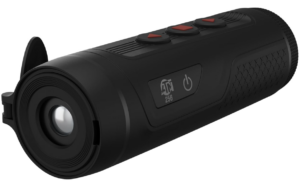
The Best Thermal Monocular for Hog Hunting needs to deliver one thing above all else, fast and reliable heat detection in low visibility environments where hogs move quickly and unpredictably. The ATN BlazeSeeker 6 is designed for hunters who want practical thermal detection without stepping into premium price territory. It combines a 256×192 thermal sensor, a 10 mm germanium lens, and AI assisted image processing to improve visibility in fields, brush, and mixed terrain. While it is not a high resolution system, it focuses on helping users spot and track heat signatures efficiently during night hunts.
The 12 μm sensor with ≤20 mK sensitivity allows the device to pick up temperature differences in animals even when they are partially obscured by grass or light cover. In real hunting scenarios, this means hogs can still be detected in uneven terrain where visual spotting would fail completely. The SHARPIR processing system enhances contrast and edge definition, which helps separate animals from warm backgrounds like soil or vegetation. However, users should understand that this enhancement improves detection more than it improves detailed identification.
The 10 mm germanium lens offers detection up to 460 meters, making it suitable for open fields and farmland hunting. The trade off is a narrower field of view, which requires more deliberate scanning when tracking moving groups of hogs. The 800×600 OLED display provides a clear viewing experience for extended use, and the multiple color palettes help adapt to different environments and heat conditions. This combination is practical for hunting sessions where visibility conditions constantly change.
Built for field conditions, the device weighs only 270 g and carries an IP67 rating for water and dust resistance. It can operate for up to 8 hours on a single charge, which covers most night hunting sessions without interruption. Additional features like WiFi connectivity and onboard recording add convenience for reviewing hunts, but they do not directly impact detection performance.
This monocular performs best when used as a detection and tracking tool rather than a precision identification device. It is designed to help hunters locate heat sources quickly, not to provide ultra detailed imaging at long distances. That distinction is important when setting expectations.
Key Specifications
| Feature | Specification |
|---|---|
| Sensor | 256×192 thermal sensor |
| Pixel Pitch | 12 μm |
| Thermal Sensitivity | ≤20 mK NETD |
| Lens | 10 mm germanium |
| Magnification | 1.7× to 13.6× |
| Detection Range | Up to 460 m |
| Display | 800×600 OLED |
| Field of View | 17.3° × 13.1° |
| Weight | 270 g |
| Protection Rating | IP67 |
| Battery Life | Up to 8 hours |
| Connectivity | WiFi, onboard recording |
Pros
- Reliable heat detection for hog hunting in open terrain
- Lightweight build reduces fatigue during long night use
- Good battery life for standard hunting sessions
- Effective contrast enhancement improves target spotting
- Rugged IP67 design handles harsh outdoor conditions
Cons
- Narrow field of view makes fast tracking more demanding
2. AGM Global Vision Asp-Micro TM160 Thermal Imaging Monocular for Hunting
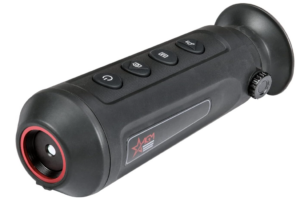
The Best Thermal Monocular for Hog Hunting is not about chasing the highest specs, it is about dependable short range detection in real field conditions where hogs move fast, split up, and often appear in cluttered terrain. The AGM Global Vision Asp-Micro TM160 is positioned as a compact entry level thermal imager designed for hunters who prioritize affordability, portability, and basic thermal awareness over long range detail. It uses a 160×120 infrared detector paired with a 720×540 LCOS display, making it a functional but clearly budget oriented option for short range hog hunting scenarios.
The 160×120 sensor is the defining limitation of this device. It is enough to detect heat signatures, but it does not provide strong image clarity or fine object separation. In practice, this means you will see hogs as heat shapes rather than detailed forms, especially beyond close to mid range distances. The advantage is that detection still works in total darkness, and the high sensitivity thermal core ensures that warm animals stand out against cooler backgrounds like soil or grass. However, in dense brush or mixed heat environments, target distinction can become less precise.
Where this monocular becomes more useful is in its feature set for field utility. The distance measurement function adds practical value for estimating range during hunts, and the highest temperature tracking helps highlight the most active heat source in the scene. The WiFi hotspot capability paired with the AGM Connect app allows real time viewing, recording, and adjustments from a phone, which is useful for hunters who want to review movement patterns or share footage. Digital zoom options from 1x to 4x exist, but increasing zoom on a low resolution sensor does not improve clarity, it only enlarges the image.
The device is also built for extended use with up to 10 hours of battery life and Type C charging, which is a strong point for long night hunts. Its compact handheld design and rugged build make it suitable for rough outdoor conditions, and it remains easy to carry for extended tracking sessions. However, the smaller sensor and basic optical output mean it is best suited for close range scanning rather than long distance surveillance or precision identification.
This monocular should be viewed as a practical entry tool into thermal hunting rather than a high performance imaging system. It performs its core job of detecting heat reliably, but it does not deliver the clarity or range needed for more advanced tracking scenarios. For hunters operating in tight terrain or controlled short range environments, it is functional. For open field long range hog hunting, it quickly reaches its limits.
Key Specifications
| Feature | Specification |
|---|---|
| Sensor | 160×120 infrared detector |
| Display | 720×540 LCOS |
| Detection Range | Short to mid range use |
| Lens | 25 mm objective lens |
| Zoom | 1x, 2x, 4x digital zoom |
| Power Source | Rechargeable battery |
| Battery Life | Up to 10 hours |
| Connectivity | WiFi hotspot, AGM Connect app |
| Functions | Distance measurement, hotspot tracking |
| Recording | Video and image capture |
| Charging | Type C interface |
| Build | Rugged handheld design |
Pros
- Compact and lightweight design for easy field carrying
- Strong battery life suitable for long hunting sessions
- Useful WiFi connectivity with app control and sharing
- Distance measurement feature adds practical hunting value
- Reliable heat detection in complete darkness conditions
Cons
- Low resolution sensor limits image clarity and detail
3. FLIR Scout TK – Compact Thermal Imaging Monocular
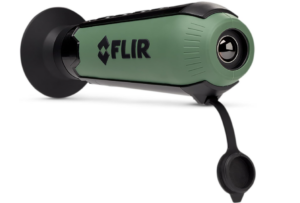
The Best Thermal Monocular for Hog Hunting is not about chasing extreme range numbers, it is about fast detection, simplicity, and reliability when animals move unpredictably in low light conditions. The FLIR Scout TK is a compact entry level thermal monocular designed for users who want straightforward heat detection without complicated menus or advanced learning curves. It uses a 160×120 VOx thermal sensor and is built for short range observation, making it more suitable for close to mid distance wildlife spotting and basic hog detection rather than long range field scanning.
The 160×120 resolution is intentionally basic, and that is the main limitation you need to accept. It will show heat signatures clearly enough to detect animals, but it will not give you detailed outlines or sharp identification at distance. In real hunting environments, this means hogs will appear as clear thermal shapes rather than defined bodies once they move beyond close range. The system focuses on detection consistency rather than visual detail, which is why it performs best when used for quick spotting instead of precise analysis.
With a detection range of up to 90 meters, the Scout TK is clearly built for short range work. This makes it useful in thick brush, woodland edges, or controlled hunting areas where animals are expected to appear relatively close. The 19 mm objective lens supports a stable field of view, and the monocular offers multiple color palettes like white hot, red hot, and iron for improving contrast depending on environmental conditions. However, these modes improve visibility perception, not actual image resolution.
The device is also designed for simplicity. It powers on quickly, requires minimal setup, and is intended for users who want immediate thermal feedback without technical adjustment. It runs on a rechargeable battery offering up to 5 hours of use, which is shorter than some competitors but acceptable for short night hunting sessions. Its waterproof construction ensures it can handle wet or harsh outdoor conditions, which is important for field reliability.
Where this device stands out is not performance superiority, but usability discipline. It strips away complexity and focuses strictly on detection. That also means it lacks advanced features such as high resolution imaging, extended range capability, or smart tracking systems found in higher tier monoculars. It is a tool for quick scanning, not detailed target evaluation.
Key Specifications
| Feature | Specification |
|---|---|
| Sensor | 160×120 VOx microbolometer |
| Detection Range | Up to 90 m |
| Lens | 19 mm objective |
| Display Modes | White hot, red hot, rainbow, iron, lava |
| Focus Type | Manual focus |
| Battery Life | Up to 5 hours |
| Power Source | Rechargeable Li ion |
| Build | Waterproof rugged housing |
| Operation | Simple one button interface |
| Use Case | Short range thermal detection |
Pros
- Very easy to use with minimal learning curve
- Compact and lightweight for fast field deployment
- Reliable heat detection in total darkness
- Multiple color palettes improve target visibility
- Rugged waterproof build suitable for harsh conditions
Cons
- Low resolution restricts detail and identification accuracy
4. AGM Global Vision Taipan V2 Thermal Imaging Monocular
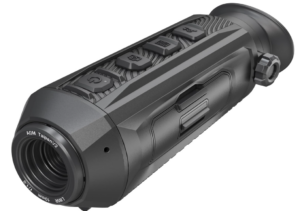
The Best Thermal Monocular for Hog Hunting should deliver three things without compromise: fast detection, usable clarity, and dependable field performance when hogs move through mixed terrain at night. The AGM Global Vision Taipan V2 is positioned as a more advanced handheld thermal option that sits above basic entry level units by offering better sensor sensitivity, improved display quality, and smarter power management. It uses a 12 μm thermal detector with sub 35 mK sensitivity, making it more capable of separating heat signatures in complex outdoor environments where background heat can confuse weaker devices.
The imaging performance is driven by its upgraded thermal sensor and processing system, which allows clearer identification of animals in both open fields and partially obstructed areas. Compared to lower resolution monoculars, this model provides better edge definition and improved contrast, which matters when hogs are moving in groups or partially hidden in brush. The wide field of view combined with digital zoom options from 1.5x to 12x gives it flexibility, allowing hunters to scan large areas and then tighten focus without immediately losing situational awareness.
One of the stronger practical advantages is its smart power management system. The device runs for up to 7 hours on a replaceable rechargeable battery and includes an automatic tilt sensor that turns the display off when not in use. This is not a minor convenience feature, it directly improves field reliability during long night hunts where power loss can become a serious limitation. The 1280×960 LCOS display also improves viewing comfort and clarity compared to lower resolution screens found in entry level thermal units.
Recording and connectivity features are also well integrated. With 16 GB internal storage, users can capture photos and videos directly without external devices. WiFi connectivity through the AGM Connect app allows real time streaming, remote control, and instant review, which is useful for both hunting documentation and tracking movement patterns across sessions. The IP67 waterproof rating and rubber overmolded housing ensure durability in rain, dust, and rough handling conditions, making it suitable for consistent field use rather than controlled environments.
This monocular is best understood as a mid to upper mid range hunting tool. It does not reach premium thermal clarity levels, but it significantly improves usability, detection stability, and field efficiency compared to entry level models. For hog hunting specifically, it offers a balanced mix of range, clarity, and practicality without pushing into overly expensive professional systems.
Key Specifications
| Feature | Specification |
|---|---|
| Sensor | 12 μm thermal detector |
| Thermal Sensitivity | Sub 35 mK |
| Display | 1280×960 LCOS |
| Lens | 15 mm objective |
| Zoom | 1.5x to 12x digital zoom |
| Battery Life | Up to 7 hours |
| Storage | 16 GB built in |
| Connectivity | WiFi, AGM Connect App |
| Protection | IP67 waterproof |
| Power System | Replaceable rechargeable battery |
| Special Features | Tilt sensor auto sleep, video recording |
Pros
- Improved image clarity and contrast for better target separation
- Wide field of view with flexible digital zoom range
- Strong battery management with auto sleep efficiency
- Built in recording with internal storage for field documentation
- Durable IP67 construction suitable for harsh hunting conditions
Cons
- Battery life is moderate compared to some long endurance competitors
5. RIX Titan-T6 Thermal Monocular LRF 35mm 640×480 Thermal Imaging Monocular
Factors to Consider When Choosing Best Thermal Monocular for Hog Hunting
1. Thermal sensor resolution
Sensor resolution determines how clear and detailed the heat image will be. Higher resolution allows better separation between multiple animals and improves identification at longer distances. Lower resolution devices still detect heat but may show targets as vague shapes, which can affect decision making in complex hunting environments. Choosing the right balance depends on whether you prioritize simple detection or detailed recognition.
2. Thermal sensitivity (NETD)
Thermal sensitivity affects how well the device can detect small temperature differences. A lower NETD value generally means better performance in challenging conditions like warm weather or environments where background heat reduces contrast. Good sensitivity helps ensure animals stand out clearly instead of blending into surroundings, improving reliability during night hunts.
3. Detection range capability
Detection range determines how far the device can identify heat signatures. Longer range is useful for open fields where animals may appear far away, while shorter range models are better suited for dense terrain. A mismatch between range capability and hunting environment can reduce effectiveness, so this factor should align with where you typically hunt.
4. Field of view and magnification
Field of view affects how wide an area you can scan at once, while magnification controls how closely you can zoom in on targets. A wider field of view helps track moving groups of hogs, but higher magnification supports identification at distance. Poor balance between these two can make tracking either too slow or too limited.
5. Display quality and resolution
The display determines how clearly thermal data is presented to your eyes. A higher resolution screen reduces strain and improves visibility of small details, especially during long sessions. Low quality displays can make even good sensors appear less effective, so this factor directly influences user experience in the field.
6. Battery life and power efficiency
Battery life is critical for night hunting sessions that can last several hours. Devices with poor battery performance may shut down at important moments or require frequent charging. Efficient power management ensures consistent operation throughout a hunt, reducing interruptions and improving reliability in remote areas.
7. Durability and weather resistance
Hog hunting often takes place in rough environments, including wet grass, mud, dust, and unpredictable weather. A durable build with proper sealing ensures the device continues working under these conditions. Without strong protection, even advanced thermal devices can fail when exposed to harsh outdoor elements.
8. Ease of use and additional features
Ease of use determines how quickly a hunter can operate the device under pressure. Simple controls, fast startup, and intuitive menus improve field efficiency. Additional features like recording, WiFi connectivity, or tracking tools can add value, but only if they do not complicate core operation or slow down decision making during a hunt.