
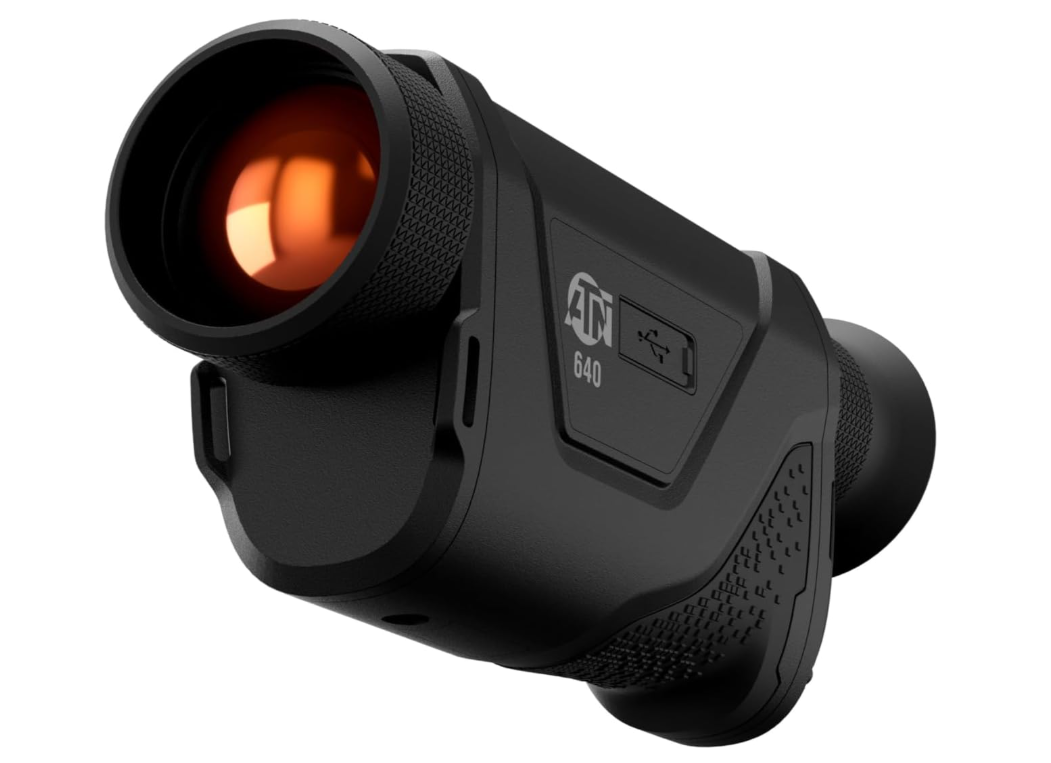
Best Thermal Monocular for Wildlife Watching has become an essential tool for anyone serious about observing animals in environments where visibility is limited or completely absent. These devices are great for wildlife watching because they detect heat signatures instead of relying on light, allowing users to spot animals in darkness, dense forests, fog, or open terrain without disturbing their natural behavior. Unlike traditional optics, they provide a way to locate living targets instantly, even when they are hidden or camouflaged in their surroundings.
In this guide, you will get a clear breakdown of key features that define performance, a comparison of top options across different budget levels, and a practical buying guide to help you avoid common mistakes when choosing a device. It also covers important FAQs to address real field concerns such as detection range, image clarity, and usability in different weather conditions.
5 Best Thermal Monocular for Wildlife Watching
1. ATN BlazeHunter Thermal Imaging Monocular
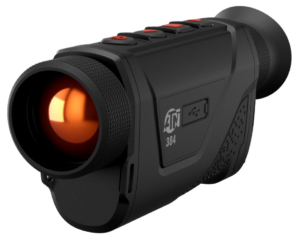
The ATN BlazeHunter Thermal Imaging Monocular is built for users who want high resolution thermal detection combined with distance measurement in a single handheld device. It is aimed at wildlife watchers who need to identify animals in darkness, fog, or dense vegetation where normal optics fail. On paper it looks like a high tier tool, but the real world value is less consistent due to mixed user feedback and questionable reliability signals.
The device uses a 640 by 512 thermal sensor with a vanadium oxide uncooled focal plane detector and a NETD rating below 18 mK. In practical terms, this allows it to pick up subtle heat differences, which helps distinguish animals from their surroundings even at longer ranges. For wildlife observation, this level of sensitivity is useful when tracking movement in complex terrain, but performance consistency is where expectations may not always be met.
Its OLED display is one of its stronger components. The 0.41 inch screen with 1440 by 1080 resolution produces sharp thermal images that make it easier to interpret shapes and movement. The multiple color palettes give flexibility depending on environment conditions, but the usefulness of these modes depends heavily on user familiarity and time spent adjusting settings.
A built in laser range finder adds functional value by allowing direct distance measurement without external tools. This is useful for estimating wildlife distance quickly, especially in open landscapes. Video recording and Wi Fi sharing also add documentation capability, but these are secondary features rather than core advantages.
Battery performance is strong on paper, with up to 14 hours of operation using replaceable rechargeable batteries. This supports long field sessions, although real world runtime can vary depending on usage intensity. At 320 grams, the device stays relatively light, which helps reduce fatigue during extended observation sessions.
Despite these strengths, the product is not without concerns. The low average user rating suggests inconsistent performance or durability issues. At its price point, expectations are high, and inconsistency becomes a serious drawback rather than a minor flaw.
Key Specifications
| Category | Specification |
|---|---|
| Brand | theOpticGuru |
| Model | BlazeHunter |
| Thermal Resolution | 640 by 512 |
| Objective Lens | 35 millimeters |
| Magnification | 3.5 to 28 times (LRF version) |
| Detector Type | Vanadium oxide uncooled focal plane array |
| NETD | Less than 18 mK |
| Display | 0.41 inch OLED, 1440 by 1080 |
| Weight | 320 grams |
| Battery | Replaceable lithium ion, up to 14 hours |
| Key Features | Built in laser range finder, video recording, Wi Fi sharing, multiple color palettes |
Pros
- High resolution thermal sensor improves detection of wildlife in low visibility environments
- Built in laser range finder provides accurate distance measurement without extra equipment
- OLED display delivers sharp image clarity with good detail recognition
- Lightweight build reduces strain during long outdoor observation sessions
- Long battery life supports extended field use without frequent interruptions
Cons
- High price compared to similar thermal monoculars with similar core specifications
2. TOPDON TS004 Thermal Imaging Monocular
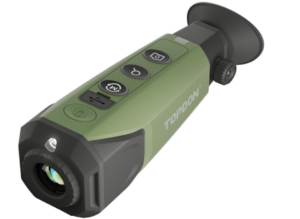
The TOPDON TS004 is positioned as a budget friendly thermal monocular for wildlife watching and general outdoor use. It is popular because it delivers usable thermal imaging at a relatively low price, but it is not a high performance professional device. The real value here is accessibility, not elite imaging quality, and that distinction matters if expectations are not kept realistic.
The device uses a 256 by 192 infrared resolution paired with a 320 by 240 display output. That combination is functional for spotting heat signatures like animals or humans at moderate distances, but it does not provide fine detail. In practical wildlife watching, you will detect presence before you identify clarity. That is a limitation you cannot ignore if you expect crisp imaging.
A 50Hz refresh rate is a strong point at this price level. It makes motion appear smoother compared to cheaper thermal units, which helps when tracking moving animals. However, resolution still caps the level of detail, so smooth motion does not equal sharp recognition. You get responsiveness, not precision imaging.
The 13mm lens supports detection up to around 410 meters, but real clarity is significantly shorter, closer to about 100 meters for meaningful detail recognition. This is typical for entry level thermal monoculars, but it is important not to overestimate its “range” claims. It detects far more than it identifies.
Battery performance is a clear strength. The 5000mAh battery supports up to 11 hours of use, which is solid for extended field sessions. Wireless connectivity through the mobile app adds convenience for recording and viewing, but it also introduces dependency on software stability and phone compatibility, which is not always perfect in real use.
Durability is another strong point. IP67 rating and rugged silicone housing make it resistant to dust, water, and light impact. This makes it suitable for outdoor wildlife environments where weather conditions can change quickly.
However, the device is still constrained by its entry level sensor. You are not getting fine thermal differentiation, and in dense vegetation or complex heat environments, image separation can become unclear. It works best as a detection tool, not an identification tool.
Key Specifications
| Category | Specification |
|---|---|
| Brand | TOPDON |
| Model | TS004 Thermal Imaging Monocular |
| Thermal Resolution | 256 by 192 |
| Display Output | 320 by 240 |
| Lens Size | 13 millimeters |
| Refresh Rate | 50 Hz |
| Detection Range | Up to 410 meters (detection) |
| Battery Capacity | 5000 mAh |
| Battery Life | Up to 11 hours |
| Protection Rating | IP67 waterproof and dustproof |
| Weight | 70 grams |
| Connectivity | Wireless app connection with recording support |
Pros
- Good value entry level thermal monocular for wildlife detection
- Smooth 50Hz refresh rate improves tracking of moving animals
- Strong battery life supports long outdoor sessions without interruption
- IP67 rating makes it reliable in rain, dust, and rough outdoor conditions
- Wireless app connectivity allows easy recording and live viewing
Cons
- Low infrared resolution limits image clarity and target identification
3. CVLIFE 256×192 Thermal Monocular
The CVLIFE 256×192 Thermal Monocular sits in the entry to mid budget category, targeting users who want better display clarity than ultra budget thermal units without moving into expensive professional optics. It combines a basic thermal sensor with a higher resolution display, which creates an interesting imbalance: the screen looks sharper than the actual thermal data feeding it. That gap defines the entire user experience.
The device uses a 256 by 192 thermal sensor with a 12 micron detector and a 15 millimeter lens. This setup is adequate for detecting warm bodies like animals in open or semi open environments, but it does not generate fine structural detail. In wildlife watching, this means you will easily spot movement and heat signatures, but identifying species or subtle features at distance will remain limited.
A 1024 by 768 display is one of the more noticeable strengths. The screen looks clear and smooth compared to many competitors in the same resolution class, and the 0.39 inch size keeps the unit compact. However, the clarity advantage is partly cosmetic because the underlying thermal sensor resolution still restricts true image detail.
Performance is supported by a 50Hz refresh rate, which keeps motion tracking smooth when following moving animals. This is useful in hunting or wildlife scanning scenarios where lag or stutter would make tracking harder. The 2.4x base magnification combined with 4x digital zoom provides flexibility, but zooming too far quickly exposes pixelation and loss of usable detail.
The device also includes six color palettes such as white hot, black hot, rainbow, and iron red. These modes are useful for adapting to environmental conditions like vegetation density or temperature contrast. In practice, the difference between modes is more about comfort and visibility preference than actual performance improvement.
Functionally, it includes WiFi connectivity, app support, photo and video recording, and built in 16GB storage. These features make it more practical for documentation and sharing compared to basic monoculars. However, software based features depend heavily on app stability, which can be inconsistent in budget devices.
Battery life is rated at up to 8 hours, which is lower than some competitors in this category. It supports fast charging and external power, which partially offsets the limitation but still makes it less ideal for long uninterrupted field sessions. IP65 protection offers basic resistance against dust and rain, but it is not as rugged as higher rated IP67 devices.
Key Specifications
| Category | Specification |
|---|---|
| Brand | CVLIFE |
| Thermal Resolution | 256 by 192 |
| Detector Type | 12 micron high sensitivity sensor |
| Lens Size | 15 millimeters |
| Display Resolution | 1024 by 768 |
| Screen Size | 0.39 inch |
| Refresh Rate | 50 Hz |
| Optical Magnification | 2.4x base |
| Digital Zoom | Up to 4x |
| Color Modes | 6 palettes including White Hot, Black Hot, Rainbow |
| Storage | Built in 16GB memory |
| Battery Life | Up to 8 hours |
| Protection Rating | IP65 water and dust resistance |
| Connectivity | WiFi with app support |
Pros
- High resolution display improves viewing clarity compared to many entry level thermal monoculars
- 50Hz refresh rate provides smooth tracking of moving wildlife
- Multiple color palettes allow better adaptation to different environments
- Built in storage supports photo and video recording without external devices
- WiFi connectivity enables easy file transfer and live viewing through mobile app
Cons
- Low thermal sensor resolution limits real detail and long range identification
4. KLARVUE Unveil AI Thermal Monocular
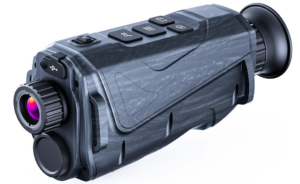
The KLARVUE Unveil AI Thermal Monocular is positioned above entry level devices and tries to bridge the gap between budget thermal imaging and mid tier performance. It focuses on improved image processing, higher native resolution, and stronger detection range, making it more suitable for serious wildlife watchers and outdoor users who need better clarity than basic 256×192 systems can deliver. Still, it is not a premium professional unit, and that gap shows in real world expectations versus marketing claims.
The device uses a 384×288 native thermal sensor combined with a 12 micron infrared detector. This is a meaningful step up from entry level monoculars, especially in terms of image definition and target separation. In wildlife observation, this translates to better recognition of animal shapes and movement patterns at mid range distances, particularly in low visibility environments such as fog, brush, or nighttime forests.
Super resolution processing enhances the perceived image quality, but it does not replace true hardware resolution. What it does is improve edge clarity and smooth transitions between heat sources, which helps when scanning open terrain. However, users expecting near HD visual detail will still be disappointed because thermal imaging remains fundamentally limited by sensor physics.
The detection capability reaches up to 750 meters, which is strong for this category, especially when combined with 8× digital zoom. The zoom function allows scanning wide areas first and then focusing on heat signatures, but as with most digital zoom systems, higher magnification reduces clarity significantly. It is useful for detection and tracking, not precise identification at long distances.
The IP66 rating and rugged build make it suitable for harsh environments, including heavy rain and dusty conditions. This is important for wildlife watchers who operate in unpredictable outdoor settings. The device is also relatively portable at 0.52 pounds, balancing durability and carry comfort without becoming bulky.
Connectivity is one of its stronger functional features. Built in WiFi and app control allow live streaming, remote adjustments, and quick sharing of thermal footage. This is particularly useful for group observation or field documentation. However, app based systems can introduce instability depending on phone compatibility and software updates, which is a common weakness in this segment.
Storage is generous at 32GB, allowing extended recording without immediate need for external memory expansion. This supports long field sessions and documentation heavy use cases like wildlife monitoring or search operations.
Battery performance is not heavily emphasized in the specifications provided, which is usually a warning sign in this category. Devices that focus more on processing features than power optimization often trade runtime efficiency for functionality.
Key Specifications
| Category | Specification |
|---|---|
| Brand | KLARVUE |
| Model | Unveil AI Thermal Monocular |
| Thermal Resolution | 384 by 288 native |
| Infrared Sensor | 12 micron high sensitivity detector |
| Super Resolution | Supported image enhancement processing |
| Lens Size | 15 millimeters |
| Digital Zoom | Up to 8× |
| Detection Range | Up to 750 meters |
| Storage | 32GB built in memory |
| Connectivity | WiFi with mobile app control |
| Protection Rating | IP66 waterproof and dustproof |
| Weight | 0.52 pounds |
| Focus Type | Manual focus |
Pros
- Higher 384×288 thermal resolution improves clarity compared to entry level monoculars
- Strong 750 meter detection range supports wider wildlife scanning capability
- 8× digital zoom allows flexible target scanning and closer inspection of heat sources
- IP66 rating provides reliable protection in rain, dust, and rough outdoor conditions
- Large 32GB storage supports extended recording without external memory needs
Cons
- Super resolution improves appearance but does not replace true high resolution imaging
5. Pulsar Axion 2 35mm Compact Thermal Monocular
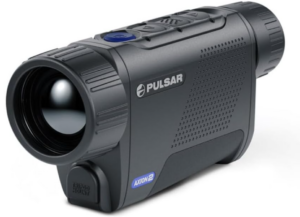
The Pulsar Axion 2 sits in a completely different class compared to the budget and mid tier monoculars you’ve seen earlier. This is a serious field instrument aimed at users who care about detection reliability, image consistency, and durability rather than just having thermal vision as a novelty. It is not cheap, and the price alone filters out casual buyers, which is actually a good thing because this device is built for demanding use, not experimentation.
At its core, the Axion 2 is available in different sensor configurations, including a 640×480 version with a 12µm pixel pitch and a 384×288 variant. The higher resolution model delivers noticeably better target separation, especially in cluttered environments like forests or bushland. In wildlife watching, this matters because you are not just looking for heat blobs, you are trying to distinguish animals from terrain, vegetation, and each other.
Image processing is one of its strongest advantages. Pulsar’s signal amplification and filtering system improves detection in low contrast environments such as fog, rain, or temperature balanced backgrounds where cheaper devices struggle. Instead of simply “seeing heat,” the device helps you interpret heat patterns more consistently, which reduces false positives and missed targets.
The build quality is another area where this monocular clearly justifies its price. The magnesium alloy housing is not marketing decoration, it is a functional design choice. It improves durability against drops, shock, and harsh weather while also helping with heat dissipation. For wildlife field use, this means you are less likely to worry about equipment failure in rough conditions.
Battery performance is moderate but practical. The APS5 rechargeable battery delivers around 7 hours of runtime, which is lower than some cheaper competitors, but the tradeoff is efficiency and reliability rather than raw endurance. It also supports USB C charging, power banks, and external power sources, which makes field management more flexible than it first appears.
The Stream Vision 2 app and Wi Fi integration add another layer of usability. You can stream footage, update firmware, and control certain functions remotely. This is useful for documentation and group observation, but it is not essential to core performance. The real strength of this device is still optical and sensor performance, not software features.
Where this device separates itself is consistency. Lower tier monoculars often fluctuate in performance depending on environment and temperature conditions. The Axion 2 is designed to minimize that inconsistency, which is what you are actually paying for. It is not about occasional good performance, it is about predictable performance in difficult conditions.
Key Specifications
| Category | Specification |
|---|---|
| Brand | Pulsar |
| Model | Axion 2 35mm |
| Thermal Sensor Options | 640×480 (12µm) or 384×288 |
| Objective Lens | 35 millimeters |
| Detection Technology | Advanced thermal imaging with signal processing |
| Image Processing | Multi level signal amplification and filtering |
| Battery Type | APS5 rechargeable battery |
| Battery Life | Up to 7 hours |
| Charging Options | USB C, power bank, external supply support |
| Build Material | Magnesium alloy housing |
| Connectivity | WiFi with Stream Vision 2 app |
| Mount Support | 1/4-20 tripod mount |
| Focus Type | Manual focus |
Pros
- Delivers strong image clarity with high resolution sensor option for better wildlife identification
- Excellent signal processing improves detection in fog, rain, and low contrast environments
- Rugged magnesium alloy build increases durability in harsh outdoor conditions
- Stable and consistent thermal performance compared to budget monoculars
- Flexible power options including USB C and external battery support
Cons
- Shorter battery life compared to many lower priced competitors
Also Read About: 5 Best Budget Thermal Monocular for Hunting
Advantages of Best Thermal Monocular for Wildlife Watching
1. Reliable Detection in Complete Darkness
A thermal monocular allows wildlife detection even when there is no ambient light at all. Unlike night vision that depends on illumination, it reads heat signatures directly, which makes it effective in forests, open fields, or cloudy nights. The limitation is that you see temperature differences, not actual detail, so interpretation still requires experience.
2. Improved Wildlife Tracking in Dense Terrain
In environments with thick vegetation or uneven terrain, thermal imaging helps separate animals from background clutter. Heat contrast makes movement easier to notice compared to optical devices. However, dense foliage can still distort or partially hide heat signatures, so it is not flawless tracking.
3. Faster Target Acquisition
Thermal monoculars allow quicker spotting of animals because heat stands out immediately against cooler surroundings. This reduces scanning time and improves reaction speed in the field. The tradeoff is that fast detection does not always equal accurate identification, especially at long distances.
4. Useful in Fog, Smoke, and Light Rain Conditions
Thermal imaging performs better than traditional optics in reduced visibility conditions such as fog or light rain. Heat signatures can still pass through partial visual obstruction, allowing continued observation. Still, heavy rain or extreme environmental interference can reduce accuracy and clarity.
5. Better Long Range Awareness
Many modern thermal monoculars can detect heat signatures at several hundred meters, giving users early awareness of animal presence. This is useful for planning movement or observation strategy. The limitation is that detection range is much greater than identification range, which can create false assumptions about clarity.
6. Non Intrusive Wildlife Observation
Thermal devices allow observation without using visible light or physical disturbance, which reduces impact on animal behavior. This makes it suitable for ethical wildlife watching. However, users should still maintain distance because detection capability can encourage risky proximity if misused.
7. Recording and Documentation Capability
Most modern units support photo and video recording, enabling users to document sightings for review or sharing. This is useful for research, content creation, or tracking patterns over time. The downside is that recorded footage often reflects sensor limitations, not real-world visual clarity.
8. Enhanced Decision Making in Outdoor Environments
Thermal monoculars improve situational awareness by highlighting living heat sources in complex environments. This can support navigation, safety, and observation planning in remote areas. Still, overreliance can be dangerous because thermal imaging does not replace judgment or full environmental awareness.
Factors to Consider When Choosing a Thermal Monocular for Wildlife Watching
1. Thermal Sensor Resolution
Sensor resolution determines how clearly heat signatures are displayed. Higher resolution provides better separation between animals and background, which improves identification accuracy. Lower resolution still detects presence but struggles with detail, especially at longer distances or in complex environments.
2. Detection Range vs Identification Range
Detection range shows how far a device can pick up heat, but identification range shows how clearly it can define what that heat source is. Many users confuse the two and overestimate performance. A good device balances both, but identification clarity is always more important for wildlife observation.
3. Refresh Rate Performance
Refresh rate affects how smooth moving objects appear on the screen. Higher refresh rates make it easier to track fast moving animals without lag or motion blur. Lower refresh rates can cause delayed or choppy movement rendering, which makes tracking more difficult in dynamic environments.
4. Display Quality and Screen Resolution
Display quality affects how usable the thermal image feels during real observation. A higher resolution screen improves viewing comfort and helps interpret shapes more easily. However, display quality cannot fully compensate for a weak thermal sensor, so both must be balanced.
5. Battery Life and Power Options
Battery life determines how long you can operate in the field without interruption. Longer runtime is essential for extended wildlife sessions or remote expeditions. Devices that also support external power or fast charging offer more flexibility in unpredictable outdoor conditions.
6. Environmental Durability Rating
Durability ratings such as water and dust resistance determine whether the device can survive harsh outdoor environments. Wildlife observation often involves rain, mud, dust, or accidental drops. A stronger build reduces risk of failure and increases long term reliability.
7. Optical Features and Zoom Capability
Zoom and magnification affect how closely you can inspect a target after detection. Digital zoom helps bring objects closer but often reduces clarity when overused. A balanced system allows scanning wide areas first, then narrowing focus without excessive image degradation.
8. Connectivity and Recording Features
Modern thermal monoculars often include WiFi, app control, and recording functions. These features are useful for sharing footage, documenting sightings, and remote viewing. However, reliance on software can introduce stability issues, so core imaging performance should still remain the priority.