Best monocular for bird watching is designed for users who want a compact, powerful, and easy to carry optical tool for observing birds in natural environments. These devices are great for bird watching because they combine portability with sufficient magnification, allowing clear viewing without the bulk of traditional binoculars. They are especially useful for outdoor enthusiasts who need quick access, stable handling, and reliable performance across different lighting and weather conditions while tracking bird activity in real time.
In this guide, you will explore the key features that matter most when selecting a monocular, the top options available across different performance levels, and how to choose the right one based on your needs and budget. It will also break down practical buying considerations and answer common questions to help you avoid costly mistakes and pick a model that performs well in real field conditions.
5 Best Monocular for Bird Watching
1. Vortex Optics Solo R/T 8×36 Monocular
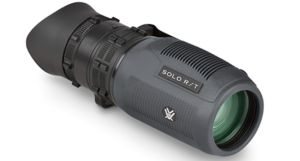
The Vortex Solo R/T 8×36 Monocular delivers 8x magnification paired with a 36 mm objective lens, which provides a stable viewing experience without excessive shake common in higher magnification optics. This balance is important for bird watching because it allows users to track moving birds without constantly losing the subject in the frame. The fully multi coated lenses with anti reflective coatings improve brightness and contrast, especially during early morning or late evening bird activity when lighting is not ideal. The focus system is split into a large main wheel for image clarity and a secondary reticle focus adjustment, allowing precise tuning for both image sharpness and ranging capability. While the reticle feature is more advanced than typical birding monoculars, it can still be useful for estimating distance in open habitats. The flared eyecup helps block stray light and can be adjusted for glasses wearers, improving viewing comfort during longer sessions in the field.
Durability is another area where this monocular performs well in real birding environments. The rubber armor coating provides a firm, non slip grip which is useful when handling the device outdoors in humid or rainy conditions. It is O ring sealed and nitrogen purged, meaning it is both waterproof and fog proof, two critical features when moving through wetlands, forests, or coastal birding areas where weather shifts quickly. The included utility clip allows the monocular to be attached to a belt or vest, which is practical for birders who need instant access without digging through a bag. The compact size also reduces fatigue during long walks, making it easier to carry throughout an entire birding session.
However, this model is not without limitations for pure bird watching purposes. The 8x magnification is safe and steady, but birders who frequently observe distant raptors or shorebirds may occasionally wish for higher reach. The reticle system, while useful for ranging, adds complexity that many bird watchers will never actually use, meaning part of the product’s capability goes underutilized. It is also priced higher than entry level monoculars, which may not appeal to beginners who only need basic magnification and clarity without tactical features.
Key specifications
| Specification | Detail |
|---|---|
| Product name | Vortex Optics Solo R/T 8×36 Monocular |
| Magnification | 8x |
| Objective lens diameter | 36 mm |
| Optical coating | Fully multi coated anti reflective |
| Focus system | Manual focus with reticle adjustment |
| Dimensions | 5.4 x 2.3 x 2.5 inches |
| Weather resistance | Waterproof and fog proof |
| Build | Rubber armored body |
| Mounting | Utility clip attachment |
| Warranty | Unlimited lifetime VIP warranty |
Pros
- Very clear and bright image for its size
- Strong low light performance for early morning and evening birding
- Compact and easy to carry for long field use
- Waterproof and fog proof construction for all weather conditions
- Comfortable grip and durable rubber armor
- Useful clip system for quick access in the field
- Lifetime unconditional warranty adds long term value
Cons
- 8x magnification may feel limiting for very distant birds
- Learning curve for reticle and dual focus system
2. Bushnell Legend 10×42 Ultra HD Tactical Monocular
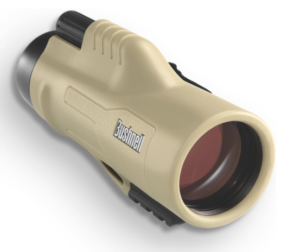
The Bushnell Legend 10×42 Ultra HD uses 10x magnification combined with a 42 mm objective lens, which immediately pushes it into stronger long range viewing territory compared to smaller 8x units. This makes it more effective for identifying fine feather detail on distant birds, especially raptors, waterfowl, or birds perched far across fields and wetlands. The optical system is built around ED Prime glass with Ultra Wide Band coating and PC 3 phase coating, which together are designed to improve brightness, contrast, and color accuracy. In practical birding terms, this means less washed out image quality in harsh daylight and better definition when light starts dropping in the early morning or late evening. The fast focus system and smooth focus knob help reduce lag when switching between near and far subjects, which matters when birds are moving quickly between perches.
The 10×42 configuration does come with a consequence that many bird watchers underestimate until they try it in the field. Higher magnification increases hand shake, meaning stable viewing becomes more dependent on technique or external support. This is where the tripod mount becomes relevant, especially for longer observation sessions. The MIL HASH reticle system is another advanced feature that supports ranging, holdover estimation, and wind drift calculation, but in bird watching it is largely unnecessary unless the user is also doing structured field measurement work. The rugged rubber armored FDE design improves grip and helps protect the unit in wet or rough environments, while O ring sealing and nitrogen purging ensure waterproof and fog proof reliability. This makes it suitable for unpredictable outdoor conditions, including dense forests and coastal zones where humidity can quickly affect lesser optics.
In terms of usability, this monocular is not the most beginner friendly option for casual bird watchers who just want quick spotting. It is more of a precision tool than a grab and observe device. However, for users who prioritize image clarity at distance and are willing to manage a slightly heavier and more sensitive optical setup, it offers a noticeably more detailed viewing experience than lower magnification alternatives.
Key specifications
| Specification | Detail |
|---|---|
| Product name | Bushnell Legend 10×42 Ultra HD Tactical Monocular |
| Magnification | 10x |
| Objective lens diameter | 42 mm |
| Glass type | ED Prime Glass |
| Prism system | BaK 4 prisms |
| Optical coatings | Ultra Wide Band and PC 3 Phase coating |
| Focus system | Fast focus manual knob |
| Eyecup | Twist up design |
| Weather resistance | Waterproof and fog proof (O ring sealed, nitrogen purged) |
| Mounting | Tripod compatible |
| Weight | 0.37 kg |
Pros
- Excellent image clarity with strong color accuracy
- ED glass improves detail resolution in challenging lighting
- 10x magnification supports long range bird identification
- Fast focus system improves tracking of moving birds
- Waterproof, fog proof, and rugged field construction
- Tripod compatibility improves stability for extended viewing
- Strong low light performance for early and late bird activity
Cons
- Higher magnification makes hand shake more noticeable
- Bulkier and less pocket friendly than compact monoculars
3. Opticron Oregon 4 PC Oasis 10×42 Monocular
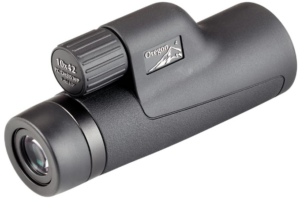
The Opticron 10×42 configuration gives this monocular enough reach for identifying birds at medium to long distances, while still maintaining a usable field of view for tracking movement. This balance matters in bird watching because overly narrow views cause you to lose subjects quickly. The BAK4 fully multi-coated optical system combined with phase corrected prism coating and Oasis high light transmission coating works together to improve brightness and reduce internal light loss. In practical use, this translates into cleaner contrast when observing birds against bright skies or shaded foliage. Colors appear more natural rather than artificially boosted, which is important for identifying species differences based on plumage. The close focus capability down to 1.8 meters also adds flexibility, allowing you to observe butterflies or nearby birds without switching optics.
The build quality focuses on field reliability rather than tactical styling. The nitrogen filled waterproof housing ensures performance in wet environments, while the twin relief rubber armor provides a secure grip even when conditions are humid or muddy. The twist type retractable eyecup and full field of view design make it more comfortable for users who wear glasses, which is often overlooked but very important during long birding sessions. The wide focusing wheel supports one handed operation, allowing faster adjustments when birds move unpredictably between distances. At 334 grams, it remains light enough for extended carrying without fatigue becoming an issue.
Where this monocular becomes less impressive is in raw feature excitement. There is no advanced ranging system, no tactical reticle, and no high end ED glass branding to market it as a premium optical powerhouse. It is also not the sharpest performer in extreme low light compared to higher tier models, meaning early dawn or dusk birding may show some softness at the edges. However, this is the trade off for its price positioning. It focuses on delivering stable, usable performance rather than pushing maximum optical specifications.
Key specifications
| Specification | Detail |
|---|---|
| Product name | Opticron Oregon 4 PC Oasis 10×42 Monocular |
| Magnification | 10x |
| Objective lens diameter | 42 mm |
| Prism type | BAK4 roof prism |
| Optical coatings | Fully multi coated with phase correction and Oasis coating |
| Focus system | Wide wheel manual focus |
| Close focus distance | 1.8 m |
| Eyecup | Twist retractable |
| Weather resistance | Nitrogen filled, waterproof |
| Weight | 334 grams |
| Design | Rubber armored twin relief housing |
Pros
- Natural and balanced color reproduction
- Lightweight and comfortable for long field use
- Good low light performance for its price range
- Close focus capability adds versatility for nearby subjects
- Waterproof and fog proof construction
- Easy one handed focusing system
- Eyecup design works well for glasses users
Cons
- Low light performance is good but not exceptional
- Build feels more budget oriented compared to high end models
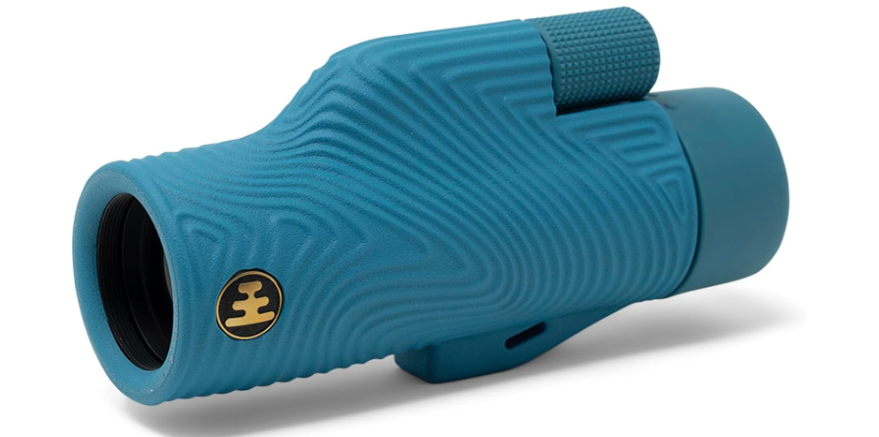
4.Nocs Provisions Field Tube 8×32 Waterproof Monocular
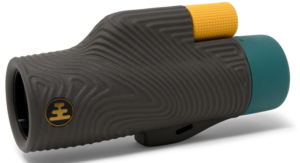
The Nocs Provisions Field Tube 8×32 positions itself very differently from the more technical or tactical monoculars. Instead of chasing maximum magnification or adding complex ranging systems, it focuses on usability, portability, and a wide, natural viewing experience. For bird watching, this matters more than most people realize. If you constantly lose sight of birds while trying to refocus or fight hand shake, even the sharpest optics become frustrating. This model is designed to reduce that friction and keep observation simple and fluid.
The 8x magnification paired with a 32 mm objective lens gives a noticeably wide field of view, which is one of its strongest advantages for bird watching. Birds rarely stay still, and a wider viewing window makes tracking movement through trees or across open water significantly easier. The fully coated optics with BAK4 prism construction are tuned for bright, balanced color reproduction rather than aggressive sharpening or artificial contrast boosting. In practice, this produces a more natural image that helps with species identification, especially when subtle color differences matter. The focus system is centered around a large, oversized wheel that allows precise adjustments even while holding the monocular one handed, and the close focus distance of 9.3 feet adds flexibility for observing nearby wildlife as well.
Durability is clearly a core design priority here. The IPX7 waterproof rating means it can handle heavy rain and even brief submersion without performance loss, which is more robust than many competitors in this category. Nitrogen sealing prevents internal fogging, making it reliable in humid environments where cheaper optics often fail. The rubberized wave grip design improves handling stability, which is particularly useful for users who spend long hours walking or hiking. At just over 8 ounces, it is one of the lightest options in this group, making it easy to carry all day without fatigue. It also includes a twist up eyecup system that accommodates both glasses wearers and non wearers comfortably.
However, this monocular is not built for users who want maximum optical reach or advanced targeting features. The 8×32 configuration trades long distance resolution for stability and field width, which means distant birds will not appear as detailed as they would through 10×42 models. It also lacks any ranging reticle or measurement system, which some advanced users may consider a limitation. In low light conditions, while it performs reasonably well for its size, it will not match larger aperture optics when light becomes extremely limited.
Key specifications
| Specification | Detail |
|---|---|
| Product name | Nocs Provisions Field Tube 8×32 Monocular |
| Magnification | 8x |
| Objective lens diameter | 32 mm |
| Prism type | BAK4 roof prism |
| Optical coating | Fully multi coated |
| Field of view | 405 ft at 1000 yards |
| Focus system | Oversized center focus wheel |
| Close focus distance | 9.3 ft |
| Waterproof rating | IPX7 submersible |
| Weight | 8.09 oz |
| Eyecup | Multi stop twist up system |
Pros
- Very wide field of view makes tracking birds easier
- Extremely lightweight and highly portable for long trips
- Natural and balanced color rendering
- Fully waterproof and fog proof with IPX7 rating
- Comfortable grip with stable one handed operation
- Good close focus capability for nearby wildlife
- Simple, intuitive design without unnecessary complexity
Cons
- Not ideal for extreme low light observation
- Smaller aperture limits brightness in deep shade or dusk conditions
5. Gosky 12×55 HD Monocular Telescope
Advantages of Best Monocular for Bird Watching
1. Strong purchase intent from targeted users
This keyword attracts users who are already interested in bird watching and actively looking for a viewing tool. These users are not browsing casually but are close to making a decision, which makes the traffic highly valuable for product reviews, comparisons, and affiliate content.
2. Direct alignment with outdoor wildlife use cases
Bird watching is a very specific activity, so the keyword naturally filters out irrelevant audiences. This improves content relevance because the product discussion can stay focused on field use such as tracking movement, observing behavior, and identifying species in natural environments.
3. High relevance to portable optical gear
Monoculars fit perfectly into bird watching because they emphasize portability and quick access. Unlike bulkier optics, they support real field conditions where users need to move often and react quickly to bird movement without setup delays.
4. Easy integration of multiple product tiers
This keyword allows smooth coverage of entry level, mid range, and premium monoculars in one structure. It supports comparisons based on magnification, lens quality, and durability, which makes the content more complete and useful for different budgets.
5. Strong focus on real world usability over technical specs
Bird watching is experience driven, not lab driven. This keyword allows content to prioritize practical factors like stability, field of view, and ease of tracking rather than overwhelming users with technical optics jargon that does not influence field performance directly.
6. High engagement from beginner and hobby users
Most users searching this keyword are beginners or casual bird watchers who want simple, reliable guidance. This makes it ideal for educational content that explains what actually matters in the field instead of overcomplicating choices with unnecessary technical depth.
7. Lower competition compared to general optics keywords
Broad terms like “best binoculars” or “best spotting scope” are heavily saturated. A more specific keyword like monocular for bird watching reduces competition and increases the chance of ranking for niche search queries with clearer intent.
8. Strong cross selling potential with outdoor gear
Bird watchers often invest in related accessories such as tripods, carrying straps, cleaning kits, and smartphone adapters. This keyword naturally supports broader monetization opportunities beyond the monocular itself, increasing overall content value.