
Best Monocular for Birding in the Wild are becoming a practical choice for outdoor enthusiasts who want a lightweight, fast, and efficient way to observe birds in their natural habitats. These optical tools are great for birding because they combine portability with strong magnification, allowing users to quickly spot, track, and identify birds without carrying bulky equipment. Their simple one eye design also makes them easy to use in fast moving or unpredictable environments where birds appear and disappear quickly.
In this guide, you will explore the key features that make them effective for birding, the top considerations when choosing one, the best options available, a detailed buying guide, and frequently asked questions to help you make a confident decision.
5 Best Monocular for Birding in the Wild
1. Opticron Explorer WA ED-R 8×42 Monocular
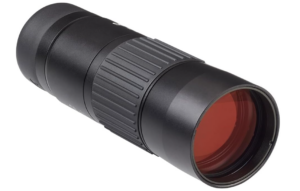
The Opticron Explorer WA ED R 8×42 Monocular is designed for users who want the portability of a monocular without sacrificing image quality. Built with ED glass objectives and a roof prism system, this model aims to deliver sharp detail, improved color accuracy, and strong contrast across a wide viewing field. Whether used for wildlife observation, travel, outdoor exploration, or general nature viewing, it offers a practical balance between optical performance and compact handling.
Image clarity is one of the strongest aspects of this monocular. The ED glass reduces chromatic aberration and helps maintain cleaner edges and more natural colors, especially in bright daylight conditions. Combined with PC phase corrected prisms and R type high light transmission multi coating, the viewing experience remains bright and crisp even when lighting becomes less favorable.
Comfort and usability also receive attention in the design. The wide angle eyepiece creates a more immersive viewing experience while the long eye relief makes extended use more comfortable for spectacle wearers. The multi stage retractable eyecup adds flexibility depending on viewing preference. Focusing feels responsive thanks to the smooth wide wheel mechanism, allowing quick adjustments between near and distant subjects.
Durability is another practical advantage. The nitrogen filled waterproof construction protects internal optics from moisture and fogging while maintaining reliable performance outdoors. The close focus capability of 1.9 meters also adds versatility for observing nearby subjects such as flowers, insects, and detailed objects.
Key Specifications
| Specification | Details |
|---|---|
| Brand | Opticron |
| Model | Explorer WA ED R 8×42 |
| Magnification | 8x |
| Objective Lens Diameter | 42 mm |
| Optical Design | Roof Prism |
| Optical Glass | ED Glass Objective |
| Prism Coating | PC Phase Corrected |
| Lens Coating | R Type High Light Transmission Multi Coating |
| Close Focus Distance | 1.9 m / 6.2 ft |
| Optical Tube Length | 138 mm |
| Focus Type | Close Focus |
| Waterproof | Yes |
| Construction | Nitrogen Filled |
| Eyecup Type | Multi Stage Retractable |
| Dimensions | 1.85 x 2.13 x 5.43 inches |
| Mount Compatibility | Tripod Mount |
Pros
- Excellent image sharpness with ED glass
- Bright and clear viewing through advanced prism coatings
- Comfortable for eyeglass users due to long eye relief
- Compact and easier to carry than binocular alternatives
- Reliable waterproof and fog resistant construction
Cons
- Narrower viewing flexibility compared to binoculars
2. Vortex Solo Monocular 8×36
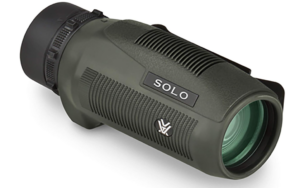
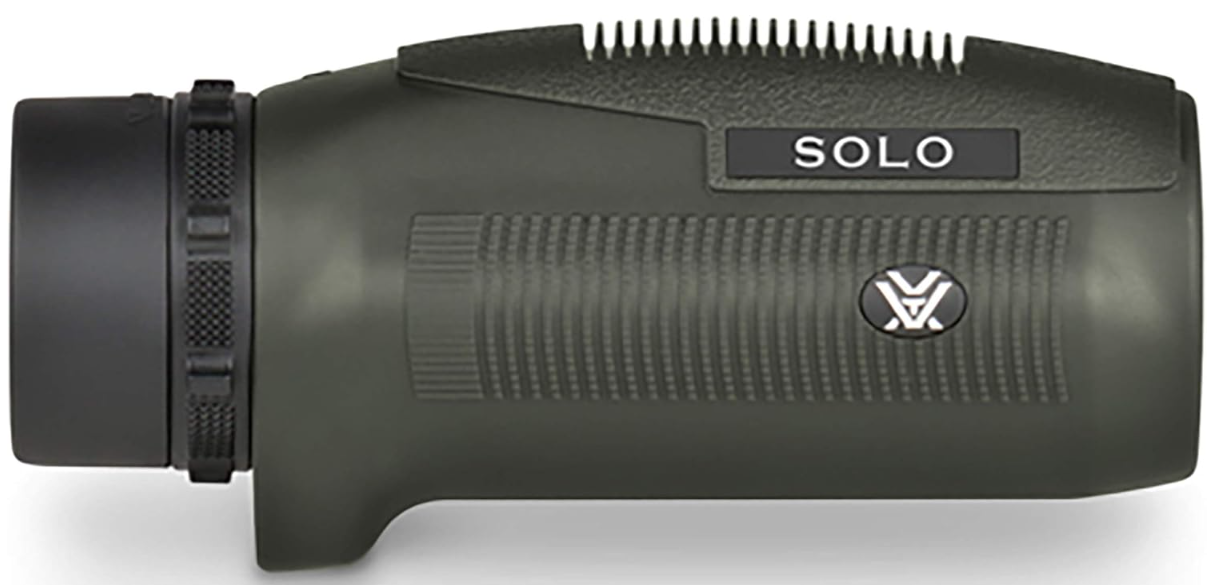
The Vortex Solo Monocular 8×36 is built for users who want a compact optic that remains practical in demanding outdoor conditions. With 8x magnification paired with a 36 mm objective lens, it delivers a balance between portability and image brightness while remaining easy to carry during hiking, wildlife observation, sporting events, and general field use. Its lightweight design makes it a convenient alternative to larger binocular setups without sacrificing usability.
Optical performance is one of the stronger areas of this monocular. The fully multi coated lenses improve light transmission and help produce clearer and sharper images across different lighting conditions. At 8x magnification, subjects appear detailed while maintaining enough stability for handheld viewing. The viewing experience feels comfortable for extended sessions and works well for both short and medium distance observation.
The exterior construction focuses heavily on durability and practicality. Full rubber armor provides a secure grip and improves resistance against impacts and rough handling. Nitrogen purging combined with O ring sealing creates dependable waterproof and fogproof protection, allowing the monocular to continue performing in rain, humidity, and changing temperatures.
Ease of use is enhanced through the adjustable eyecup that accommodates both users with glasses and those without. The included multi position utility clip adds convenience by allowing quick attachment to clothing, packs, or outdoor gear. Vortex also strengthens the value proposition with its unlimited, unconditional lifetime VIP warranty, offering long term confidence for owners.
Key Specifications
| Specification | Details |
|---|---|
| Brand | Vortex |
| Model | Solo Monocular 8×36 |
| Magnification | 8x |
| Objective Lens Diameter | 36 mm |
| Optical Tube Length | 4.9 inches |
| Optical Coating | Fully Multi Coated |
| Focus Type | Manual Focus |
| Waterproof | Yes |
| Fogproof | Yes |
| Construction | Nitrogen Purged and O Ring Sealed |
| Exterior Finish | Rubber Armor |
| Eyecup | Adjustable |
| Mount Type | Handheld |
| Dimensions | 4.9 × 2.6 × 4.9 inches |
| Utility Feature | Multi Position Utility Clip |
| Warranty | Unlimited Unconditional VIP Lifetime Warranty |
Pros
- Compact and lightweight for everyday carry
- Fully multi coated lenses improve image clarity
- Excellent durability with protective rubber armor
- Waterproof and fogproof performance for outdoor use
- Strong lifetime warranty coverage adds long term value
Cons
- Manual focusing requires adjustment when changing viewing distances
3. Bushnell Legend 10×42 Ultra HD Monocular
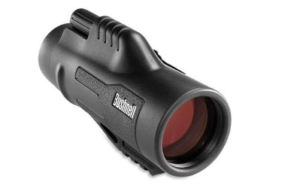
The Bushnell Legend 10×42 Ultra HD Monocular is designed for users who need strong optical performance in a compact and field ready format. Built for hunting, wildlife observation, birdwatching, and general outdoor use, this monocular combines 10x magnification with a 42 mm objective lens to provide detailed viewing while remaining easier to carry than traditional binoculars.
Optical quality is one of the biggest strengths of this model. Bushnell integrates ED Prime glass together with Ultra Wide Band Coating to improve image sharpness, color accuracy, and overall brightness. These enhancements help reduce color fringing while increasing light transmission, resulting in clearer images during early morning, evening, and challenging lighting conditions. The 10x magnification also provides enough reach for observing distant subjects without adding excessive bulk.
The build quality supports demanding outdoor environments. The rugged rubber armored exterior improves grip security and adds protection against impact and wear. O ring sealed optics create reliable waterproof and fogproof performance, allowing the monocular to continue functioning through changing weather conditions and humid environments.
Usability is enhanced through the smooth focus knob and fast focus system that allow rapid adjustments between subjects at varying distances. The twist up eyecup improves viewing comfort for both eyeglass wearers and non eyeglass users, making extended observation sessions more enjoyable.
Key Specifications
| Specification | Details |
|---|---|
| Brand | Bushnell |
| Model | Legend 10×42 Ultra HD Monocular |
| Model Number | 191142 |
| Magnification | 10x |
| Objective Lens Diameter | 42 mm |
| Optical Glass | ED Prime Glass |
| Lens Coating | Ultra Wide Band Coating |
| Focus Type | Manual Focus |
| Waterproof | Yes |
| Fogproof | Yes |
| Exterior Finish | Rubber Armored |
| Eyecup Type | Twist Up Adjustable |
| Mount Type | Tripod Mount |
| Dimensions | 6 × 4 × 4 inches |
| Weight | 374 g |
| Battery Requirement | 1 × 12V Battery |
Pros
- Excellent image clarity with ED Prime glass
- Strong low light performance for outdoor observation
- Durable waterproof and fogproof construction
- Fast and smooth focusing system
- Comfortable viewing for users with or without glasses
Cons
- 10x magnification can introduce more handheld shake
4. Gosky 12×55 HD Monocular Telescope
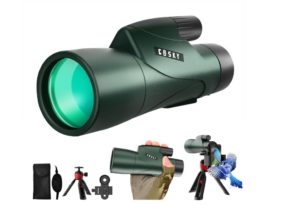
The Gosky 12×55 HD Monocular Telescope is built for users who want extended viewing distance, strong light gathering ability, and portable outdoor performance in a single compact optic. Designed for bird watching, hunting, hiking, travel, and wildlife observation, this model combines powerful 12x magnification with a large 55 mm objective lens to deliver detailed long range viewing while remaining easy to carry.
Optical performance is one of the major strengths of this monocular. The combination of an 18 mm BAK 4 prism and fully multi coated lenses improves light transmission and minimizes unwanted reflections. This results in brighter images, improved contrast, and sharper detail across varying lighting conditions. The 55 mm objective lens also supports stronger low light performance than smaller monocular alternatives, making it useful during early morning and late afternoon observation.
The viewing experience is designed with comfort and practicality in mind. The twist up eyecup and extended eye relief provide comfortable use for both eyeglass and non eyeglass wearers during longer observation sessions. With a wide field of view rated at 352 feet at 1000 yards, users can track moving subjects more naturally while maintaining good scene awareness.
Durability and versatility further improve the overall package. The IPX7 rated nitrogen filled construction delivers waterproof, fogproof, dustproof, and shock resistant performance for outdoor environments. A practical addition is the included smartphone adapter, allowing users to capture photos and videos directly through the monocular with improved alignment and reduced movement.
Key Specifications
| Specification | Details |
|---|---|
| Brand | Gosky |
| Model | PIPER |
| Magnification | 12x |
| Objective Lens Diameter | 55 mm |
| Prism Type | BAK 4 Prism |
| Lens Coating | Fully Multi Coated |
| Field of View | 352 ft at 1000 yds |
| Waterproof Rating | IPX7 |
| Construction | Nitrogen Filled |
| Focus Type | Manual Focus |
| Eyecup Type | Twist Up |
| Smartphone Compatibility | Included Smartphone Adapter |
| Optical Tube Length | 18 mm |
| Mount Type | Equatorial Mount |
| Dimensions | 6.5 × 2.9 × 8.27 inches |
| Operation | Handheld |
Pros
- Powerful 12x magnification for long distance viewing
- Large 55 mm objective improves brightness and low light performance
- BAK 4 prism and FMC lens produce clear detailed images
- IPX7 waterproof and fogproof construction for outdoor reliability
- Includes smartphone adapter for easy photo and video capture
Cons
- Higher magnification can make handheld viewing less stable
5. Belmeri 10–300×40 High Powered Zoom Monocular
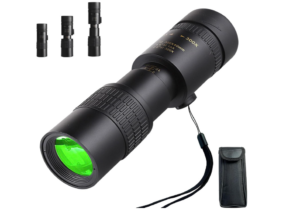
The Belmeri 10–300×40 High Powered Zoom Monocular is positioned as a budget friendly optic for users interested in concerts, birdwatching, hiking, casual outdoor observation, and occasional stargazing. Its compact design and broad zoom range are intended to provide flexibility across different viewing scenarios while remaining portable enough for travel and everyday carry.
This monocular uses a BAK 4 prism system combined with fully multi coated optics to improve image transmission and reduce glare. Under moderate magnification settings, the monocular can provide reasonably bright and usable images for daytime observation. The 40 mm objective lens supports a compact footprint while still collecting enough light for general outdoor use.
One of the main selling points is the adjustable zoom capability. Users can change magnification depending on viewing distance and activity. However, extremely high magnification claims such as 300x should be viewed realistically in practical handheld use. Higher zoom levels naturally reduce brightness, narrow the field of view, and make image stability more difficult without external support. For most users, lower and moderate zoom settings tend to deliver the most usable experience.
The lightweight construction makes carrying and handling easy during travel and outdoor activities. Manual focusing and extendable operation keep the design simple for beginners. Although smartphone compatibility is mentioned, it is important to note that a smartphone adapter and tripod are not included with this package.
Key Specifications
| Specification | Details |
|---|---|
| Brand | Belmeri |
| Model | Belmeri 10–300×40 |
| Magnification | Adjustable 10x to 300x |
| Objective Lens Diameter | 40 mm |
| Prism Type | BAK 4 |
| Lens Coating | Fully Multi Coated |
| Optical Tube Length | 6.8 inches |
| Eyepiece Type | Super Plossl |
| Focus Type | Manual Focus |
| Device Compatibility | Smartphone |
| Mount Type | Triangle Bracket |
| Finderscope | Straight Through |
| Dimensions | 5 × 1.8 × 1.8 inches |
| Operation | Handheld |
Pros
- Wide adjustable zoom range for flexible viewing
- Compact and lightweight for travel and outdoor use
- BAK 4 prism improves image quality and brightness
- Simple operation suitable for beginners
- Affordable entry level pricing
Cons
- Maximum advertised magnification is not highly practical in handheld conditions
Also read about: 5 Best Thermal Monocular for Wildlife Watching
Advantages of Best Monocular for Birding in the Wild
1. Improved ability to detect distant birds quickly
A monocular designed for birding helps users spot distant birds faster due to its focused magnification and clear optical alignment. It allows quick scanning of treetops, skies, and wetlands without the delay of setting up larger equipment. This makes it easier to identify movement and react instantly before birds fly away.
2. Enhanced portability for field movement
Birding in the wild often involves walking long distances through uneven terrain, so a lightweight monocular is a major advantage. It reduces carrying strain compared to heavier binoculars or spotting scopes. This allows birders to stay mobile and cover more ground comfortably during observation sessions.
3. Better tracking of fast moving subjects
Birds rarely stay still, so a monocular helps users quickly follow movement with one hand while maintaining visual contact. The simple single eye viewing design reduces complexity during tracking. This makes it easier to keep up with flying or shifting birds in real time.
4. Greater ease of use in unpredictable environments
Wild birding environments often require quick adjustments and simple operation. A monocular allows fast focusing and repositioning without complicated setup steps. This simplicity is useful when conditions change suddenly, such as shifting light or sudden bird movement.
5. Improved long distance identification of species
High quality monoculars provide enough magnification and clarity to distinguish bird species at a distance. This helps birders identify markings, colors, and shapes that would otherwise be invisible to the naked eye. It supports more accurate field identification and better learning.
6. Reduced eye fatigue during short observation bursts
Because only one eye is used, monoculars can feel less tiring during short, repeated viewing sessions common in birding. This makes them suitable for quick scans followed by rest periods. It supports comfortable use throughout long birding trips without continuous strain.
7. Better adaptability in dense natural environments
In forests or thick vegetation, wide movement and quick repositioning are necessary. A monocular allows easier maneuvering between branches, leaves, and obstacles compared to bulkier optics. This improves visibility in cluttered environments where birds often hide.
8. Increased convenience for spontaneous observation
Bird sightings in the wild are often unexpected, so having a compact monocular ready at all times increases observation opportunities. It can be quickly raised and focused without preparation. This ensures fewer missed sightings and more successful birding experiences.
Factors to Consider When Choosing Best Monoculars for Birding in the Wild
1. Magnification level and stability balance
Magnification determines how close distant birds appear, but higher levels can reduce image stability when handheld. A balanced magnification range is important so you can see details without excessive shaking or image loss. For birding in the wild, overly high magnification often becomes a disadvantage rather than a benefit because it narrows the field of view and makes tracking harder.
2. Objective lens size and light gathering ability
The size of the objective lens affects how much light enters the optic, which directly impacts brightness and clarity. A larger lens generally performs better in low light conditions such as early morning or late evening bird activity. However, it also increases size and weight, so a balance between brightness and portability is important.
3. Field of view for tracking movement
Field of view determines how wide an area you can see at once, which is crucial for following fast or unpredictable bird movement. A wider field makes it easier to locate and track birds without constantly repositioning the device. Narrow field of view can make birding frustrating, especially in dense or active environments.
4. Optical clarity and lens quality
High quality optics improve sharpness, contrast, and color accuracy, which are essential for identifying bird species correctly. Good lens coatings and quality glass reduce glare and visual distortion. Poor optical quality can cause missed details, especially when observing birds at long distances or in mixed lighting conditions.
5. Durability and weather resistance
Birding in the wild exposes equipment to changing weather, humidity, dust, and accidental impact. A reliable monocular should be waterproof, fog resistant, and built with durable materials to handle outdoor conditions. Without proper protection, internal fogging or damage can reduce performance and shorten the lifespan of the device.
6. Weight and portability
Since birding often involves long walks and extended field time, weight becomes a critical factor. A lighter monocular is easier to carry and quicker to use when birds appear unexpectedly. Heavy equipment can cause fatigue and reduce the willingness to carry optics consistently.
7. Ease of focusing and speed of adjustment
Birds move quickly, so a monocular must allow fast and smooth focusing to keep up with changing distances. A complicated or slow focusing system can cause missed viewing opportunities. Quick adjustment improves efficiency and ensures sharper observation during fast-paced moments in the field.
8. Comfort during extended use
Comfort plays a major role when observing for long periods, especially when scanning trees, skies, or water areas repeatedly. Features such as adjustable eye relief and ergonomic design help reduce strain on the eyes and face. A comfortable viewing experience allows longer observation sessions without fatigue or discomfort.
Frequently Asked Questions About Best Monoculars for Birding in the Wild
1. What magnification is best for birding in the wild
A moderate magnification level is usually best because it provides enough detail to identify birds while still keeping the image stable and easy to track. Very high magnification can make handheld viewing shaky and reduce the field of view, which makes it harder to follow moving birds. The best choice is one that balances clarity, stability, and ease of use in real field conditions.
2. Are monoculars better than binoculars for birding
Monoculars are not necessarily better, but they are more portable and quicker to use in fast observation moments. They allow users to scan the environment easily and react quickly when birds appear. Binoculars, on the other hand, offer a more immersive view but can feel heavier and less convenient for short, frequent spotting in the wild.
3. Can monoculars be used effectively in low light conditions
Yes, but performance depends heavily on lens quality and light gathering ability. Larger objective lenses and good optical coatings help improve brightness during early morning or late evening bird activity. However, no monocular performs equally well in very low light, so expectations should remain realistic in challenging lighting conditions.
Conclusion
Best monocular for birding in the wild provide a practical balance between portability, optical performance, and ease of use. They are designed to help users quickly locate and observe birds in natural environments without the bulk or complexity of larger optical systems. Their ability to deliver clear detail, manageable magnification, and fast handling makes them well suited for unpredictable outdoor conditions where speed and flexibility matter more than heavy equipment.
Overall, these monoculars stand out because they combine mobility with reliable viewing performance, making them ideal for both beginners and experienced birders. Features such as decent field of view, improved light transmission, and weather resistance ensure consistent usability across different environments. While they are not without limitations, their simplicity and convenience make them a strong choice for anyone focused on effective bird observation in the wild.