

Best Kid Telescope for Stargazing is an exciting way to introduce children to the wonders of space, making astronomy simple, fun, and highly engaging for beginners. These telescopes are great because they combine easy setup, lightweight designs, and clear optics that allow kids to explore the Moon, planets, and stars without feeling overwhelmed by complex equipment. They turn curiosity into real hands on discovery, helping young learners connect science with actual sky observations.
In this guide, I will cover the key features to look for, top beginner friendly picks, a practical buying guide, and frequently asked questions to help you choose the right telescope. The goal is to make it easier to understand what matters most so you can confidently select a telescope that keeps kids interested, supports learning, and makes stargazing an enjoyable experience.
5 Best Kid Telescope for Stargazing
1. Gskyer Telescope, 70mm Aperture 400mm AZ Mount Astronomical Refracting Telescope for Kids Beginners
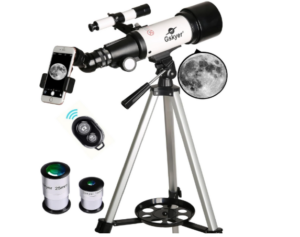
The Gskyer Telescope, 70mm Aperture 400mm AZ Mount Astronomical Refracting Telescope for Kids Beginners is one of the most beginner friendly options for young stargazers who want an affordable and easy to use telescope. It is designed for kids and first time users who want to explore the moon, bright planets, and basic deep sky objects without dealing with complicated setup processes. The lightweight build and travel friendly design also make it practical for family trips and backyard astronomy sessions.
This refractor telescope comes with a 70mm aperture and 400mm focal length, which gives it enough light gathering ability to produce bright and clear lunar views. The fully coated optics help improve image clarity while reducing glare. For children learning astronomy, the views are impressive enough to keep them interested without overwhelming them with advanced controls or difficult adjustments.
The telescope includes two eyepieces along with a 3x Barlow lens that increases magnification options. This gives beginners flexibility when viewing the moon, star clusters, and some brighter planets. The included 5×24 finder scope helps users locate objects faster, which is useful because beginners often struggle with aiming telescopes accurately.
One of the more practical additions is the smartphone adapter and wireless remote. Kids can connect a phone to capture basic moon photos or record their observations directly through the telescope. While image quality will not compete with expensive astrophotography equipment, it adds a fun interactive element that makes stargazing more engaging for younger users.
The adjustable aluminum tripod is simple to set up and works well for casual observation sessions. The included carry bag improves portability and storage, making this telescope convenient for travel and outdoor use. Parents looking for a starter telescope that does not require advanced technical knowledge will likely appreciate how quickly it can be assembled and used.
Key Specifications
- Brand: Gskyer
- Model: Astronomical Refracting Telescope
- Aperture: 70mm
- Focal Length: 400mm
- Focal Ratio: f/5.7
- Mount Type: Altazimuth Mount
- Optical Design: Refractor
- Focus Type: Manual Focus
- Optical Tube Length: 400mm
- Finder Scope: 5×24 Reflex Finder
- Tripod Material: Aluminum Alloy
Pros
- Easy setup for beginners and kids
- Lightweight and portable design
- Clear moon and planetary views
- Smartphone adapter adds extra functionality
- Good value for the price
- Travel bag included
- Simple controls for first time users
Cons
- Limited performance for advanced astrophotography
2. Telescope for Adults & Kids, 80mm Aperture 500mm Refractor
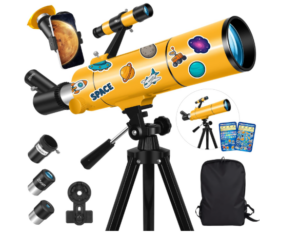
The Telescope for Adults & Kids, 80mm Aperture 500mm Refractor is designed for beginners who want a more capable entry level telescope without spending heavily on advanced equipment. It balances portability, ease of use, and solid optical performance, making it suitable for both kids and adults interested in astronomy, nature observation, and casual astrophotography.
With an 80mm aperture and 500mm focal length, this refractor telescope gathers more light than many smaller beginner models. That extra aperture improves brightness and detail when viewing the Moon, planets, and brighter deep sky targets. The fully multi coated optics also help produce sharper images with better contrast while reducing reflections and glare during nighttime viewing sessions.
The telescope includes two eyepieces along with a 3X Barlow lens, allowing magnification from 20X up to 150X. This range gives beginners flexibility for different viewing situations. Lower magnification works well for wide sky views and landscapes, while higher magnification helps reveal lunar craters and planetary details. The included 45 degree zenith mirror also improves viewing comfort by presenting upright images, which is especially useful for younger users.
MEEZAA includes a 5×24 finder scope to help users locate objects faster in the night sky. Beginners often struggle with aiming telescopes accurately, so having a dedicated finder scope makes the learning process easier. The lightweight altazimuth mount keeps movement simple and intuitive, allowing users to track celestial objects without complicated adjustments.
One practical advantage of this telescope is the travel friendly package. The adjustable aluminum tripod folds down easily, while the waterproof backpack stores the telescope and accessories securely for transport. This makes it convenient for camping, road trips, and backyard astronomy sessions. The included smartphone adapter also allows users to capture simple moon photos and videos directly through the eyepiece.
The overall package is clearly aimed at families and beginners who want an all in one telescope kit. The addition of colorful space stickers gives younger users a more interactive experience, which can help keep children engaged while learning astronomy.
Key Specifications
- Brand: MEEZAA
- Model: 80500
- Aperture: 80mm
- Focal Length: 500mm
- Optical Design: Refractor
- Mount Type: Altazimuth Mount
- Focus Type: Manual Focus
- Optical Tube Length: 500mm
- Finder Scope: 5×24 Straight Through
- Compatible Devices: Smartphones
- Tripod Height Range: 16.92 to 44.48 inches
Pros
- Larger 80mm aperture improves brightness and detail
- Beginner friendly setup process
- Lightweight and portable design
- Waterproof backpack adds travel convenience
- Good magnification range for moon and planets
- Smartphone adapter supports casual astrophotography
- Comfortable upright viewing angle
- Suitable for both kids and adults
Cons
- High magnification performance depends heavily on viewing conditions
3. Telescope for Kids 50mm 100x Magnification Beginner Silver Telescopio
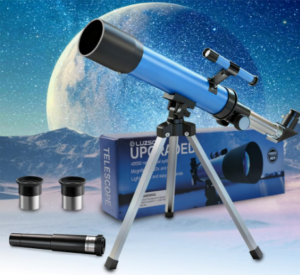
The Luzsco Telescope for Kids 50mm 100x Magnification Beginner Telescope is built specifically for young children who are curious about space and want a simple introduction to astronomy. Its lightweight design, easy setup, and affordable price make it more of an educational toy telescope than a serious astronomy instrument, but for kids between ages 6 and 12, that is exactly the point. It focuses on accessibility and fun rather than advanced optical performance.
This beginner telescope features a 50mm aperture with magnification ranging from 20x to 100x. For young users, that is enough to observe the Moon’s craters, brighter stars, and some basic planetary shapes. The multi coated optics help improve brightness and reduce distortion, although expectations should remain realistic because a small 50mm aperture has clear limitations compared to larger beginner telescopes.
The package includes two eyepieces, a Barlow lens, tripod, and finder scope, giving children several viewing options while learning how telescopes work. The controls are straightforward and beginner friendly, which matters because complicated setups often frustrate younger users quickly. The telescope is also compact enough for children to carry and move without much assistance.
One of the strongest aspects of this telescope is its educational value. It encourages hands on learning, outdoor exploration, and curiosity about science. Parents looking for a STEM focused gift will likely appreciate that it combines entertainment with learning rather than functioning as another short lived electronic toy.
Portability is another advantage. At only around 600 grams, the telescope is lightweight enough for camping trips, backyard observation, and school projects. The compact size also makes storage simple for families with limited space.
That said, this telescope works best when expectations are realistic. It is designed for introducing kids to astronomy, not for advanced planetary observation or deep sky viewing. Older children or users who become serious about stargazing will probably outgrow it fairly quickly and eventually want a larger aperture telescope.
Key Specifications
- Brand: Luzsco
- Model: Telescope 001
- Aperture: 50mm
- Magnification Range: 20x to 100x
- Optical Design: Refractor
- Focus Type: Manual Focus
- Mount Type: Fixed Mount
- Eyepiece Type: Huygens
- Finderscope: Reflex
- Weight: 600 grams
- Power Source: None
Pros
- Very affordable beginner telescope
- Lightweight and easy for kids to carry
- Simple setup process
- Good educational STEM gift
- Portable for travel and outdoor use
- Encourages curiosity about astronomy
- Includes useful beginner accessories
Cons
- Limited image detail compared to larger telescopes
4.NASA Lunar Telescope for Kids Ages 8-12 with Tripod and Finder Scope
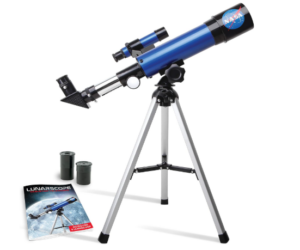
The NASA Lunar Telescope for Kids is a Beginner focused telescope designed to introduce younger children to astronomy in a simple and approachable way. Marketed as a STEM learning tool and space themed educational gift, this telescope prioritizes ease of use and fun over advanced observing capability. For kids interested in the Moon and basic night sky exploration, it offers an accessible starting point without overwhelming them with complicated controls.
This telescope provides up to 90x magnification and includes both low power and high power eyepieces. Young users can observe the Moon’s surface in more detail than with the naked eye, including some visible craters and surface patterns under good viewing conditions. The included finder scope helps children locate the Moon more easily before switching to higher magnification viewing.
The tabletop tripod keeps the setup compact and manageable for smaller users. Unlike full size tripods that can be awkward for children, this design works well for desks, tables, and backyard observation sessions. The mount system is also designed for smoother movement, making it easier for beginners to scan the lunar surface without struggling with complicated adjustments.
Assembly is straightforward, which matters because younger users often lose interest quickly when equipment becomes frustrating. Parents looking for an educational astronomy gift will likely appreciate the balance between entertainment and learning. The NASA branding also adds extra appeal for children already fascinated by space exploration.
That said, this telescope should be viewed realistically. The small aperture limits brightness and detail compared to larger beginner telescopes. It performs best for basic Moon viewing rather than serious planetary or deep sky observation. Older children or highly enthusiastic beginners may eventually want a larger and more capable telescope fairly quickly.
Key Specifications
- Brand: Blue Marble
- Model: NASA Lunar Telescope for Kids
- Magnification: Up to 90x
- Optical Design: Refractor
- Eyepiece Type: Galilean
- Focus Type: Manual Focus
- Mount Type: Equatorial Mount
- Finder Scope: Straight Through
- Tripod Type: Tabletop
- Power Source: Battery Powered
Pros
- Very beginner friendly for young children
- Easy assembly and simple controls
- Compact tabletop design saves space
- Good educational astronomy gift
- Lightweight and portable
- Moon viewing is enjoyable for beginners
- NASA branding increases appeal for kids
Cons
- Small aperture limits viewing performance
5. Hawkko 80mm Aperture 500mm Telescope for Kids 8-12 & Adults Beginners
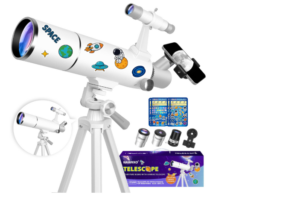
The Hawkko 80mm Aperture 500mm Refractor Telescope is aimed at families, beginners, and young astronomy enthusiasts who want an affordable telescope with better light gathering ability than most entry level 70mm models. With its 80mm aperture, portable design, and beginner friendly accessories, it offers a balanced mix of educational value, casual stargazing performance, and travel convenience.
This refractor telescope uses an 80mm fully multi coated lens paired with a 500mm focal length. Compared to smaller beginner telescopes, the larger aperture gathers noticeably more light, producing brighter and clearer lunar and planetary views. Under good sky conditions, users can observe detailed moon craters, brighter planets, and some larger star clusters with respectable clarity for this price range.
The telescope includes two eyepieces and a Barlow lens that extend magnification from 20X up to 150X. Lower magnification settings are useful for wide field viewing and daytime nature observation, while higher settings provide closer looks at lunar features and bright celestial targets. The included straight through finder scope helps beginners locate objects more efficiently, although aiming still takes some practice for first time users.
One feature that separates this kit from many similar beginner telescopes is the personalized experience. Hawkko includes space themed stickers and alphabet decals that allow children to customize the telescope. While this does not improve performance, it makes the telescope feel more interactive and engaging for younger users who are learning astronomy for the first time.
The adjustable altazimuth tripod is lightweight and portable enough for backyard viewing, camping, or travel. Setup is simple and beginner friendly, which matters because overly complicated equipment often discourages new users quickly. The included smartphone adapter also allows casual moon photography and basic astronomy videos using a mobile phone.
Despite its strengths, expectations still need to remain realistic. While the 80mm aperture is solid for beginner astronomy, this telescope is not designed for serious astrophotography or advanced deep sky observation. Stability may also decrease slightly when using the highest magnification levels.
Key Specifications
- Brand: Hawkko
- Model: Hawkko 80500
- Aperture: 80mm
- Focal Length: 500mm
- Optical Tube Length: 500mm
- Optical Design: Refractor
- Mount Type: Altazimuth Mount
- Focus Type: Manual Focus
- Eyepiece Type: Kellner
- Finder Scope: Straight Through
- Compatible Devices: Smartphones
Pros
- Larger 80mm aperture improves image brightness
- Good value for beginner astronomy
- Lightweight and travel friendly
- Easy setup for families and kids
- Smartphone adapter supports simple astrophotography
- Suitable for both daytime and nighttime viewing
- Decorative stickers make it fun for younger users
Cons
- Tripod stability decreases at high magnification
Also Read: Best Telescopes for Stargazing
Also Read: Best Handheld Binoculars for Stargazing
Advantages of Using the Best Kid Telescope for Stargazing
1. Encourages Interest in Science and Space
One of the biggest advantages of using the Best Kid Telescope for Stargazing is how it sparks curiosity about astronomy and science. Kids become more interested in the Moon, planets, stars, and space exploration when they can observe them directly instead of only reading about them. A telescope makes learning interactive and far more exciting.
2. Supports STEM Learning
A beginner telescope helps children develop STEM related skills through hands on learning. Kids learn about optics, magnification, observation, and problem solving while using the telescope. These activities encourage critical thinking and scientific curiosity in a practical way.
3. Creates Family Bonding Time
Stargazing is an activity parents and children can enjoy together. Families can spend evenings exploring the night sky, identifying constellations, and observing lunar details. This creates meaningful shared experiences away from screens and indoor distractions.
4. Builds Patience and Focus
Using a telescope teaches children patience because finding celestial objects takes time and concentration. Kids learn to adjust focus, align the telescope properly, and carefully observe details, which helps improve attention span and focus.
5. Provides Educational Entertainment
The Best Kid Telescope for Stargazing combines fun with learning. Children enjoy exploring the night sky while also gaining knowledge about astronomy and science. This balance makes telescope use both entertaining and educational at the same time.
6. Encourages Outdoor Exploration
A telescope motivates kids to spend more time outdoors during backyard stargazing sessions, camping trips, and family activities. It provides a healthy alternative to excessive screen time while helping children connect with nature and the night sky.
7. Improves Observation Skills
Using a telescope helps children develop stronger observation abilities. Kids learn to notice details on the Moon, compare stars, and track moving objects in the sky. These activities also improve hand eye coordination and visual awareness.
8. Portable and Beginner Friendly
Most kid telescopes are lightweight, simple to assemble, and easy to carry. This makes them ideal for travel, school projects, and outdoor adventures. The beginner friendly design allows children to start exploring astronomy without complicated setup procedures.