Best Spotting Scope for 600 Yards is all about choosing optics that can deliver clear, reliable detail at a distance where the naked eye and basic equipment fail. At 600 yards, small differences in glass quality, objective lens size, and optical coatings become critical, because they directly affect how well you can identify targets, spot impacts, and read environmental conditions. These scopes are great for long-range use because they bridge the gap between seeing a target and actually understanding what is happening on it.
In this guide, I will break down the key features that matter most at 600 yards, highlight the top-performing options across different price levels, and explain how to choose the right scope based on real-world performance rather than marketing numbers. You will also find a practical buying guide and FAQs to help you avoid common mistakes and choose a scope that actually performs when it matters.
5 Best Spotting Scope for 600 Yards
1. Vortex Optics Razor HD Spotting Scope (22–48×65 Angled)
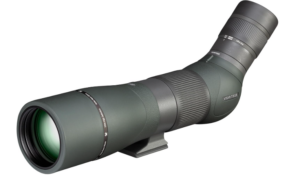
The Vortex Razor HD 22–48×65 is designed for shooters and observers who want high level optical performance without moving into oversized, heavy spotting scopes. The combination of HD glass and apochromatic lens design produces a sharp, color accurate image that holds together well through most of its magnification range. At 600 yards, this scope can clearly resolve targets, making it suitable for range spotting, target identification, and mid to long distance observation.
The magnification range of 22 to 48x is more practical than it may first appear. At 600 yards, most usable spotting happens around 30 to 40x, where this scope maintains good clarity and contrast. Pushing toward 48x is possible, but like most mid sized scopes, atmospheric conditions will decide how much detail you actually get. The angled body design also helps with extended viewing sessions, especially when sharing between multiple users or adjusting tripod height frequently.
Optically, the HD extra low dispersion glass works alongside advanced anti reflective coatings to improve brightness and reduce color fringing. This matters at 600 yards because edge clarity and contrast are what allow you to pick out bullet impacts or small target details. The built in sunshade also helps reduce glare, which becomes important when shooting in open ranges under strong sunlight.
Durability is another strong point. The scope is O ring sealed and argon purged, which keeps it waterproof and fog proof in changing weather. The rubber armor protects it from handling wear, and the Armortek lens coating helps resist oil, dust, and scratches. These features make it reliable for field use rather than just bench use.
The focusing system is smooth and precise, allowing small adjustments without overshooting your target focus point. The rotating eyecup and locking collar improve comfort and viewing angles, especially during longer observation sessions. While these may seem like small design details, they matter a lot when tracking small movements at long range.
However, this model is not without limitations. The 65 mm objective lens reduces light gathering compared to larger 80 or 85 mm scopes, which becomes noticeable in low light or heavy mirage conditions. At 600 yards, this means you may lose fine detail earlier in the morning or late afternoon. It also requires a very stable tripod to reach its full optical potential, otherwise image shake becomes the limiting factor rather than the glass itself.
Key Specifications
- Magnification range: 22 to 48x
- Objective lens diameter: 65 mm
- Optical design: HD extra low dispersion glass with apochromatic lens system
- Lens coatings: XR Plus anti reflective coatings
- Focus system: Helical manual focus
- Body design: Angled spotting scope
- Construction: Waterproof and fog proof, argon purged
- Protection: Rubber armored with Armortek lens coating
- Sunshade: Built in extendable sunshade
- Mount type: Tripod compatible (Altazimuth mount support)
Pros
- Excellent image sharpness for its size
- High quality HD and apochromatic glass system
- Good color accuracy and contrast at mid range magnification
- Lightweight and easier to carry than larger 80 to 85 mm scopes
- Strong waterproof and fog proof construction
- Smooth and precise focusing system
- Effective glare reduction from built in sunshade
- Lifetime warranty support
Cons
- 65 mm objective limits brightness at long distance in poor light
2. Nikon Monarch 20-60×82 ED Spotting Scope – Extra-Low Dispersion Glass, Field-Flattener Lens System, Waterproof & Fogproof High-Definition Observation Scope, Angled/Straight View
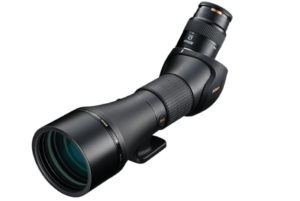
The Nikon Monarch Fieldscope 82ED is built for users who prioritize optical accuracy and consistency over portability. At 600 yards, it delivers a level of clarity that allows reliable target identification and fine detail recognition, especially under stable atmospheric conditions. The combination of extra low dispersion glass and a field flattener system ensures that the image remains sharp across the entire viewing field rather than only at the center.
One of the strongest aspects of this scope is its ability to maintain image integrity at higher magnification. Many spotting scopes start to degrade quickly past 40x, but this model holds usable clarity deeper into the zoom range. At 600 yards, this means you can push magnification when needed without immediately losing contrast or definition, which is useful for spotting small impacts or distant markings.
The 82 mm objective lens is a major advantage. It gathers significantly more light than mid sized scopes, which improves performance in early morning, late afternoon, or cloudy conditions. This also helps reduce the negative effects of heat shimmer compared to smaller objectives, although no scope fully eliminates that issue.
Ergonomically, the angled design makes long observation sessions more comfortable, especially when tracking targets at varying heights or sharing the scope between users. The build quality is solid, with a nitrogen filled, O ring sealed body that ensures resistance against fog, moisture, and dust. This makes it reliable for field conditions rather than just controlled range environments.
However, this level of optical performance comes with tradeoffs. The scope is heavier and less portable than smaller alternatives, and it demands a high quality tripod to stabilize its larger optical system. Without proper support, you lose a significant portion of its resolving capability. It is also more scope than a casual 600 yard shooter strictly needs, meaning part of what you are paying for is performance beyond your immediate use case.
Key Specifications
- Magnification range: 20–60x
- Objective lens diameter: 82 mm
- Glass type: Extra low dispersion (ED)
- Optical system: Field flattener lens design
- View type: Angled
- Lens coatings: Multilayer coated optics
- Body construction: Aluminum alloy
- Weather sealing: Waterproof and fog proof, nitrogen filled
- Focus system: Individual focus
- Weight: 3 pounds
- Mount type: Tripod compatible outdoor mount
Pros
- Excellent clarity at 600 yards and beyond
- Large 82 mm objective improves brightness and detail
- ED glass reduces color fringing significantly
- Field flattener system improves edge to edge sharpness
- Strong performance in low light conditions
- Usable magnification range up to 60x
- Durable waterproof and fog proof construction
Cons
- Heavier and less portable than smaller scopes
3. Nocs Provisions Long View 20-60x85mm Spotting Scope – Waterproof, Fogproof, Fully Multi-Coated Anti-Scratch Optics for Adults & Kids, Ideal for Wildlife & Landscape Viewing, Hunting & Outdoor Travel
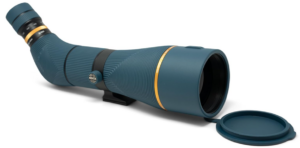
The Nocs Provisions Long View is positioned as an accessible long-range spotting scope that emphasizes large objective size and general outdoor usability. At 600 yards, it is capable of showing targets clearly in good lighting conditions, especially when magnification is kept in the 20x to 40x range. The 85 mm lens gives it a strong advantage in brightness, which helps when scanning distant terrain or tracking objects in open environments.
However, optical performance is where this scope shows its limitations. While it uses fully multi-coated optics and PrismHD glass, it does not achieve the same level of chromatic control or edge-to-edge sharpness found in ED glass systems. At 600 yards, this means fine details such as small impacts or subtle contrast differences may appear less defined, especially at higher magnifications or in heat shimmer conditions.
The zoom range from 20 to 60x is functional, but like most scopes in this price range, performance is strongest in the lower to mid magnification band. Pushing toward 50x and above often introduces softness and reduced contrast. This is not unusual at this price point, but it limits its usefulness for precision spotting at distance.
The build quality is practical and field ready. The IPX7 waterproof rating and nitrogen sealing ensure it can handle rain, humidity, and temperature changes without internal fogging. The focusing system is smooth and easy to control, and the angled viewing design improves comfort during longer observation sessions. The scope also supports smartphone and camera use, which adds flexibility for casual documentation.
Where this scope struggles is consistency. At 600 yards, environmental factors like heat shimmer and low light expose its optical limitations faster than higher tier scopes. While it can show targets, it is less reliable for extracting fine detail compared to ED glass competitors.
Key Specifications
- Magnification range: 20–60x
- Objective lens diameter: 85 mm
- Optical system: PrismHD glass with fully multi-coated lenses
- Focus system: Manual smooth focus wheel
- Body design: Angled spotting scope
- Weather sealing: IPX7 waterproof and fogproof, nitrogen filled
- Lens protection: Anti scratch coating
- Compatibility: Smartphone and camera digiscoping support
- Weight: 80 oz
- Mount type: Altazimuth tripod compatible
Pros
- Large 85 mm objective lens improves brightness
- Usable 600 yard performance in good conditions
- Waterproof and fogproof IPX7 construction
- Smooth focusing system with easy adjustments
- Wide 20–60x zoom range
- More affordable than premium ED spotting scopes
- Smartphone compatibility for digiscoping
Cons
- No ED glass, leading to reduced clarity and color accuracy
4. Celestron – Regal M2 100ED Spotting Scope – ED Glass for Birding and Outdoor Activities – Phase and Dielectric Coated BaK-4 Prism – Fully Multi-Coated Optics – Dual Focus – 22-67x Zoom Eyepiece
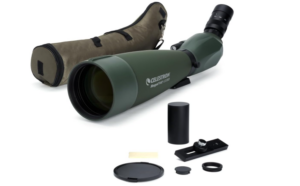
The Celestron Regal M2 100ED is designed for users who want maximum optical reach and detail resolution. At 600 yards, it performs at a level where target edges, impact zones, and fine environmental details can be observed with high clarity under good atmospheric conditions. The combination of ED glass and XLT coatings produces strong color accuracy and high light transmission, which improves visibility in both bright and moderately low light environments.
The 100 mm objective lens is the defining factor in this scope’s performance. It gathers a large amount of light, which enhances brightness and contrast at long distances. At 600 yards, this translates into a very stable image even when conditions are not perfect. It also allows the scope to maintain usable clarity at higher magnification levels compared to smaller objectives.
The 22–67x zoom range gives it flexibility, but its real strength is not just maximum magnification. It is the ability to remain optically stable as you increase zoom. Many scopes lose definition quickly past 40x, but this model holds detail longer, making it useful for precise long-range spotting tasks. The dual focus system also improves control, allowing both fast acquisition and fine tuning, which matters when tracking small details at distance.
Build quality is solid and designed for field use. The rotating mount system improves ergonomics, especially when adjusting viewing angles during extended observation sessions. The included digiscoping compatibility also makes it suitable for users who want to document targets or wildlife through a camera setup. The waterproof and fog proof construction ensures reliable performance in changing weather conditions.
However, this scope is not without drawbacks. The 100 mm size makes it heavy and less portable than 80–85 mm alternatives. It also demands a very stable tripod to avoid image shake, because any vibration becomes more noticeable at higher magnification. In addition, while it performs extremely well optically, it is more scope than most 600 yard shooters actually need, meaning you are paying for performance that may not always be fully utilized.
Key Specifications
- Magnification range: 22–67x
- Objective lens diameter: 100 mm
- Glass type: Extra Low Dispersion (ED)
- Prism system: BaK-4 with phase and dielectric coatings
- Optical coatings: XLT fully multi-coated optics
- Focus system: Dual focus (coarse and fine adjustment)
- Body design: Angled spotting scope
- Mount type: Rotating tripod mount
- Weather sealing: Waterproof and fogproof construction
- Weight: 5 pounds
- Compatibility: DSLR digiscoping via T-mount adapter
Pros
- Extremely strong clarity at 600 yards
- Large 100 mm objective delivers excellent brightness
- ED glass reduces chromatic aberration effectively
- XLT coatings improve light transmission and contrast
- Maintains usable detail at higher magnification levels
- Dual focus system improves precision control
- Good low light performance
- Strong build quality with waterproof and fogproof design
Cons
- Heavy and less portable than smaller scopes
5. Gosky Flagship DiamondEdge 20-60×80 Spotting Scope with Tripod, Carrying Bag and Quick Phone Holder – BAK4 High Definition Waterproof Spotter Scope for Bird Watching Wildlife observing,Green
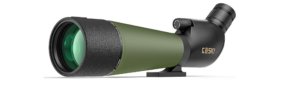
The Gosky DiamondEdge 20–60×80 is designed as a budget-friendly spotting scope for general outdoor observation. At 600 yards, it can identify targets in good lighting conditions, especially when used in the lower magnification range around 20x to 35x. The 80 mm objective lens provides decent brightness for its price category, making it usable for daylight spotting and casual range observation.
Optically, the scope uses BAK4 Porro prisms and fully multi-coated lenses to improve light transmission. This helps produce a reasonably bright and usable image at mid distances. However, compared to ED glass systems, it lacks fine color correction and edge-to-edge sharpness. At 600 yards, this means the image may appear slightly soft, especially when zooming past mid magnification or when atmospheric distortion increases.
The zoom range of 20–60x is flexible on paper, but real-world performance is strongest in the lower half of that range. As magnification increases, clarity drops noticeably, which is expected in this price segment. This limits its usefulness for precision spotting at longer distances where detail recognition becomes important.
Build quality is practical rather than premium. The scope is nitrogen filled and sealed for waterproof and fog proof use, which makes it suitable for field conditions like rain or humidity. The rubber armored body improves durability and grip, while the included tripod and phone adapter make it more user-friendly for beginners. These additions add convenience but do not improve optical performance.
At 600 yards, the biggest limitation is resolution consistency. In stable conditions, you will see targets clearly enough for general identification. However, in heat shimmer, low light, or when trying to identify small details, the image quickly loses sharpness compared to higher grade scopes. This makes it less reliable for serious shooting or precision spotting tasks.
Key Specifications
- Magnification range: 20–60x
- Objective lens diameter: 80 mm
- Prism type: BAK4 Porro prism
- Lens coating: Fully multi-coated green film optics
- Focus system: Manual focus
- Body design: Rubber armored waterproof construction
- Weather sealing: Nitrogen filled, fog proof and waterproof
- Accessories: Tripod, smartphone adapter, carrying case included
- Weight: 2.41 pounds
- Mount type: Altazimuth tripod compatible
Pros
- Very affordable entry into long range spotting
- Usable 600 yard performance in good conditions
- 80 mm objective provides decent brightness
- Includes tripod and smartphone adapter
- Waterproof and fog proof design
- Lightweight and portable
Cons
- Limited optical clarity at higher magnification
Also Read: Best Scope for Long Range Precision Shooting
Also Read: Best Spotting Scope
Advantages of a Best Spotting Scope for 600 Yards
1. Accurate target identification
A best spotting scope for 600 yards allows you to clearly distinguish targets that are too small or too far for the naked eye. At this distance, objects blend into the background easily, so high-quality optics help you confirm exactly what you are aiming at instead of guessing.
2. Clear shot impact spotting
One of the most important uses is seeing where your shot lands. At 600 yards, bullet impacts are difficult to see without strong optics. A good spotting scope shows hits on steel or paper instantly, helping you correct aim without walking downrange.
3. Faster shooting adjustments
When you can see impacts clearly, you can adjust elevation and windage quickly. This reduces wasted ammunition and improves consistency, especially during practice sessions or competitive shooting where feedback speed matters.
4. Improved long-range visibility
Atmospheric conditions like heat shimmer and light distortion affect long-distance viewing. A quality spotting scope maintains better contrast and sharpness, allowing you to see targets more consistently at 600 yards compared to basic optics.
5. Reduced eye fatigue
Staring through low-quality optics for long periods strains the eyes. A high-quality spotting scope produces a clearer and more stable image, making it easier to observe for extended periods without discomfort or loss of focus.
6. Better decision making in real time
At 600 yards, small visual details matter. A spotting scope gives you reliable visual information so you can decide whether to shoot, adjust, or hold. This improves accuracy because decisions are based on actual observation rather than estimation.
7. Enhanced magnification control
A good scope allows you to smoothly adjust magnification depending on conditions. Lower zoom helps with stability and field of view, while higher zoom helps with detail recognition when conditions are stable.
8. Versatility for outdoor use
Beyond shooting, a best spotting scope for 600 yards is useful for wildlife observation, hunting, and landscape viewing. It becomes a multi-purpose tool that extends far beyond range work, making it more valuable overall.
Factors to Consider When Choosing the Best Spotting Scope for 600 Yards
1. Optical quality and glass type
Optical quality is the most important factor because it directly determines how clearly you can see at 600 yards. High quality glass improves sharpness, contrast, and color accuracy, which are essential for identifying small details at long distance. Inferior glass may still show an image, but it often appears soft or washed out, especially when magnification increases.
2. Objective lens size
The size of the objective lens controls how much light the scope can gather. A larger lens produces a brighter image, which is especially important at 600 yards where light loss and atmospheric interference become more noticeable. However, larger lenses also increase size and weight, so there is always a balance between brightness and portability.
3. Magnification range and usability
A wide zoom range is useful, but what matters most is how well the scope performs at usable magnification levels. At 600 yards, most viewing happens in the mid range of magnification rather than the maximum setting. A good scope should maintain clarity and stability when zoomed in, not just advertise high magnification numbers.
4. Resolution and detail clarity
Resolution determines how much fine detail you can actually distinguish at long range. At 600 yards, low resolution optics may show a target but fail to reveal important details like impact marks or small movements. High resolution ensures that what you see is precise enough for accurate decision making.
5. Performance in atmospheric conditions
Heat shimmer, wind distortion, and changing light conditions significantly affect visibility at 600 yards. A strong spotting scope should minimize these effects as much as possible. While no optic can fully remove atmospheric interference, better optical design helps maintain usable clarity for longer under difficult conditions.
6. Stability and tripod compatibility
At high magnification, even small movements can ruin the image. A stable tripod is essential, and the scope must be compatible with secure mounting systems. Without proper stability, even high end optics will perform poorly because the image will constantly shake or drift.
7. Build quality and weather resistance
Since spotting scopes are often used outdoors, durability matters. Waterproof and fog proof construction ensures reliable performance in rain, humidity, and temperature changes. A well built body also protects internal optics from shock and handling wear, which extends the lifespan of the scope.
8. Eye comfort and long viewing usability
Long observation sessions require comfortable eye relief and ergonomic design. Poor eye comfort leads to fatigue, reduced focus, and shorter viewing time. A well designed scope allows extended use without strain, making it more effective for shooting sessions, hunting, or wildlife observation.
Frequently Asked Questions About Best Spotting Scope for 600 Yards
1. Can a spotting scope really perform well at 600 yards?
Yes, a spotting scope can perform very well at 600 yards, but only if it has good optical quality, proper magnification control, and a large enough objective lens. At this distance, lower quality scopes may show a target but fail to reveal fine details, while higher quality optics provide clear and usable image resolution for accurate observation and feedback.
2. What magnification is ideal for 600 yards?
For 600 yards, the most effective magnification is usually in the mid range, typically between 25x and 45x. While many scopes advertise up to 60x or more, pushing to maximum zoom often reduces image sharpness due to atmospheric distortion. The best results come from using moderate magnification where clarity and stability are balanced.
3. Do I need an expensive spotting scope for 600 yards?
Not always, but quality matters more than price alone. A budget scope may show the target, but it often struggles with detail clarity and consistency under changing conditions. Higher quality optics provide better contrast, sharper resolution, and more reliable performance, especially when environmental factors like heat shimmer affect visibility.
Conclusion
Best Spotting Scope for 600 Yards performance comes down to optical clarity, stability, and how consistently a scope can resolve fine detail at distance. Across all the options discussed, the strongest models stand out because they combine high quality glass, larger objective lenses, and better control over magnification, which directly improves visibility and accuracy at 600 yards. These factors matter far more than advertised zoom levels, since real-world performance depends on how well the image holds up under heat shimmer, changing light, and atmospheric distortion.
Ultimately, the Best Spotting Scope for 600 Yards is one that delivers reliable detail recognition, clear impact spotting, and stable viewing under real field conditions. Whether for shooting, hunting, or outdoor observation, these scopes improve decision making by turning distant, unclear visuals into usable information. The result is greater accuracy, faster adjustments, and a much more confident long-range viewing experience.