

Best Portable Telescope for Stargazing has become one of the most practical choices for both beginners and casual astronomy enthusiasts because it removes the biggest barriers that stop people from enjoying the night sky. These telescopes are designed to balance portability, ease of setup, and optical performance, making it possible to observe the Moon, planets, and deep sky objects without dealing with heavy equipment or complicated setups. What makes them especially valuable is that they encourage more frequent use, which leads to faster learning and a more enjoyable stargazing experience overall.
This guide breaks down the key features that define a good portable telescope, highlight the top picks across different categories, and explain how to choose the right model based on your needs and budget. You will also find a detailed buying guide and answers to the most common questions so you can confidently decide which telescope fits your stargazing goals.
5 Best Portable Telescope for Stargazing
1. Celestron Travel Scope 70 Portable Refractor Telescope – 70mm Aperture, Fully-Coated Glass Optics – Includes Tripod, Backpack & Software – Ideal for Beginners & Travel
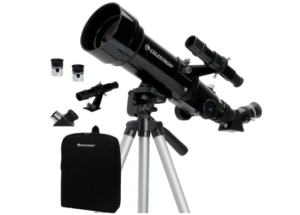
The Celestron Travel Scope 70 is built for people who want a lightweight and simple telescope without dealing with bulky equipment or complicated setup. Many beginner telescopes promise portability but sacrifice image quality to stay compact. This model avoids that problem by combining a 70mm aperture with fully coated glass optics, giving users noticeably sharper and brighter views than most cheap entry level telescopes.
For beginners, the biggest advantage is ease of use. The telescope can be assembled in minutes without tools, which removes a major frustration that often pushes new users away from astronomy. The included full height tripod keeps the setup practical for both adults and kids, while the padded backpack makes transport easy for camping trips, road travel, or backyard stargazing sessions.
Image quality is surprisingly solid for a portable refractor in this price range. The 70mm aperture gathers enough light to show detailed lunar craters, Jupiter’s moons, and bright planets with respectable clarity. During daytime use, it also works well for viewing landscapes and wildlife. The fully coated glass optics help improve brightness and reduce glare, which gives the telescope a cleaner image than many cheaper alternatives.
The included 20mm and 10mm eyepieces give users flexibility depending on the target they want to observe. The 20mm eyepiece works better for wider sky views and star clusters, while the 10mm eyepiece provides closer views of the Moon and planets. This makes the telescope versatile enough for both astronomy and terrestrial viewing without needing immediate accessory upgrades.
Portability is where this telescope separates itself from larger beginner models. The optical tube measures only 17 inches long, and the entire setup fits neatly inside the included backpack. That matters because many larger telescopes stay unused simply because transporting and setting them up becomes inconvenient. The Travel Scope 70 is easy enough to carry almost anywhere, which increases the chances that beginners will actually use it consistently.
The Starry Night software included with the telescope adds extra value for new users. Beginners often struggle to identify celestial objects, and the software helps simplify the learning process by guiding users through the night sky. Combined with the reflex finderscope, locating objects becomes less frustrating for first time observers.
Key Specifications
- Brand: Celestron
- Model Name: Travel Scope 70 Portable Telescope
- Optical Design: Refractor
- Aperture: 70mm
- Optical Tube Length: 17 inches
- Mount Type: Altazimuth Mount
- Focus Type: Manual Focus
- Eyepieces Included: 20mm and 10mm
- Finderscope: Reflex Finderscope
- Optics: Fully Coated Glass
- Tripod Included: Yes
- Backpack Included: Yes
- Software Included: Starry Night Astronomy Software
- Dimensions: 18″D x 7″W x 14″H
- Price: Around $99.99
- Customer Rating: 4.2 out of 5 stars
- Best For: Beginners, travel, camping, casual stargazing, daytime viewing
Pros
- Compact and lightweight for travel
- Quick setup with no tools required
- Fully coated glass optics improve image clarity
- Good beginner telescope for adults and kids
- Includes backpack and tripod
- Works for both astronomy and daytime viewing
- Affordable price for the included accessories
- Easy manual controls for learning astronomy basics
Cons
- Limited deep sky performance compared to larger telescopes
2. DWARFLAB Dwarf Mini Smart Telescope – 1.85lb Ultra-Portable Astronomy Telescope for Astrophotography with Built-in Filters, Auto GOTO, AZ/EQ Mode and Cloud Processing, Ideal for All Ages
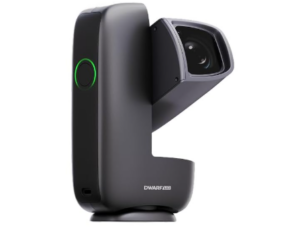
DWARFLAB Dwarf Mini Smart Telescope Review
The DWARFLAB Dwarf Mini takes a completely different approach to astronomy compared to traditional telescopes. Instead of focusing on large optics and manual controls, it prioritizes portability, automation, and smartphone driven astrophotography. This telescope is built for people who want quick access to the night sky without carrying bulky equipment or learning complicated alignment procedures.
At just 1.85 pounds, the Dwarf Mini is genuinely portable rather than “portable by telescope standards.” Most telescopes advertised for travel still require separate mounts, tripods, and accessory cases. The Dwarf Mini avoids that problem with an all in one design compact enough to fit inside a backpack or even a large jacket pocket. For hiking, camping, or casual backyard use, that convenience becomes one of its biggest strengths.
The app based control system is clearly designed for beginners and casual users. Traditional astronomy often overwhelms new users with star charts, alignment procedures, and manual tracking. The DWARFLAB app simplifies the process dramatically with an interactive sky atlas that allows users to select objects directly from a map. Within minutes, the telescope can automatically locate and track celestial targets using its Auto GOTO system.
The imaging system is surprisingly capable considering the telescope’s tiny size. The Sony IMX662 sensor helps produce cleaner and brighter astrophotography results than most people would expect from such a compact device. Bright nebulae, star clusters, and lunar details appear far better than what most beginner telescopes can capture through a smartphone eyepiece setup. Built in light pollution filters also help improve visibility in urban and suburban environments where city glow normally washes out faint celestial objects.
One feature that gives the Dwarf Mini more serious imaging potential is its Equatorial Mode support. Many smart telescopes focus only on casual use, but this model allows exposures up to 90 seconds, which significantly improves deep sky imaging quality. Combined with automated tracking and cloud based image processing, the telescope creates cleaner astrophotography results without requiring advanced editing knowledge.
The cloud processing system is another beginner friendly addition. Astrophotography normally involves complicated stacking software and image editing workflows. Here, much of that processing is automated, allowing users to produce more polished images with minimal effort. For beginners and younger users, this removes one of the biggest barriers to enjoying astrophotography.
However, there is an important reality many buyers ignore: portability always comes with compromises. The 30mm aperture is extremely small compared to traditional telescopes in the same price range. While the digital imaging technology compensates for this limitation in photography, visual observing performance is naturally more restricted. If someone expects bright visual deep sky views through an eyepiece, a larger traditional telescope would outperform this device easily.
Key Specifications
- Brand: DWARFLAB
- Model Name: Dwarf Mini
- Optical Design: Smart Digital Telescope
- Objective Lens Diameter: 30mm
- Mount Type: Altazimuth and Equatorial Mount
- Focus Type: Manual and Auto Focus
- Sensor: Sony IMX662
- Exposure Capability: Up to 90 seconds
- Tracking System: Auto GOTO
- Control Method: Smartphone App
- Filters Included: Built in light pollution filters
- Power Source: Rechargeable Battery
- Battery Included: Yes
- Weight: 1.85 pounds
- Dimensions: 2.39″D x 3.95″W x 7.23″H
- Compatible Devices: Smartphone
- Best For: Travel, beginner astrophotography, camping, casual astronomy, family use
Pros
- Extremely lightweight and portable
- Compact all in one design
- Fast beginner friendly setup
- App control simplifies astronomy learning
- Auto GOTO tracking improves usability
- Built in light pollution filters help urban viewing
- Good astrophotography performance for its size
- Cloud processing enhances images automatically
- Supports Equatorial Mode for longer exposures
- Battery powered for travel convenience
Cons
- Higher price compared to some larger beginner telescopes
3. Celestron NexStar 5SE Computerized Telescope – 5-Inch Schmidt-Cassegrain Optical Tube – Fully Automated GoTo Mount with SkyAlign – Ideal for Beginners and Advanced Users – 40,000+ Object Database
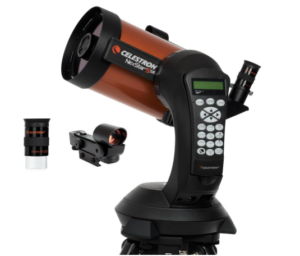
The Celestron NexStar 5SE is designed for people who want more than a basic beginner telescope but are not ready to deal with the complexity of large observatory style setups. Many entry level telescopes become frustrating because users spend more time searching for objects than actually observing them. The NexStar 5SE solves that problem with a fully computerized GoTo mount and an enormous 40,000 object database that automatically locates and tracks celestial targets.
What immediately separates this telescope from cheaper beginner models is the optical system. The 5 inch Schmidt Cassegrain design gives users strong light gathering performance in a compact body. Unlike large Newtonian reflectors that can become awkward to transport, the NexStar 5SE stays relatively portable while still delivering detailed views of the Moon, planets, star clusters, and brighter deep sky objects. Lunar craters appear sharp and detailed, Jupiter’s cloud bands become clearly visible, and Saturn’s rings look impressive even for casual observers.
The computerized GoTo system is one of the strongest reasons to buy this telescope. Many beginners quit astronomy because manually locating objects is slow and discouraging. With the NexStar+ hand controller, users can simply choose an object from the database, and the telescope automatically moves into position and tracks the target across the sky. That tracking capability becomes especially useful during long observation sessions because objects remain centered instead of constantly drifting out of view.
SkyAlign technology makes the setup process far less intimidating than older computerized systems. Instead of memorizing star names or performing complicated alignment routines, users only need to point at three bright celestial objects. The telescope then calculates its position automatically. This dramatically reduces the learning curve and makes the system approachable even for complete beginners.
The NexStar 5SE also has room to grow with the user. Unlike many budget telescopes that quickly hit their limits, this model supports accessories for wireless control, astrophotography, and advanced tracking improvements. The built in wedge allows basic long exposure astrophotography, making it a practical stepping stone for users interested in imaging the night sky without immediately investing in expensive equatorial mounts.
Portability remains another major advantage. Despite having a 127mm aperture, the optical tube is compact enough for travel and backyard use. This balance between performance and portability is one reason the 5SE has remained popular for years. Larger telescopes may provide brighter deep sky views, but they are often much harder to transport and set up consistently.
Key Specifications
- Brand: Celestron
- Model Name: NexStar 5SE Computerized Telescope
- Optical Design: Schmidt Cassegrain
- Aperture: 127mm
- Optical Tube Length: 330mm
- Mount Type: Computerized Altitude Azimuth Single Fork Arm
- Database Capacity: 40,000 plus celestial objects
- Alignment System: SkyAlign Technology
- Eyepiece Included: 25mm
- Focus Type: Manual Focus
- Finderscope: StarPointer Red Dot Finderscope
- Power Options: 8 AA batteries, 12V AC adapter, or PowerTank source
- Astrophotography Support: Built in wedge for polar alignment
- Dimensions: 32″D x 34″W x 52″H
- Customer Rating: 4.4 out of 5 stars
- Best For: Intermediate beginners, advanced users, planetary viewing, GoTo automation, entry level astrophotography
Pros
- Computerized GoTo mount simplifies object locating
- 40,000 object database provides massive sky coverage
- Compact Schmidt Cassegrain design saves space
- Strong planetary and lunar viewing performance
- SkyAlign system makes setup beginner friendly
- Automatic tracking keeps objects centered
- Portable compared to larger telescopes
- Upgradeable with advanced accessories
- Suitable for beginner astrophotography
- Sharp optics with good contrast
Cons
- Deep sky performance cannot match larger apertures
4. Sky-Watcher Flextube 200 Dobsonian 8-inch Collapsible Large Aperture Telescope – Portable, Easy to Use, Perfect for Beginners (S11700)
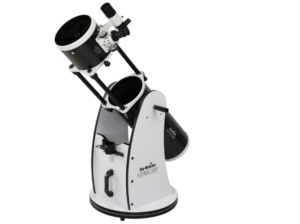
The Sky-Watcher Flextube 200 Dobsonian is built for people who want serious stargazing performance without moving into overly complex astronomy equipment. Many beginner telescopes focus heavily on portability and automation but sacrifice viewing power. This telescope takes the opposite approach by prioritizing a large 8 inch aperture while still maintaining a collapsible design that makes storage and transport far easier than traditional full tube Dobsonians.
The first thing that separates the Flextube 200 from smaller beginner telescopes is raw light gathering ability. The 8 inch aperture collects dramatically more light than compact refractors and smart telescopes, allowing users to see brighter deep sky objects with far more detail. Galaxies, nebulae, globular clusters, and star fields appear richer and more immersive. Lunar viewing is extremely sharp, and planets like Jupiter and Saturn show impressive detail under good viewing conditions.
The collapsible tube system is one of the telescope’s strongest practical advantages. Traditional large Dobsonian telescopes can become difficult to transport because of their long optical tubes. The Flextube design shortens the telescope significantly during storage and transport, making it more manageable for backyard astronomy, camping trips, or travel to darker sky locations. It is still a large telescope, but the collapsible structure reduces one of the biggest frustrations associated with large aperture instruments.
Ease of use is another reason Dobsonian telescopes remain popular among beginners. Unlike computerized systems that rely on power supplies, software, and alignment procedures, the Flextube 200 uses a simple manual altazimuth mount. The movement feels smooth and intuitive, allowing users to manually point the telescope across the night sky without dealing with complicated controls. This simplicity helps beginners focus more on observing and less on technical setup.
Optically, the Newtonian reflector design performs extremely well for the price. The telescope delivers bright views with strong contrast, especially under dark skies. Deep sky observing is where this telescope clearly outperforms smaller portable models. Faint galaxies that barely appear in compact beginner telescopes become easier to detect, and nebulae show noticeably more structure and brightness.
However, the large aperture also introduces tradeoffs that buyers should understand. This telescope is far more capable than entry level portable models, but it is also bulkier and heavier. It requires more storage space and takes longer to move outside compared to compact refractors or smart telescopes. Beginners looking for ultra quick grab and go astronomy may find it less convenient for casual short viewing sessions.
The Flextube 200 also requires occasional collimation, which is the process of aligning the mirrors for optimal image quality. This is normal for Newtonian reflectors, but some beginners may initially find it intimidating. Fortunately, most users learn the process quickly with practice.
Key Specifications
- Brand: Sky-Watcher
- Model Name: Flextube 200 Dobsonian
- Optical Design: Newtonian Reflector
- Aperture: 8 inches
- Tube Design: Collapsible Flextube
- Mount Type: Dobsonian Altazimuth Mount
- Best Use: Deep sky observing and planetary viewing
- Portability: Collapsible for easier transport
- Tracking System: Manual
- Power Requirement: None
- Recommended User Level: Beginners to intermediate users
- Viewing Targets: Moon, planets, galaxies, nebulae, star clusters
Pros
- Large 8 inch aperture delivers excellent deep sky performance
- Collapsible design improves portability and storage
- Bright and detailed planetary views
- Simple manual operation with no electronics required
- Strong value compared to computerized telescopes
- Smooth Dobsonian mount movement
- Excellent for galaxies, nebulae, and star clusters
- Easy setup compared to equatorial mount systems
- Durable construction for long term use
Cons
- Still large and heavy despite collapsible design
5. Orion StarBlast 4.5 Astro Reflector Telescope MAX Kit for Beginner and Intermediate Astronomy – Includes Eyepieces, Barlow Lens & Accessories
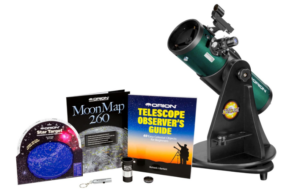
The Orion StarBlast 4.5 Astro Reflector is built for users who want stronger viewing performance than small entry level refractors but without jumping into large, heavy Dobsonian systems. Many beginner telescopes fail because they either prioritize portability too much or become too complex for casual users. This model sits in a practical middle ground, offering a 114mm aperture in a compact tabletop design that is easy to move, set up, and store.
The most important strength of this telescope is its fast f/4 optical system combined with a 4.5 inch aperture. That combination allows the telescope to gather enough light for detailed lunar viewing and decent planetary performance while also excelling at wide field deep sky targets. Star clusters, nebulae, and rich Milky Way fields appear brighter and more expansive compared to smaller refractors. The tradeoff is that fast focal ratios can be slightly more sensitive to alignment and require careful focusing for sharp results.
Setup is one of the reasons this telescope appeals to beginners. It arrives mostly pre assembled, meaning users can go from unpacking to observing in a short time without dealing with complicated construction. The compact tabletop design also removes the need for a full tripod system, which reduces both cost and setup time. However, it does require a stable surface, which can be a limitation depending on where you observe.
The included MAX Kit accessories add real value to the package. The 20mm and 10mm eyepieces provide flexibility for both wide field and higher magnification viewing. The Barlow lens effectively doubles magnification options, which helps beginners experiment with different levels of detail. The EZ Finder II reflex sight improves object locating, which is often one of the most frustrating parts of learning astronomy. Additional tools like the planisphere and red flashlight support learning the night sky rather than relying only on automated systems.
In terms of portability, the StarBlast 4.5 performs well. At just under 11 pounds fully assembled and with a compact 21 inch height, it is easy to carry in a car or store at home. It is not as travel optimized as ultra light refractors or smart telescopes, but it offers significantly better optical performance than most ultra portable systems in a similar size category.
One limitation is manual tracking. Like most non computerized reflectors, users must manually follow objects as they move across the sky. At higher magnifications, this requires frequent adjustments and can take practice. Another consideration is that tabletop mounts depend heavily on the stability of the surface, so vibrations can affect viewing quality if the setup is not solid.
Key Specifications
- Brand: Orion Telescopes & Binoculars
- Model Name: Orion StarBlast 4.5 Astro Reflector Telescope MAX Kit
- Optical Design: Newtonian Reflector
- Aperture: 114mm
- Focal Ratio: f/4
- Optical Tube Length: 18 inches
- Mount Type: Altazimuth Tabletop Mount
- Focus Type: Manual Focus
- Finderscope: EZ Finder II Reflex Sight
- Included Eyepieces: 20mm and 10mm
- Accessories: Barlow Lens, Planisphere, RedBeam Flashlight, Eyepiece Rack, Observer Guide
- Weight: 10.9 lbs (fully assembled)
- Height: 21 inches when aimed upward
- Best For: Beginners, intermediate users, wide field observing, portable backyard astronomy
Pros
- Good balance between portability and optical performance
- 114mm aperture delivers solid deep sky capability
- Fast f/4 system provides bright wide field views
- Pre assembled design reduces setup time
- MAX Kit includes useful beginner accessories
- Lightweight and easy to transport
- Strong performance on star clusters and nebulae
- Better value than many small refractors
Cons
- Fast optics can be sensitive to collimation
Also Read: Best Kid Telescope for Stargazing
Also Read: Best Handheld Binoculars for Stargazing
Advantages of Portable Telescope for Stargazing
1. Easy access leads to more actual observing
A major advantage of a portable telescope is not technical performance, but usage frequency. Large telescopes often stay indoors because setup feels like a task. Portable designs remove that barrier by making it easy to step outside and observe within minutes. The real benefit is behavioral: the simpler the setup, the more likely you are to use it regularly, which directly improves skill development and sky familiarity over time.
2. Faster setup reduces frustration for beginners
Many beginners quit astronomy early because alignment, assembly, and calibration feel overwhelming. Portable telescopes simplify or eliminate complex steps, allowing users to start observing quickly. Even when performance is not the highest, reduced friction matters more in the early stages. A telescope that takes five minutes to use will consistently outperform a “better” telescope that takes an hour and discourages frequent sessions.
3. Better mobility for dark sky locations
Light pollution is one of the biggest limitations in astronomy. Portable telescopes make it realistic to travel to darker environments such as rural areas, open fields, or camping sites. This mobility directly improves viewing quality more than incremental upgrades in optics. In many cases, a modest portable telescope under dark skies will outperform a larger fixed telescope used in a city.
4. Lower physical and storage demands
A practical advantage often ignored is space and weight. Many homes cannot comfortably store large optical tubes, mounts, and accessories. Portable telescopes solve this by fitting into backpacks or small storage areas. This makes astronomy accessible to users who live in apartments or shared spaces where large equipment is unrealistic.
5. More consistent learning curve
Portable telescopes encourage repeated use, which leads to faster learning. Astronomy is a skill that improves through repetition, not one time sessions. When setup is simple, users spend more time actually learning constellations, tracking planets, and understanding sky movement instead of fighting equipment. This consistency builds confidence and long term interest.
6. Versatility for different observing conditions
Many portable telescopes are designed for both astronomy and daytime use. This flexibility increases their value because they are not limited to rare clear night conditions. Being able to observe landscapes, wildlife, and the Moon in the same system makes the equipment more useful overall and justifies its place in everyday use rather than occasional hobby activity.
7. Lower risk for beginners entering the hobby
Starting astronomy with expensive or complex equipment can be a mistake. Portable telescopes reduce financial and technical risk while still providing meaningful results. This allows beginners to test interest without committing to large investments. If the hobby grows, upgrading later becomes a smarter and more informed decision rather than an early guess.
Factors to Consider When Choosing the Best Portable Telescope for Stargazing