Best Vortex Optics for Medium Range Hunting is all about choosing a scope that delivers consistent performance in real field conditions where targets appear at varying distances and lighting is rarely ideal. These scopes are considered great for medium range hunting because they combine reliable optical clarity, practical magnification ranges, and durable construction that can handle unpredictable outdoor environments. Instead of focusing on extreme long range precision or overly simplified setups, they aim to give hunters a balanced tool that supports quick target acquisition and accurate shot placement when it matters most.
In this guide, you will go through the key features that define a strong medium range hunting optic, along with a breakdown of top picks across different performance and price levels. It also covers a practical buying guide to help you understand what actually matters in the field versus what is just marketing noise. Finally, the FAQ section addresses common questions to clear up confusion and help you make a more informed and realistic decision based on your actual hunting needs.
5. Best Vortex Optics for Medium Range Hunting
1. Vortex Optics Viper HS Second Focal Plane Riflescopes

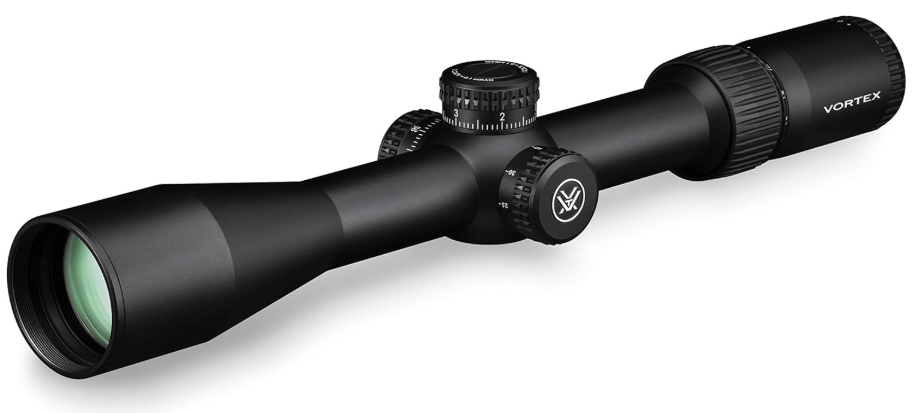
The Best Vortex Optic for Medium Range Hunting in this case centers on the Vortex Optics Viper HS Second Focal Plane Riflescope configured in 2.5 to 10×44 with Dead Hold BDC reticle. This scope is built for hunters who want reliable clarity and consistent performance across varying mid distance shots without overcomplicating the setup. It is not a tactical long range system and it should not be treated like one. Its strength is controlled, practical hunting distances where quick target acquisition matters more than extreme magnification.
This model uses XD glass and XR multi coated lenses to improve light transmission in low light conditions such as early morning or late evening hunts. In real use, this matters more than marketing claims because medium range hunting often happens in uneven lighting. The image remains reasonably sharp from center to edge, but expecting absolute edge perfection would be unrealistic in this price and class range. The 44 millimeter objective lens helps gather light, but it also adds a bit of bulk that some hunters may find unnecessary if they prioritize ultra lightweight gear.
The 2.5 to 10 magnification range is where this optic makes its strongest case. The lower end allows fast target tracking in close to mid distances, while the upper end gives enough reach for ethical shots at extended medium range. However, it is not forgiving if you overestimate your shooting ability. The Dead Hold BDC reticle is useful for holdover estimation, but it assumes the shooter understands their ballistics. If you do not, it can lead to inconsistency rather than accuracy.
The capped quick reset turrets are practical but not built for constant adjustment. This scope is not intended for frequent dialing in the field, which may frustrate users who expect tactical style turret performance. The 30 millimeter tube gives decent adjustment range, but again this is designed for hunting corrections, not precision competition shooting.
Durability is solid. The Armortek coating protects against scratches, and the argon purged body prevents fogging and internal moisture issues. It is also waterproof and holds up well under normal field abuse. The lifetime warranty from Vortex Optics adds confidence, but relying on warranty instead of expecting perfection is a more realistic mindset.
Key Specifications
| Specification | Details |
|---|---|
| Brand | Vortex Optics |
| Model | Viper HS Second Focal Plane Riflescope |
| Magnification | 2.5 to 10 |
| Objective Lens Diameter | 44 millimeters |
| Tube Size | 30 millimeters |
| Reticle Type | Dead Hold BDC |
| Weight | 16.5 ounces |
| Material | Aluminum |
| Lens Coating | XR multi coated with XD glass system |
| Weather Resistance | Waterproof, fogproof with argon purging |
| Finish | Hard anodized matte black |
| Turrets | Capped quick reset |
| Warranty | Lifetime VIP Warranty |
Pros
- Strong light transmission in low light conditions
- Clear image quality across most of the field of view
- Useful magnification range for medium distance hunting
- Durable construction with good weather resistance
- Reliable lifetime warranty support from Vortex Optics
Cons
- Slightly bulky for ultra lightweight hunting setups
2. Vortex Optics Razor HD LHT Second Focal Plane Riflescopes

The Best Vortex Optic for Medium Range Hunting in this review is the Vortex Optics Razor HD LHT Second Focal Plane Riflescope in 3 to 15 by 42 with HSR 5i reticle. This optic is clearly built for hunters who want premium glass and lightweight handling, but calling it the perfect medium range hunting scope would be misleading. It pushes into high end territory in both price and capability, which means many users will pay for performance they will never fully use in typical hunting scenarios.
The optical system is where this scope earns attention. The HD glass produces a very sharp image with strong color accuracy, and the anti reflective coatings improve brightness during early morning and late evening conditions. In real hunting terms, this means better target separation in shaded or mixed lighting environments. However, expecting it to magically transform poor visibility situations is unrealistic. It performs extremely well, but it does not break the laws of light physics.
Magnification from 3 to 15 gives flexibility, but this is where practical hunting judgment matters. The lower range supports fast target acquisition in medium distance brush or open field hunting, while the higher end can stretch further than most ethical hunting shots should realistically go. Many hunters will find they rarely need to go beyond 10x in real field conditions, which raises the question of whether the extra range justifies the cost.
The RevStop zero system and locking elevation turret are strong engineering choices. They allow fast return to zero after adjustments, which is useful if you actually dial elevation in the field. The locking mechanisms also reduce accidental shifts during movement. Still, this level of turret system is often overkill for hunters who prefer holdover shooting rather than constant dialing. In that case, you are paying for capability you might never use.
Durability is solid with aircraft grade aluminum construction, argon purging, and full waterproof and fogproof protection. The illuminated center dot also helps in low light, but it is more of a situational advantage than a necessity. It is not a feature that defines hunting success, despite how it is often marketed.
The biggest criticism is value positioning. This optic performs closer to a precision hybrid hunting and shooting scope rather than a simple medium range hunting tool. If your hunting style is straightforward and does not involve technical shooting adjustments, this scope may be more complex and expensive than required.
Key Specifications
| Specification | Details |
|---|---|
| Brand | Vortex Optics |
| Model | Razor HD LHT Second Focal Plane Riflescope |
| Magnification | 3 to 15 |
| Objective Lens Diameter | 42 millimeters |
| Reticle Type | HSR 5i MOA or MRAD options |
| Tube Size | 30 millimeters |
| Weight | 1.19 pounds |
| Material | Aircraft grade aluminum |
| Lens System | HD optical system with index matched lenses |
| Coatings | Anti reflective coatings on all air to glass surfaces |
| Weather Protection | Waterproof, fogproof with argon purging |
| Turret System | RevStop zero system with locking elevation turret |
| Eyepiece | Locking focus adjustment |
| Warranty | Lifetime VIP Warranty |
Pros
- Extremely clear HD glass with strong color accuracy
- Excellent low light performance for early morning and late evening hunting
- Lightweight design for its performance class
- Reliable zero stop system with locking elevation turret
- Strong build quality with waterproof and fogproof protection
Cons
- Advanced turret system is unnecessary for many hunters
3. Vortex Optics Venom First Focal Plane Riflescopes
The Best Vortex Optic for Medium Range Hunting in this review is the Vortex Optics Venom First Focal Plane Riflescope in 3 to 15 by 44 with EBR 7C reticle. This scope is positioned as an entry point into more technical shooting optics, but that positioning can be misleading for typical hunters. It is capable, feature packed, and affordable compared to higher tier Vortex models, yet it leans more toward crossover hunting and precision shooting than simple field hunting.
Optically, the XD glass system combined with fully multi coated lenses produces a clear and bright image with reduced color distortion. In practical use, this helps during dawn and dusk when medium range hunting conditions are most active. However, it does not match the contrast and edge refinement of higher tier glass like Razor HD. That gap becomes noticeable when targets are partially obscured by brush or uneven lighting, where clarity matters more than magnification.
The 3 to 15 magnification range offers flexibility for both close woodland shots and extended field distances. The lower end is fast enough for moving targets, while the higher end supports precise aiming when conditions are stable. The first focal plane design means the reticle scales with magnification, which is helpful for ranging and holdovers, but it also makes the reticle appear thicker at high magnification and thinner at low magnification. This is a tradeoff, not an upgrade.
The EBR 7C reticle is functional and detailed, but it assumes the shooter understands MOA or MRAD concepts. If you do not, it becomes more of a complication than an advantage. The exposed elevation turret with RevStop zero system is useful for dialing corrections and returning to zero quickly, but this level of adjustment is often unnecessary for hunters who prefer simple holdover shooting in the field.
Durability is strong with a 34 millimeter tube that increases internal adjustment range and adds rigidity. The nitrogen purged body ensures waterproof and fogproof reliability, and the Armortek coating helps protect against scratches and oil residue. These are practical field advantages, not marketing decoration.
Key Specifications
| Specification | Details |
|---|---|
| Brand | Vortex Optics |
| Model | Venom First Focal Plane Riflescope |
| Magnification | 3 to 15 |
| Objective Lens Diameter | 44 millimeters |
| Tube Size | 34 millimeters |
| Reticle Type | EBR 7C MOA or MRAD |
| Weight | 1.8 pounds |
| Material | Aluminum |
| Optical System | XD lens system |
| Lens Coating | Fully multi coated with Armortek protection |
| Turrets | Exposed elevation with capped windage, RevStop zero system |
| Weather Resistance | Nitrogen purged, waterproof and fogproof |
| Extras | Fast focus eyepiece, throw lever included |
| Warranty | Lifetime VIP Warranty |
Pros
- Clear XD optical system with good low light performance
- Flexible magnification range suitable for medium to long range use
- First focal plane reticle supports accurate ranging at all zoom levels
- Solid turret system with reliable zero reset function
- Strong durability with weather resistant construction
Cons
- First focal plane reticle can be visually distracting at low magnification
4. Vortex Optics Viper PST Gen II First Focal Plane Riflescopes

The Best Vortex Optic for Medium Range Hunting in this review is the Vortex Optics Viper PST Gen II First Focal Plane Riflescope in the 2 to 10 by 32 configuration. This is the most disciplined and purpose driven optic among the options reviewed so far. It is not overloaded with unnecessary magnification or excessive complexity, but it still gives you advanced features that actually matter in real field conditions. That balance is exactly why it stands out for medium range hunting.
Optically, this scope performs at a higher level than most hunting optics in its class. The extra low dispersion glass improves clarity and color accuracy, which directly affects target identification in mixed terrain. XR fully multi coated lenses increase light transmission, making it dependable in low light situations where medium range hunting typically happens. The image is not just bright, it is controlled and consistent across the zoom range, which reduces guesswork when switching distances.
The 2 to 10 magnification range is practical rather than excessive. The low end supports fast target acquisition in close to medium brush, while the higher end is enough for precise ethical shots without pushing into unnecessary long range territory. Unlike higher magnification scopes that tempt users into overestimating their shooting ability, this setup keeps expectations realistic and usable in the field.
The first focal plane EBR reticle is detailed but not chaotic. It allows accurate holdovers and windage corrections at any magnification, which is useful if you actually understand your ballistic data. However, if you do not, this feature becomes wasted complexity rather than an advantage. The RZR zero stop system and laser etched turrets give you confidence when dialing adjustments, and the fiber optic rotation indicator helps you track turret movement without confusion.
Build quality is strong with aircraft grade aluminum construction, argon purging, and full waterproof and fogproof protection. The Armortek lens coating helps resist scratches and dirt buildup, which is important for field durability rather than controlled range use. At 26.3 ounces, it is not the lightest optic in this group, but the weight is justified by its mechanical precision and durability.
Key Specifications
| Specification | Details |
|---|---|
| Brand | Vortex Optics |
| Model | Viper PST Gen II First Focal Plane Riflescope |
| Magnification | 2 to 10 |
| Objective Lens Diameter | 32 millimeters |
| Reticle Type | EBR 4 MOA or MRAD options |
| Tube Material | Aircraft grade aluminum |
| Glass Type | Extra low dispersion glass |
| Lens Coating | XR fully multi coated with Armortek protection |
| Turret System | RZR zero stop with laser etched turrets |
| Rotation Indicator | Fiber optic system |
| Weather Resistance | Argon purged, waterproof, fogproof |
| Weight | 26.3 ounces |
| Warranty | Lifetime VIP Warranty |
Pros
- Excellent optical clarity with strong color fidelity
- Very practical 2 to 10 magnification range for real hunting use
- Reliable first focal plane reticle with usable holdover system
- Precise turret system with zero stop and clear tracking indicator
- Strong build quality with weather resistant construction
Cons
- Reticle system requires knowledge of ballistic calculations
5. Vortex Optics Strike Eagle First Focal Plane Riflescopes

The Best Vortex Optic for Medium Range Hunting in this review is the Vortex Optics Strike Eagle First Focal Plane Riflescope in 1 to 10 by 24 with EBR 8 BDC reticle. This optic is clearly designed with speed and versatility in mind, not pure precision. It tries to merge red dot speed at close range with usable holdover capability at distance, and that combination makes it appealing on paper. In reality, it works best when you accept it as a hybrid tool rather than a dedicated precision hunting scope.
Optically, the XD glass and fully multi coated lenses provide a clean and usable image, especially for fast target acquisition. The clarity is good enough for medium range hunting, but it does not reach the same refinement level as higher tier Vortex lines like Viper PST Gen II or Razor HD LHT. The difference becomes noticeable in complex backgrounds where target separation matters more than brightness alone.
The 1 to 10 magnification range is where this scope earns its reputation. At 1x, it behaves almost like a red dot, allowing extremely fast engagement at close range. This is useful in dense terrain or sudden encounters. However, once you move into higher magnification, the optical limitations become more visible compared to dedicated hunting optics. At 8x to 10x, it is usable for medium range shots, but not as precise or forgiving as more specialized scopes.
The first focal plane EBR 8 BDC reticle is designed for speed and holdover use, but it comes with a tradeoff. At low magnification, the reticle is highly effective for quick shooting. At higher magnification, it can appear busier than necessary, which may distract shooters who prefer a clean sight picture. The built in ranging and holdover system is useful, but only if you take time to understand it properly.
Motion activation illumination and multiple brightness settings are practical additions, especially in low light or transitional environments. However, they also introduce complexity and battery dependency that some hunters may not want in a simple field optic. The capped turrets are a clear signal that this scope is not designed for constant dialing. It is meant for set and forget use with holdover adjustments.
Durability is solid with a 30 millimeter aircraft grade aluminum tube, nitrogen purging, and Armortek lens protection. At just over 13 ounces, it is the lightest optic in this group, which is a real advantage for hunters who prioritize mobility over optical perfection.
Key Specifications
| Specification | Details |
|---|---|
| Brand | Vortex Optics |
| Model | Strike Eagle First Focal Plane Riflescope |
| Magnification | 1 to 10 |
| Objective Lens Diameter | 24 millimeters |
| Reticle Type | EBR 8 BDC MOA or MRAD |
| Tube Size | 30 millimeters |
| Weight | 13.12 ounces |
| Optical System | XD glass system |
| Lens Coating | Fully multi coated with Armortek protection |
| Turrets | Capped windage and elevation turrets |
| Illumination | Motion activated with multiple brightness settings |
| Weather Resistance | Nitrogen purged, waterproof, fogproof |
| Extras | Throw lever included |
| Warranty | Lifetime VIP Warranty |
Pros
- Extremely fast target acquisition at 1x magnification
- Lightweight design ideal for mobile hunting setups
- Useful holdover reticle for medium range shooting
- Good illumination system for low light and transitional conditions
- Durable build with waterproof and fogproof construction
Cons
- Battery dependent illumination system adds maintenance
Also Read: Best Scope for 22LR Long Range Shooting
Also Read: Best Vortex Rifle Scope for Long Range
Advantages of Best Vortex Optics for Medium Range Hunting
1. Balanced magnification flexibility
The main advantage is that most of these optics sit in a usable magnification range that does not force extremes. You get enough low end power for quick target acquisition and enough top end for controlled medium distance shots. The critical point is that this balance prevents over dependence on extreme zoom, which often leads to shaky shooting and poor field judgment. However, this only works if the shooter is disciplined enough not to overuse higher magnification as a crutch for bad fundamentals.
2. Strong low light performance across models
Most of these Vortex optics are built with coated lenses and glass systems designed to improve brightness in dawn and dusk conditions. This is important because medium range hunting rarely happens in perfect lighting. The advantage is real, but it is often overstated in marketing. Better low light performance does not fix poor target identification skills or bad shot timing. It simply gives you a slightly better visual window, not a miracle solution.
3. Reliable durability in field conditions
Across the lineup, you get waterproof, fogproof, and shock resistant construction. This matters in hunting environments where weather and physical impact are unavoidable. The advantage is practical reliability rather than luxury performance. The downside is that durability is often used as a selling point to justify higher prices, even though most mid tier scopes already meet basic field survival standards.
4. Useful reticle systems for holdover shooting
Many of these optics include BDC or first focal plane reticles that help estimate bullet drop and windage. This is useful for medium range shots where dialing turrets is not always practical. The critical issue is that these systems assume user knowledge. Without understanding ballistics, the reticle becomes confusing rather than helpful, which can lead to worse shooting decisions instead of better accuracy.
5. Faster target acquisition compared to high magnification optics
These scopes are generally faster to use than long range precision optics because they avoid excessive magnification and overly complex setups. This makes them more practical for real hunting scenarios where targets appear suddenly. However, speed only helps if the shooter can control recoil and maintain proper positioning. Otherwise, faster optics just help you miss quicker.
6. Better weight balance for field use
Most models are lighter than heavy precision rifle scopes, especially in the hunting focused designs. This reduces fatigue during long hunts and improves rifle handling. The limitation is that lighter often means some compromise in glass quality or turret refinement. So the advantage is comfort, not maximum optical performance.
7. Versatility across different hunting environments
These optics can function in woodland, open fields, and mixed terrain without requiring a full change of setup. That flexibility is valuable for hunters who do not operate in a single consistent environment. The drawback is that versatility often comes at the cost of specialization, meaning they are rarely the absolute best in any one category.
8. Strong warranty support reduces long term risk
The lifetime warranty coverage gives users confidence that defects or failures will be handled. This is a real advantage in terms of long term ownership risk. However, it can also encourage buyers to overlook better initial product selection, assuming warranty support will compensate for a poor choice. That is not a smart dependency strategy in equipment selection.
Factors to Consider When Choosing Best Vortex Optics for Medium Range Hunting
1. Magnification range suitability
Magnification range is the first filter that determines whether an optic actually fits medium range hunting. A balanced low end allows quick target acquisition when animals appear suddenly, while a reasonable top end supports precise shot placement without encouraging unrealistic long distance attempts. If the range is too high, it often leads to overconfidence and poor shot judgment. If it is too low, you lose flexibility in open terrain where targets may appear farther than expected.
2. Optical clarity and light transmission
Glass quality and light transmission decide how usable the scope is in real hunting conditions, especially during early morning and late evening. Clear optics help you distinguish targets from background clutter, which is critical for ethical shot placement. Poor clarity leads to hesitation, misidentification, and missed opportunities. However, chasing extreme clarity often increases cost without necessarily improving practical hunting outcomes.
3. Reticle complexity and usability
The reticle should match the user’s skill level and shooting style. Simple reticles are faster and easier to use under pressure, while more complex ballistic designs offer advanced ranging and holdover tools. The problem is that complexity without understanding becomes a disadvantage rather than a benefit. A good choice is one that enhances decision making rather than forcing constant interpretation in the field.
4. First focal plane versus second focal plane design
The focal plane design affects how the reticle behaves across magnification levels. A first focal plane setup keeps measurements consistent but can appear busy at high zoom and thin at low zoom. A second focal plane design stays visually stable but only provides accurate scaling at specific magnification levels. The wrong choice here can either overwhelm the shooter or limit functional accuracy depending on usage habits.
5. Turret system and adjustment style
Turrets determine how you correct for distance and wind in real time. Exposed turrets support frequent dialing and precision shooting, while capped turrets are better for set and forget hunting setups. The mistake many buyers make is choosing advanced turret systems without actually using them. If you do not plan to dial adjustments regularly, complexity becomes unnecessary weight on decision making.
6. Weight and rifle balance
Weight directly affects how long you can comfortably carry and control your rifle in the field. Heavier optics may offer more features, but they can also slow movement and increase fatigue during long hunts. A well balanced setup improves natural handling and reaction time. The wrong choice here is assuming heavier automatically means better performance, which is not true in real field conditions.
7. Durability and weather resistance
A hunting optic must survive unpredictable environments including rain, dust, temperature changes, and physical impact. Waterproofing, fog resistance, and shock resistance are essential for reliability. However, many modern optics already meet a basic durability standard, so this factor is more about avoiding weak build quality rather than chasing extreme ruggedness claims.
8. Practical skill alignment
The most ignored factor is whether the optic matches the user’s actual skill level. Advanced reticles, dialing systems, and long range features are only useful if the shooter understands how to apply them correctly. Otherwise, they create confusion and reduce effectiveness in the field. The right optic is not the most advanced one, but the one that supports consistent, confident shooting decisions under real hunting pressure.
Frequently Asked Questions About Best Vortex Optics for Medium Range Hunting
1. What makes an optic suitable for medium range hunting
An optic suitable for medium range hunting needs a balanced magnification range that supports both quick target acquisition and accurate shot placement. It should provide clear optical performance in low light conditions since most hunting activity happens during dawn or dusk. It also needs a reticle system that supports practical aiming without forcing overly complex calculations during real field situations.
2. Is higher magnification always better for medium range hunting
Higher magnification is not always better and can actually reduce effectiveness in real hunting conditions. Excessive zoom often narrows the field of view, slows down target acquisition, and encourages overestimating shooting ability. A moderate magnification range is more practical because it keeps the shooter aware of surroundings while still allowing precise aiming at ethical distances.
3. Do advanced reticle and turret systems improve hunting accuracy
Advanced reticle and turret systems can improve accuracy, but only if the shooter understands how to use them properly. Without proper knowledge of ballistics and adjustment methods, these features can create confusion and lead to poor shot decisions. In most medium range hunting scenarios, simplicity combined with consistent practice often produces better real world results than relying on complex systems
Conclusion
Best Vortex Optics for Medium Range Hunting comes down to finding a balance between usable magnification, reliable clarity, and practical field performance rather than chasing maximum specifications. Across the scopes discussed, the consistent strength is their ability to handle real hunting distances with dependable optical performance, solid durability, and reticle systems that support both simple aiming and more advanced holdover shooting. However, each option also shows a clear tradeoff some prioritize speed and lightweight handling, while others lean toward precision and technical control that can become unnecessary for average hunting situations.
What makes these scopes effective for medium range hunting is not perfection in any single area, but their adaptability across different environments and shooting styles. They give hunters the flexibility to operate in low light, varied terrain, and unpredictable conditions without relying on overly complicated systems. At the same time, the right choice still depends heavily on user discipline and skill level, because even the best optic cannot compensate for poor judgment or lack of practice in the field.